
Side Dishes
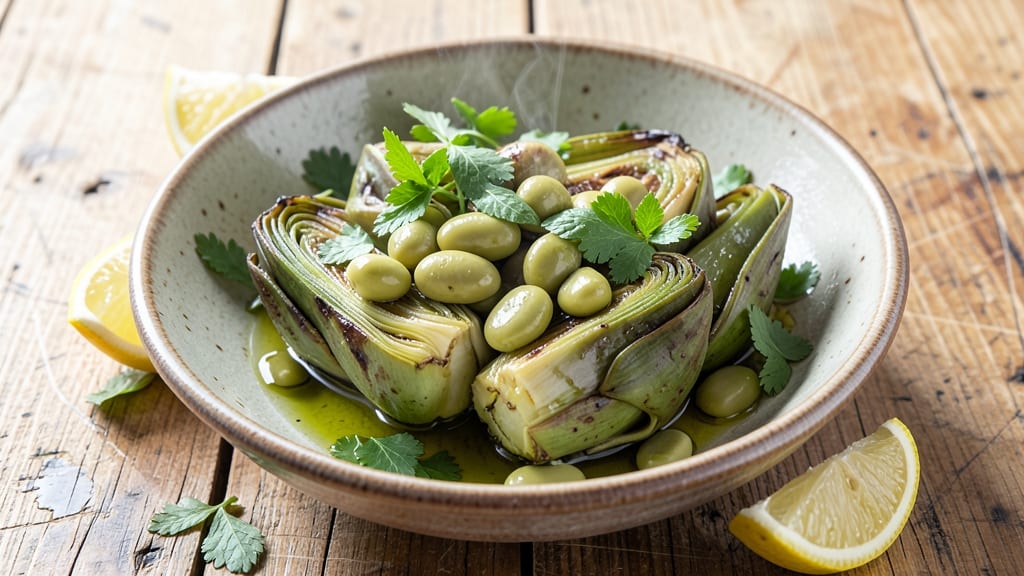
This artichoke and fava bean recipe transforms humble Mediterranean ingredients into a vibrant, herb-infused side dish that shines alongside grilled meats or as a vegetarian main. The key lies in balancing tender fava beans with artichokes' earthy crunch, all brightened by lemon and fresh herbs.
I developed this recipe after discovering how simple ingredients—when prepared with intention—can create restaurant-quality results at home.
The process is straightforward but rewarding: fava beans simmer until tender, while artichokes roast until their leaves caramelize into crispy perfection. A zesty lemon-herb dressing ties everything together, adding a fresh contrast to the rich, savory base.
What makes this dish special is its versatility—it works as a side for roasted chicken or lamb, or as a standalone vegetarian bowl with crusty bread.
By the time you're done, you'll have a dish that's bursting with Mediterranean brightness—golden artichokes, velvety fava beans, and a dressing that's tangy yet herbaceous. The aroma alone will draw everyone to the table, and the texture combination ensures every bite is satisfying.
This recipe proves that even the simplest ingredients can create something extraordinary.
Pair it with a crisp white wine or herbal tea to complement the dish's herbal notes. The best part? It comes together in just 30 minutes, making it perfect for weeknight dinners or special occasions. Let's get started!
Ingredients for artichoke and fava bean
Mediterranean freshness meets simple elegance with these artichoke-fava bean ingredients.
| Ingredient | Amount | Notes |
|---|---|---|
| Fresh Artichokes 🌿 | 4 whole | Medium-sized, trimmed and halved |
| Fresh Fava Beans 🌱 | 1 ½ cups | Shell-free, shelled beans |
| Extra-Virgin Olive Oil 🫒 | ½ cup | High-quality, fruity variety |
| Fresh Lemon Juice 🍋 | ¼ cup | Freshly squeezed, strained |
| Fresh Flat-Leaf Parsley 🌿 | ½ cup | Chopped, stems removed |
| Fresh Mint Leaves 🌿 | ¼ cup | Chopped, stems removed |
| Garlic Cloves 🧄 | 4 cloves | Peeled and minced |
| Diamond Crystal Kosher Salt 🧂 | 1 ½ tsp | Fine grain preferred |
| Freshly Ground Black Pepper 🌶️ | ½ tsp | Freshly cracked |
| Vegetable Broth 💧 | 1 cup | Low-sodium preferred |
| Red Wine Vinegar 🍷 | 1 tbsp | For dressing acidity |
| Honey 🍯 | 1 tbsp | For subtle sweetness |
| Toasted Pine Nuts 🥜 | ¼ cup | For garnish and crunch |
| Crusty Bread 🍞 | 4 slices | For serving |
Artichokes are the star here—look for firm, compact heads with tightly closed leaves. Whole Foods or local farmers' markets often carry the freshest, but grocery store artichokes work too if they're plump and heavy for their size. Trim the artichokes by cutting off the top third and pulling out the choke with a spoon—a sharp chef's knife makes this task easier. Fava beans should be bright green and tender; Trader Joe's sells pre-shelled beans in the freezer section, which saves time. For the herbs, fresh is non-negotiable—they bring that vibrant Mediterranean brightness the dish craves. If you can't find mint, substitute more parsley, but the mint's cool contrast is worth seeking out.
No fresh artichokes? Jarred marinated artichoke hearts work in a pinch—drain and pat dry before roasting. For fava beans, canned broad beans are a decent substitute, though they lack the delicate texture. The dressing can be made ahead and stored in the fridge for up to 3 days, but the herbs should be added just before serving. Want more depth in flavor? Add a pinch of smoked paprika to the dressing. The pine nuts should be toasted in a dry pan until golden—don't overcook, or they'll turn bitter. If you're avoiding nuts, toasted pumpkin seeds offer a similar crunch.
Artichokes and fava beans keep best when stored separately. Trimmed artichokes can be wrapped in damp paper towels and refrigerated for 2-3 days, while shelled fava beans last 3-4 days in the fridge. The dressing components (except herbs) can be prepped a day ahead—just combine the olive oil, lemon juice, vinegar, honey, and salt. The toasted pine nuts stay fresh for 1 week in an airtight container. This dish reheats beautifully—simmer gently on the stove with a splash of water to revive the fava beans' tenderness. For a restaurant-worthy presentation, arrange the artichokes and fava beans on a platter and drizzle with extra dressing.
Why You'll Love This Recipe
- One-Pan Magic: I swear by this—just toss the artichoke hearts and shelled fava beans into a screaming-hot pan with olive oil, and let them sizzle for 10 minutes. No chopping, no peeling, no mess. The lemon juice and parsley join at the end, and suddenly you’ve got a dish that feels fancy but took less time than boiling water.
- Bright & Earthy: That first bite of crisp-tender artichoke with the buttery fava beans? It’s like spring in a pan. The lemon cuts through the richness, and the parsley adds a fresh finish—no heavy cream, no complicated spices, just pure, bright Mediterranean flavor that sticks with you.
- Meal Prep MVP: Between us, this is my secret weapon for lunches. Cook a big batch on Sunday, and you’ve got a protein-packed side for salads, a topping for toast, or even a filling for wraps all week. The flavors actually improve overnight—honestly, the leftovers are my favorite part.
- Budget Bright Spot: Fresh artichokes and fava beans might sound fancy, but they’re cheaper than you think—especially if you buy in season. A single lemon and a handful of parsley stretch this dish into a full meal, and the olive oil? A little goes a long way. It’s the kind of recipe that makes seasonal produce feel like a splurge without breaking the bank.
Step-by-step instructions for artichoke and fava bean dish
Here's how to transform fresh Mediterranean ingredients into a vibrant, herb-infused centerpiece.
Prepare and Blanch the Artichokes
Fill a large pot with water and bring to a rolling boil. While waiting, trim the artichokes by cutting off the top third and removing any tough outer leaves. Use kitchen shears to snip the remaining leaves back to the base, leaving the heart intact. Peel off any remaining fibrous leaves.
Drop the trimmed artichokes into the boiling water and cook for 5-7 minutes until the leaves begin to pull away easily. Immediately transfer them to an ice bath to stop the cooking process and preserve their bright green color. Once cooled, drain and set aside. This blanching step removes bitterness and prepares them for the final dish.
Sauté the Fava Beans and Aromatics
In a large skillet, heat 2 tablespoons of the extra-virgin olive oil over medium-high heat. Add the 1.5 cups fresh fava beans and cook for 3-4 minutes until they begin to soften slightly and develop a golden hue. Remove them from the pan and set aside.
In the same skillet, add the remaining 0.35 cup extra-virgin olive oil and the 4 cloves minced garlic. Sauté for 30 seconds until fragrant but not browned. Add the 0.5 cup chopped flat-leaf parsley and 0.25 cup chopped mint leaves and cook for another 1 minute until the herbs release their aromatic oils. This aromatic base forms the flavor foundation of the dish.
Combine and Simmer the Dish
Return the cooked fava beans to the skillet and add the 1 cup vegetable broth, 1 tbsp red wine vinegar, and 1 tbsp honey. Stir to combine, then add the blanched artichokes. Bring the mixture to a gentle simmer and cook for 8-10 minutes until the artichokes are tender when pierced with a fork.
Season with 1.5 tsp diamond crystal kosher salt and 0.5 tsp freshly ground black pepper, then stir in the 0.25 cup fresh lemon juice. The acidity brightens the flavors and balances the sweetness from the honey. Taste and adjust seasoning if needed, keeping in mind the artichokes will absorb some of the liquid as they cook further.
Finish and Serve
Remove the skillet from heat and let the dish rest for 5 minutes to allow the flavors to meld. Gently fold in the 0.25 cup toasted pine nuts just before serving to maintain their crisp texture. Ladle the artichoke and fava bean mixture onto plates, garnishing each serving with an additional sprinkle of chopped parsley and mint.
Serve immediately with the 4 slices crusty bread on the side for dipping. The combination of tender artichokes, creamy fava beans, and vibrant herbs creates a harmonious balance of textures and flavors that captures the essence of Mediterranean cuisine. The bread soaks up the flavorful juices beautifully, making every bite satisfying.
Pro Tips For Making Artichoke And Fava Bean
- Trim Fava Beans Properly: Those tough outer skins on fava beans? Don’t just peel them—slice off the thick edge first, then peel. I used to waste 10 minutes scrubbing stubborn skins, but this method guarantees clean beans in half the time. Works best when beans are still in their pods—just snap them open and go.
- Cook Artichokes in Two Stages: Start them in boiling salted water (10 minutes), then transfer to a screaming-hot skillet with olive oil. The initial boil softens the hearts, while the skillet sears the outer leaves for that perfect crisp-tender texture. Skipping the skillet step leaves them soggy—trust me, I’ve done it.
- Use Lemon Zest, Not Just Juice: That bright, floral note you crave? Toss in a fine grated strip of lemon zest with the juice. The zest dissolves into the oil, adding depth without overpowering. I learned this after a batch tasted flat—now it’s non-negotiable.
- Save the Fava Pods for Stock: After snapping open fava beans, toss the empty pods into a freezer bag. When you’ve got a pile, simmer them in water for 20 minutes—you’ll get a silky, umami-rich stock that’s perfect for risottos or soups. Zero waste, maximum flavor. Yes, even the pods have purpose.
Dietary considerations for this artichoke and fava bean
Vegetarian Powerhouse
This dish is a plant-based protein powerhouse, combining fava beans (rich in fiber and plant-based protein) with artichokes (packed with antioxidants and prebiotics). A 1-cup serving delivers about 12 grams of protein and 10 grams of fiber, making it perfect for vegetarian or vegan diets.
The dish also provides vitamin C, vitamin K, and folate—nutrients essential for immune support and energy. 💪
Gluten-Free Friendly
Naturally gluten-free, this recipe relies on fresh vegetables, herbs, and olive oil—no grains or wheat-based ingredients. Just ensure your vegetable broth and crusty bread (for serving) are certified gluten-free if needed.
I always double-check labels, especially for broth, since some brands add wheat-based thickeners. The dish’s flavor profile shines without gluten, proving it’s delicious on its own. ✨
Low-FODMAP Options
For those following a low-FODMAP diet, this recipe can be adapted by omitting fava beans (high in FODMAPs) and replacing them with cooked carrots or zucchini for texture. Artichokes are low-FODMAP in small portions (up to ½ cup per serving), so they remain safe.
The lemon-herb dressing stays compliant as long as you avoid garlic (use garlic-infused oil instead) and excessive honey. Always reintroduce ingredients gradually to test tolerance. 🌱
Allergen Considerations
This dish is nut-free as written, but the toasted pine nuts (optional garnish) contain tree nuts. For nut allergies, substitute with toasted pumpkin seeds or sunflower seeds—they add crunch without the risk.
If sesame allergies are a concern, avoid using sesame oil (not in this recipe, but worth noting for similar dishes). The dish is also egg-free, dairy-free, and soy-free, making it safe for most common allergies. 💛
Meal Prep Adaptations
Perfect for meal prepping, this dish stores well for 3-4 days in the fridge or up to 2 months in the freezer. To reheat, simmer gently on the stove with a splash of water or broth to revive texture.
For FODMAP-friendly prep, store components separately—artichokes, fava beans, and dressing—so you can customize servings based on dietary needs. I love prepping the dressing ahead and assembling the dish fresh for maximum flavor. ⏰
Nutrition facts
Frequently asked questions
Can I substitute canned artichokes in this recipe?
Yes, but with adjustments! Use 1 (14 oz) jar marinated artichoke hearts instead of fresh. Drain and pat dry thoroughly, then slice them into ½-inch pieces before roasting. Since canned artichokes are pre-cooked, reduce the simmering time to 5 minutes to avoid overcooking. The flavor will be slightly milder than fresh, but still delicious.
What's the best way to remove fava bean skins?
For fresh fava beans, blanch them in boiling water for 1-2 minutes, then transfer to ice water. The skins will easily slip off when cool. For shelled beans, simply rinse under cold water—the skins should come off with gentle rubbing. If using canned broad beans, they're usually pre-shelled, but check the label. Never peel raw fava beans—they contain toxins!
Can I make this dish ahead of time?
Prepare all components separately and store them in airtight containers. Keep the artichokes and fava beans refrigerated for up to 2 days, and the lemon-herb dressing for 3 days. Reheat gently with a splash of water or broth to restore moisture. The flavors actually improve overnight as they meld together.
Why do my artichokes turn bitter?
Bitterness usually comes from overcooking or using older artichokes. Always blanch fresh artichokes for 5-7 minutes max and transfer immediately to ice water. For storage, wrap trimmed artichokes in damp paper towels and refrigerate for only 2-3 days. If using jarred artichokes, ensure they're well-drained and patted dry before cooking.
What other Mediterranean herbs can I use?
This recipe works beautifully with dill, oregano, or thyme instead of mint. For a more complex flavor, try ½ tsp za'atar with the herbs. Avoid heavy herbs like rosemary—they can overpower the delicate artichoke flavor. Fresh herbs always taste best, but dried herbs (used at ⅓ the amount) work in a pinch.