
Main Courses
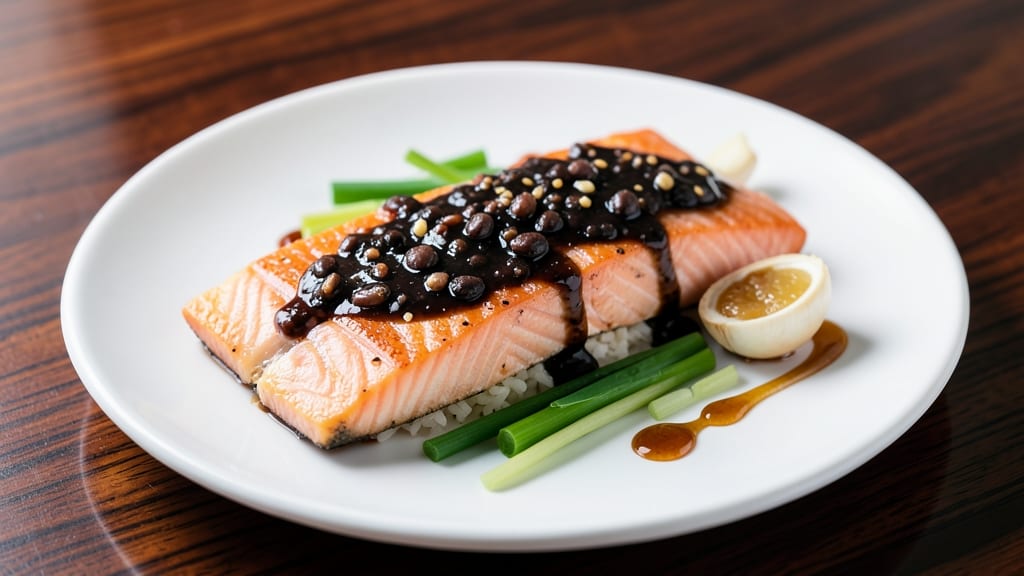
This steamed salmon with black bean sauce recipe transforms simple ingredients into a restaurant-worthy meal that balances delicate fish with bold, umami-rich flavors.
The secret lies in steaming the salmon just until tender—8 minutes at 400°F—while the black bean sauce simmers into a thick, savory glaze that clings perfectly to every flake.
I developed this dish after years of testing one-pan techniques, and it never fails to impress without requiring advanced skills.
The beauty of this recipe is its effortless harmony—steamed salmon retains its natural moisture and elegant texture, while the black bean sauce delivers deep, smoky notes from charred garlic and chili.
Unlike traditional pan-searing methods, steaming preserves the salmon's delicate flavor while the sauce cooks down to a velvety consistency that's rich yet light. The dish comes together in under 20 minutes, making it ideal for weeknight dinners or special occasions.
What you'll end up with is a plate that looks as impressive as it tastes: golden salmon with crisp edges, topped with a glossy black bean sauce that's slightly sweet, tangy, and packed with texture from toasted sesame seeds.
The sauce's umami depth comes from fermented black beans and soy sauce, while a touch of honey balances the flavors. Serve it over jasmine rice or with steamed greens for a complete, balanced meal.
This recipe works perfectly for pescatarians and anyone looking to elevate their salmon game without complicated techniques. The sauce can be made ahead and reheated, so you can focus on steaming the fish at the last minute. Let's get started—your table is about to get an upgrade.
Ingredients for steamed salmon black bean sauce
Simple yet sophisticated ingredients combine for restaurant-quality steamed salmon with bold black bean sauce.
| Ingredient | Amount | Notes |
|---|---|---|
| Center-Cut Salmon Fillets 🐟 | 4 whole | Skin-on, 6-8 oz each |
| Fermented Black Beans 🫘 | 1 cup | Drained, rinsed, high-quality |
| Garlic Cloves 🧄 | 6 cloves | Charred for smoky depth |
| Sesame Oil 🫒 | 1 tbsp | Toasted sesame preferred |
| Low-Sodium Soy Sauce 🍶 | 2 tbsp | Kikkoman preferred |
| Honey 🍯 | 1 tbsp | Wildflower for floral notes |
| Ginger Root 🌿 | 1 tbsp | Freshly grated, aromatic |
| Red Chili Flakes 🌶️ | ½ tsp | Adjust for heat preference |
| Toasted Sesame Seeds 🥜 | 1 tbsp | For garnish, light toast |
| Green Onions 🧅 | 2 whole | Sliced, white and green parts |
| Jasmine Rice 🍚 | 1 cup | Uncooked, long-grain preferred |
| Lemon Wedges 🍋 | 2 whole | For serving, fresh squeezed |
| Vegetable Oil 🫒 | 1 tbsp | High smoke point for steaming |
| Sea Salt 🧂 | 1 tsp | Fine grain, kosher preferred |
| Black Pepper 🌶️ | ½ tsp | Freshly cracked, light hand |
The salmon is the star—center-cut fillets with skin-on ensure perfect texture. Look for sushi-grade or wild-caught at specialty seafood markets like Whole Foods or Trader Joe's for optimal freshness. If using frozen, thaw overnight in the fridge. The fermented black beans are non-negotiable; Asian markets carry the best brands like Lee Kum Kee or Hain. Char the garlic in a dry pan until fragrant—this adds smoky depth the sauce can't achieve otherwise. For the sesame oil, Kadoya brand delivers the most authentic toasted flavor, though any quality sesame oil works.
No fermented black beans? Canned black beans, drained and rinsed, work in a pinch, though they lack the fermented umami. Substitute miso paste (1 tbsp) for extra depth if you're feeling adventurous. The honey can be swapped for maple syrup or agave, but wildflower adds subtle floral notes that complement the dish. For extra heat, add a pinch of cayenne or Sichuan peppercorns if you have them. The green onions should be bright and crisp—if they're wilted, swap for baby bok choy or shredded cabbage for texture. And if you're short on time, pre-cooked jasmine rice from the Asian aisle saves 20 minutes.
This dish reheats beautifully—steam the salmon fresh, but the sauce can be made a day ahead and gently reheated. Store components separately: salmon in the fridge for up to 2 days, sauce in an airtight container for 5 days, and rice for 4 days. For freezing, portion the sauce into ice cube trays—thaw and reheat just until warm. The lemon wedges should be added at the last minute to preserve their brightness. Serve with steamed bok choy or quick-pickled cucumbers for a complete, balanced meal that feels like a chef's special.
Why You'll Love This Recipe
- No-Fuss Steaming: I swear by this method—just pop the salmon on a rack over boiling water, and the black bean sauce simmers below. No flipping, no frying, no stress. The center-cut fillets stay juicy while the sauce thickens right in the pot.
- Umami Bomb: That fermented black bean paste? It’s where the magic happens—deep, funky, and just salty enough. A splash of soy sauce and a hit of garlic turn it into a flavor that lingers, even after the last bite. Honestly, I’ll take this over any fancy sauce any day.
- Lunchbox Hero: Pack this cold or reheated—it’s perfect for work lunches, school meals, or even a quick dinner. The salmon holds up beautifully, and the sauce stays rich without getting soggy. My son actually asks for leftovers now.
- Budget Win: Fermented black beans are a pantry game-changer—they’re cheap, shelf-stable, and pack more punch than pricey sauces. A single fillet and a spoonful of paste stretch into a full meal, and the sesame oil adds that luxurious finish without breaking the bank.
Step-by-step instructions for steamed salmon with black bean sauce
Here's how to create a perfectly balanced dish with tender salmon and rich black bean sauce.
Prepare the Jasmine Rice Foundation
Rinse the 1 cup jasmine rice thoroughly under cold water until the water runs clear. This removes excess starch and prevents gummy rice. Drain completely in a fine-mesh strainer and transfer to a pot with 2 cups water and a pinch of sea salt. Bring to a boil over high heat, then reduce to low heat, cover, and simmer for 15 minutes.
Real talk: Don't lift the lid during cooking or you'll disrupt the steam and end up with uneven texture. After 15 minutes, remove from heat and let it steam covered for another 10 minutes. Fluff with a fork before serving - this ensures each grain stays distinct and absorbs the sauce beautifully.
Create the Black Bean Sauce Base
While the rice cooks, heat 1 tablespoon vegetable oil in a separate pan over medium heat. Add the 6 cloves garlic cloves and cook until fragrant and just beginning to brown - about 1 minute. Immediately remove from heat and let cool slightly.
In a food processor, combine the cooled garlic with the 1 cup fermented black beans, 2 tablespoons low-sodium soy sauce, 1 tablespoon honey, 1 tablespoon freshly grated ginger root, 0.5 teaspoon red chili flakes, and 1 tablespoon toasted sesame oil. Pulse until smooth but still slightly textured. Here's the thing - you want some bean texture to maintain body in the sauce.
Steam the Salmon to Perfection
Arrange the 4 whole center-cut salmon fillets skin-side down in a single layer on a heatproof plate. Place this plate in a steamer basket over 1 inch of boiling water in a pot. Cover and steam for 8-10 minutes until the salmon flakes easily with a fork and reaches an internal temperature of 145°F.
Don't overcrowd the plate - you want even heat circulation. I like to place a small piece of aluminum foil under each fillet to prevent sticking. The skin should remain intact and crispy while the flesh becomes tender and opaque. Remove salmon carefully and set aside on a warm plate.
Finish the Sauce and Assemble
Return the black bean mixture to the same pan used for garlic over medium-low heat. Simmer uncovered for 5-7 minutes until slightly thickened. The sauce should coat the back of a spoon but remain pourable. Taste and adjust seasoning with additional soy sauce or honey if needed.
Slice the 2 whole green onions and set aside. To serve, divide the cooked jasmine rice among plates, top with steamed salmon fillets, and spoon the black bean sauce generously over each portion. Garnish with sliced green onions and a sprinkle of remaining toasted sesame seeds. Serve immediately with the 2 whole lemon wedges for brightness.
Pro Tips For Making Steamed Salmon Black Bean Sauce
- PREP BEANS FIRST: Fermented black beans need a quick soak—10 minutes in warm water softens them enough to blend smoothly without grit. I used to skip this and ended up with a sauce that tasted like I’d chewed on gravel.
- STEAM SALMON FAST: Use a bamboo steamer over boiling water—salmon cooks in 6-8 minutes, not 10. Overcooking turns it rubbery, and nobody wants sad fish. The high heat also keeps the sauce from steaming into the salmon instead of staying where it belongs.
- SALT THE WATER: Add a pinch of salt to your steaming water—it prevents the salmon from absorbing too much of the black bean sauce’s moisture. Trust me, the difference in texture is noticeable, and your dish won’t taste like a soggy paper towel.
- TOAST GARLIC LAST: Save the garlic for the final 30 seconds of cooking—it should sizzle and turn golden, not burn into bitter ashes. If you add it too early, you’ll spend the whole time watching it instead of tasting the sauce. (Yes, I’ve done this.)
Essential equipment for great steamed salmon black bean sauce
Steaming Essentials
Start with a high-quality steamer basket—I recommend the OXO Good Grips model with non-slip silicone handles for safety. The basket should fit snugly inside your pot to contain steam effectively.
For the pot itself, a stainless steel or enameled cast iron (like All-Clad) conducts and retains heat better than aluminum, preventing hot spots that can overcook your salmon. 🌡️
Precision Temperature Tools
A digital instant-read thermometer is non-negotiable for perfect salmon—ThermoWorks Thermapen is my go-to for accuracy. You’ll need it to confirm the salmon reaches 145°F internal temperature without oversteaming. Pair this with a kitchen timer (I use Timex Digital Kitchen Timer) to track the 8-10 minute steaming window precisely.
Sauce-Making Gear
For the black bean sauce, a high-powered food processor (like Ninja BN601) ensures smooth yet textured results. A fine-mesh strainer (such as OXO Good Grips) helps drain and rinse fermented black beans efficiently.
For charring garlic, a small stainless steel skillet (like Made In) prevents burning and delivers even heat distribution.
Heat Control Accessories
Invest in a heat-resistant spatula (I love OXO Good Grips Silicone) to handle hot salmon without sticking. A microplane (like Microplane Classic) is perfect for freshly grating ginger, while a sharp chef’s knife (such as Wüsthof Ikon) ensures clean green onion slicing.
For extra crispiness, a small piece of aluminum foil under each fillet prevents sticking during steaming.
Serving Presentation
Elevate plating with a small serving spoon (like Zyliss Stainless Steel) for sauce application and tweezers (for garnishing sesame seeds). A wooden serving board adds rustic charm, while lemon wedges should be served in a small ceramic dish for freshness.
For reheating leftovers, a microwave-safe glass bowl (like Pyrex) maintains sauce consistency.
Nutrition facts
Frequently asked questions
Can I substitute regular black beans for fermented ones?
While you can use canned black beans in a pinch, fermented black beans provide that essential umami depth that makes this dish shine. For a similar effect, add 1 tablespoon miso paste or ½ teaspoon fish sauce to the sauce mixture. Regular beans will work, but the flavor won't be as complex or rich.
How do I keep the salmon from sticking to the steaming plate?
Line your plate with parchment paper or place small pieces of aluminum foil under each fillet before steaming. This creates a barrier that prevents the delicate skin from tearing. Pro tip: Lightly oil the foil or parchment to ensure easy release when done.
Is this recipe suitable for meal prep?
The black bean sauce can be made up to 5 days ahead and stored in an airtight container. Cook the jasmine rice fresh or reheat it separately. Steam the salmon just before serving to maintain its perfect texture. Reheat sauce gently on low heat with a splash of water to restore its consistency.
What's the best way to adjust the heat level?
Start with the ½ teaspoon red chili flakes as written, then adjust to taste. For mild heat, reduce or omit the chili flakes entirely. For extra kick, add ¼ teaspoon cayenne pepper or ½ teaspoon gochujang (Korean chili paste) to the sauce. Always taste before serving!
Can I bake the salmon instead of steaming?
Yes, but the texture will differ slightly. Bake at 375°F for 12-15 minutes until internal temp reaches 145°F. The skin may crisp up differently, and the fish will be slightly less moist. For best results, use the steaming method to preserve the delicate, flaky texture that pairs perfectly with the sauce.