
Side Dishes
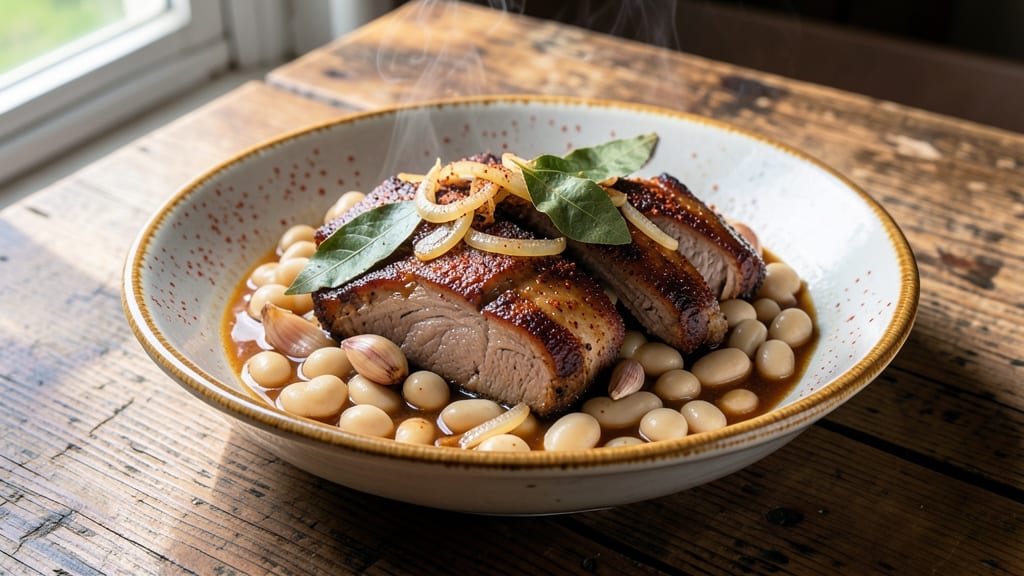
This Portuguese beans recipe transforms simple ingredients into a hearty, smoky dish that tastes like a homecoming. 💛 Growing up, my grandmother’s feijoada simmered for hours, filling the kitchen with aromas that made every meal feel like a celebration.
The secret lies in slow-cooked beans, rich with paprika, garlic, and tender pork, creating a dish that’s both comforting and deeply flavorful.
The beauty of this recipe is its simplicity—just a few ingredients, but each plays a crucial role. Smoked paprika adds depth, garlic infuses warmth, and slow cooking transforms tough cuts of pork into melt-in-your-mouth bites.
It’s the kind of dish that gets better with time, as flavors meld and the beans soften just enough to soak up every bit of savory goodness.
By the time you serve it, you’ll have a steaming bowl of Portuguese beans with tender meat, crispy edges, and a sauce so rich it’ll have everyone asking for seconds. Pair it with fluffy rice and collard greens for a full meal that feels like a hug on a plate.
This is the kind of recipe that turns weeknights into something special.
Perfect for family dinners or gatherings, this dish is as much about tradition as it is about taste. The slow cooking method ensures every bite is packed with flavor, while the combination of spices and pork creates a dish that’s both hearty and elegant.
Let’s bring a taste of Portugal to your table.
Ingredients for portuguese beans
Simple ingredients, slow cooking, and smoky flavors make this Portuguese beans dish unforgettable.
| Ingredient | Amount | Notes |
|---|---|---|
| Dry White Beans 🌱 | 2 cups | Soaked overnight for best texture |
| Pork Shoulder 🥩 | 2 lb | Cut into 1-inch cubes |
| Smoked Paprika 🌶️ | 2 tbsp | Key for authentic smoky flavor |
| Garlic Cloves 🧄 | 8 cloves | Freshly minced for aromatic punch |
| Bay Leaves 🍃 | 2 whole | Fresh or dried, removed before serving |
| Onion 🧅 | 1 whole | Yellow or red, chopped |
| Tomato Paste 🍅 | ½ cup | Thickens sauce beautifully |
| Olive Oil 🫒 | ½ cup | Extra-virgin for richness |
| Salt 🧂 | 1 ½ tsp | Adjust to taste |
| Black Pepper 🌶️ | 1 tsp | Freshly ground preferred |
| Red Wine 🍷 | 1 cup | Dry, like Cabernet Sauvignon |
| Chorizo Sausage 🌭 | 1 lb | Optional for extra richness |
| Fresh Parsley 🌿 | ¼ cup | Chopped for garnish |
The beans are the heart of this dish, so don't skimp on quality. Great Northern or cannellini beans work best, but any white bean will do. Soak them overnight to cut down on cooking time—this is non-negotiable for tender results. For the pork, pork shoulder is ideal—it stays juicy during long cooking. If you can't find it, pork butt works too. The smoked paprika is what gives this dish its signature flavor; Penzeys or La Boîte brands are excellent choices if you want to splurge. Fresh garlic and bay leaves elevate the dish, so grab them at the same time as your other ingredients.
No smoked paprika? Substitute with a mix of regular paprika and a pinch of liquid smoke—it won’t be the same, but it’ll get you close. Running low on red wine? Beef broth with a splash of balsamic vinegar works in a pinch. If you can’t find chorizo, Italian sausage or even extra pork shoulder will keep the dish hearty. For the tomato paste, Trader Joe’s squeeze tubes are perfect—they’re convenient and last longer than cans. Fresh parsley isn’t just for garnish; it brightens the dish, so don’t skip it if you’ve got it.
This dish tastes even better the next day, so plan ahead. Store leftovers in the fridge for up to 5 days or freeze for 3 months. The flavors deepen as it sits, so the longer you can let it simmer, the better. If you’re making this ahead for a gathering, reheat gently on the stove with a splash of water or broth to keep it moist. Serve with fluffy rice and crusty bread to soak up every last bit of that smoky, savory sauce.
Why You'll Love This Recipe
- One-Pot Magic: I swear by this—just toss everything in one pot and walk away. The beans soften while the pork shoulder melts into shreds, and honestly? That’s half the battle won right there.
- Smoky Depth Bomb: The smoked paprika and bay leaves give this dish a richness that’s impossible to resist. It’s not just flavor; it’s that comfort taste—like a hug in a bowl, especially when the garlic gets crispy at the edges.
- Leftovers That Shine: Between us, this recipe begs to be made extra. The flavors deepen overnight, and reheating it the next day? Pure satisfaction. My freezer’s always stocked with portions—perfect for lazy Fridays or unexpected guests.
- Budget-Friendly Feast: Pork shoulder and dry beans stretch into meals that feed the whole family without breaking the bank. I’ll be real: this is my go-to when I need to stretch groceries, but it never feels like a sacrifice—just solid, hearty food.
Step-by-step instructions for smoky paprika and garlic Portuguese beans
Here's how to create rich, flavorful Portuguese beans with deep smoky notes.
🍳 Step 1: Sauté Aromatics Until Fragrant
Heat the 0.5 cup olive oil in a large Dutch oven over medium heat. Add the 1 whole onion chopped into ¼-inch pieces and cook for 5-6 minutes until the onion becomes translucent and slightly golden. Here's the thing—don't rush this step. The onion needs to soften completely before adding the other aromatics.
Add the 8 cloves garlic cloves, minced, and the 2 tbsp smoked paprika. Stir constantly for 1-2 minutes until the garlic becomes fragrant and the paprika dissolves into the oil. You'll notice the kitchen filling with that wonderful smoky aroma—this is where the authentic Portuguese flavor begins to develop. Remove the pan from heat for a moment to let the paprika aroma settle.
🔥 Step 2: Brown the Pork Shoulder and Chorizo
Return the Dutch oven to medium-high heat and add the 2 lb pork shoulder cut into 1-inch cubes. Brown the pork in batches if needed, working in 3-4 minutes per batch until each piece develops a deep golden crust. Don't overcrowd the pan—this prevents proper browning. Transfer the browned pork to a plate and set aside temporarily.
In the same pot, add the 1 lb chorizo sausage sliced into ½-inch rounds. Cook for 3-4 minutes until the chorizo begins to release its oils and develop a slightly crispy exterior. The chorizo will add rich, smoky depth to the beans. Remove the chorizo and set it aside with the pork.
🍳 Step 3: Build the Flavor Base
Return the Dutch oven to medium heat and stir in the 0.5 cup tomato paste. Cook for 2-3 minutes until the tomato paste darkens slightly and begins to caramelize. This step develops the sauce's depth and thickness—don't skip it. Add the 1 cup red wine and scrape up any browned bits from the bottom of the pot with a wooden spoon.
Bring the mixture to a gentle simmer and let it reduce by half, which should take about 5-6 minutes. You'll see the liquid reduce and the flavors concentrate. Add the 2 whole bay leaves, 1.5 tsp salt, and 1 tsp black pepper. Stir well to combine all the seasonings evenly throughout the base.
🥘 Step 4: Combine and Simmer the Beans
Drain the 2 cups dry white beans (after soaking overnight) and add them to the Dutch oven. Stir to coat the beans thoroughly with the flavorful liquid. Add enough water to cover the beans by about 2 inches. Here's where it gets important—bring the mixture to a boil, then reduce the heat to low and cover the pot.
Simmer for 1.5-2 hours until the beans are tender but still hold their shape. You'll know they're ready when a bean easily crushes between your fingers but doesn't fall apart. Stir occasionally to prevent sticking. If the beans begin to look dry, add a little water—just enough to keep them covered.
⏰ Step 5: Finish and Garnish
Once the beans are tender, uncover the pot and increase the heat to medium. Add the reserved pork shoulder and chorizo back to the pot. Simmer uncovered for 10-15 minutes to allow the flavors to meld together and the pork to absorb the bean juices. The beans should be coated with a rich, smoky sauce by now.
Remove the 2 whole bay leaves before serving. Stir in the 0.25 cup fresh parsley chopped finely for a fresh finish. Taste and adjust the seasoning if needed. Serve hot with crusty bread or over rice to enjoy this hearty Portuguese dish at its best.
Pro Tips For Making Portuguese Beans
- Soak Beans Overnight: I learned this the hard way—skipping the soak turns your beans into mushy glue. Use 3 cups water per cup of dry beans, let them sit 12+ hours, then drain. No shortcuts here; the texture makes all the difference.
- Brown the Pork First: Start with a screaming-hot pot and render that pork shoulder until it’s deep golden, not just pink. This builds flavor that simmering alone can’t match—think crispy edges and rich fond at the bottom.
- Toast the Paprika: Dry-toast the smoked paprika in a separate pan for 30 seconds until fragrant. It deepens the smoky notes and cuts the bitterness—trust me, your beans will taste more complex.
- Skim the Foam Early: The first 15 minutes of simmering? Skim off the scum that rises like a science experiment gone wrong. It’s gross, but it keeps your broth clean and prevents that off-flavor that sneaks in later.
Storing and reheating this portuguese beans
Refrigerator Storage
After your Portuguese beans cool to room temperature, transfer them to an airtight container—I love using glass Pyrex with snap-on lids for even heating later.
Store in the fridge at 40°F or below for up to 5 days, but honestly, the flavors get even better after 24 hours as the spices meld. The sauce thickens slightly overnight, making it even more delicious. 💫
Pro tip: Let the beans sit at room temperature for no more than 2 hours before refrigerating to prevent bacterial growth. I always portion leftovers into smaller containers so I can reheat just what I need without dealing with a whole pot.
Freezer Prep
For longer storage, freeze your Portuguese beans in quart-sized freezer bags or glass containers with 1-inch headspace for expansion. Squeeze out excess air to prevent freezer burn—they’ll keep for up to 3 months.
Label with the date so you can track freshness. When ready to eat, thaw overnight in the fridge for best results. ❄️
If you’re prepping for a crowd, freeze individual portions in single-serving containers. This way, you can pull out just what you need without thawing the whole batch. I’ve found that freezing the beans with some of the pork and sauce keeps everything cohesive when reheated.
Stovetop Reheating
My preferred method is stovetop reheating because it preserves the texture and prevents drying. Pour the beans into a heavy-bottomed pot and add ¼ cup water or beef broth to prevent sticking.
Heat over medium-low heat for 10-15 minutes, stirring occasionally. The low heat ensures the pork stays tender and the sauce doesn’t separate. 🔥
Taste and adjust seasoning after reheating—beans often need a pinch of salt or a splash of red wine to restore balance. If the sauce looks too thick, add a little water or broth to loosen it up. This method keeps the dish restaurant-quality every time.
Microwave Shortcut
For quick meals, transfer a portion to a microwave-safe bowl, cover loosely with a damp paper towel, and heat on 70% power for 3-4 minutes.
Stir halfway through to distribute heat evenly. The damp towel helps retain moisture, but be careful—microwaves can make the sauce watery if overdone. 💡
If the beans seem dry after reheating, add 1-2 tablespoons of water or broth and let it sit for a minute before serving. This works well for single servings when you’re in a hurry, but I still recommend stovetop for larger batches.
Serving Leftovers
Leftovers make an even better lunch the next day. Serve with crusty bread to soak up the smoky sauce or over steamed white rice for a hearty meal. I often add a sprinkle of fresh parsley and a drizzle of olive oil to brighten the flavors. 🌿
For extra richness, reheat with a splash of red wine or beef broth to enhance the depth of flavor. If you’re feeling adventurous, top with fried eggs for a Portuguese-inspired brunch twist. The possibilities are endless!
Nutrition facts
Frequently asked questions
What type of beans work best for this Portuguese recipe?
Great Northern or cannellini beans are ideal—they hold their shape beautifully while soaking up the smoky flavors. Any white bean variety will work, but avoid black beans or kidney beans, as they have different textures. For extra richness, I recommend using dried beans instead of canned—they absorb more flavor during the long simmer.
Can I make this recipe without pork?
Swap the pork shoulder for chicken thighs or smoked turkey to keep it hearty. For a vegetarian version, use mushrooms or crispy tofu instead of meat, and add extra smoked paprika for depth. The beans will still be delicious, though the texture will differ slightly.
How do I know when the beans are fully cooked?
The beans are ready when they’re tender but still hold their shape. Test by mashing one between your fingers—it should crush easily but not turn to mush. If they’re still firm after 2 hours of simmering, add ½ cup water, cover, and cook another 30 minutes. Overcooking turns them mushy, which ruins the dish.
What’s the secret to making the sauce extra flavorful?
The key is browning the pork and chorizo first—this creates a deep, caramelized base. Also, don’t skip the tomato paste caramelization step; it adds a rich, umami depth. For extra smokiness, add a pinch of liquid smoke or a dash of cayenne pepper at the end. The longer you simmer, the better the flavors meld.
Can I make this ahead of time for a gathering?
This dish tastes even better the next day! Cook it a day ahead, refrigerate in an airtight container, and reheat gently on the stove with a splash of water or broth. The flavors deepen as it sits, making it perfect for potlucks or family dinners. Just avoid reheating in the microwave—it can make the sauce watery.