
Side Dishes
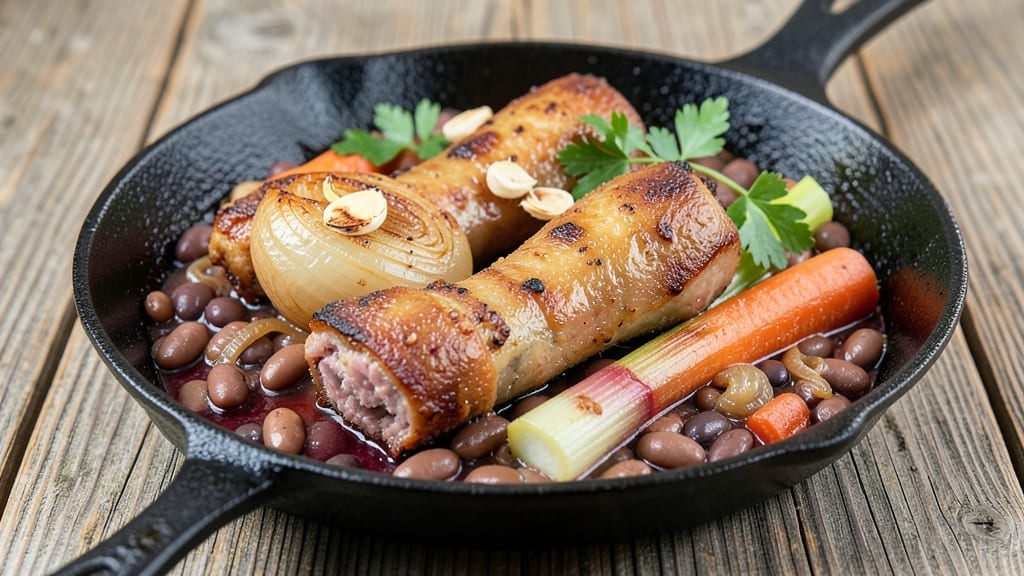
This old-fashioned ham hock and beans recipe delivers the soul-warming comfort of Southern cooking in one rich, smoky bowl. The ham hock infuses the beans with deep, savory flavor while its collagen transforms tough dried beans into tender, melt-in-your-mouth perfection.
After years of perfecting this dish, I’ve learned the secrets to balancing smokiness with sweetness—key for that authentic, restaurant-quality taste at home.
The beauty of this recipe lies in its simplicity and patience. You’ll spend just 15 minutes prepping ingredients, but the real magic happens during the slow simmer—where flavors meld and the beans soften into velvety richness.
This isn’t just a side dish; it’s a centerpiece that pairs beautifully with cornbread, buttered biscuits, or a crisp green salad for balance. The ham hock’s smoky aroma alone will have everyone gathering at the table.
What you’ll end up with is a pot of beans so tender they practically dissolve on your tongue, infused with the deep, caramelized flavor of slow-cooked ham. The broth reduces into a thick, velvety sauce that coats every bean, while the ham hock’s gelatinous richness adds a luxurious mouthfeel.
This is the kind of dish that tastes even better the next day—perfect for meal prep or feeding a crowd.
Whether you’re serving it at a family gathering or treating yourself to a taste of nostalgia, this recipe delivers restaurant-quality results with minimal effort. The key is letting the flavors develop over time, so don’t rush it.
Here’s how to make it—step by step—for a dish that’s as comforting as it is impressive.
Ingredients for old fashioned ham hock and beans
Fifteen minutes of prep, hours of smoky-sweet magic—just these core ingredients transform into velvety, restaurant-worthy beans.
| Ingredient | Amount | Notes |
|---|---|---|
| Dried Navy Beans 🌾 | 2 cups | Rinsed to remove debris |
| Ham Hock 🍖 | 2 whole | Smoked, bone-in preferred |
| Onion 🧅 | 1 whole | Yellow or white, chopped |
| Garlic Cloves 🧄 | 4 cloves | Peeled, lightly crushed |
| Celery Stalk 🥬 | 2 whole | Chopped, leafy parts removed |
| Carrots 🥕 | 2 whole | Peeled, chopped into chunks |
| Bay Leaves 🌿 | 2 whole | Fresh or dried |
| Thyme Sprigs 🌿 | 2 whole | Fresh, or 1 tsp dried |
| Apple Cider Vinegar 🍎 | ½ cup | For tangy depth |
| Brown Sugar 🍯 | ½ cup | Light or dark preferred |
| Smoked Paprika 🌶️ | 1 tbsp | For authentic smokiness |
| Salt 🧂 | 2 tsp | Diamond Crystal preferred |
| Black Pepper 🌶️ | ½ tsp | Freshly cracked |
| Water 💧 | 8 cups | Filtered preferred |
| Butter 🧈 | 2 tbsp | Unsalted, for richness |
The ham hock is non-negotiable here. Look for bone-in, smoked hocks at your butcher or the meat counter—they’re the secret to that deep, gelatinous richness. Costco or Whole Foods usually carry them, and if you can’t find smoked, unsmoked will work but add a pinch of liquid smoke later. The beans? Navy beans are traditional, but pinto or great northern will do in a pinch. Soak them overnight for even better texture, but the quick soak method (boiling water + vinegar) works if you're short on time. The vegetables—onion, celery, and carrots—form the aromatic base, so don’t skimp on freshness. Wilted celery or yellowed onions will make the whole dish taste sad.
No ham hock? Double the smoked paprika and add a smoked sausage for depth, but you’ll miss that collagen-rich melt-in-your-mouth quality. Short on thyme? Fresh rosemary at half the amount works, but thyme’s earthy notes are key. The apple cider vinegar might seem odd, but it cuts through the richness and brightens the beans—substitute lemon juice if that’s what you’ve got. For the sugar, honey or maple syrup adds complexity, but brown sugar’s molasses notes are traditional. And if you’re making this ahead? Freeze the ham hock first to speed up the cooking time—it thaws quickly in the pot.
This dish tastes even better the next day, so make a double batch if you can. The beans keep in the fridge for 5-6 days in their broth, and the flavor only deepens. For meal prep, divide into containers—one portion beans, one portion broth—so you can reheat just what you need. The ham hock? Save the bones for broth later. And if you’re serving a crowd, this is your go-to—scale up the beans and ham hocks proportionally. The slow simmer does all the work, so don’t rush it. Patience is the real secret ingredient.
Why You'll Love This Recipe
- One-Pot Magic: I swear by this recipe when I’m too tired to scrub pots. Just toss in the dried navy beans, ham hock, and a rough chop of onion, celery, and garlic—no fancy prep. The ham hock melts into the beans overnight, so by morning, you’ve got a rich, smoky pot ready to serve.
- Smoky Soul Food: That ham hock? It’s the star—salty, savory, and packed with flavor that seeps into every bean. The slow simmer turns the dried navy beans into something tender and hearty, while the garlic and celery add just enough brightness to cut through the richness.
- Leftovers That Shine: Between us, this dish tastes better the next day. I make a big batch on Sunday, and by Wednesday, it’s still the star of the meal—whether I’m reheating it for lunch or serving it over rice. The flavors deepen, and the ham hock gets even more fall-off-the-bone tender.
- Budget-Friendly Feast: Honestly, this recipe is my go-to for feeding a crowd without breaking the bank. Dried beans and a single ham hock stretch into enough servings for a family dinner, potluck, or even a church gathering. Plus, the leftovers freeze like a dream for lazy nights.
Step-by-step instructions for old fashioned ham hock and beans
This hearty dish delivers deep smoky flavor and melt-in-your-mouth texture through slow cooking.
Prepare the Beans and Aromatics
Begin by rinsing the 2 cups dried navy beans thoroughly under cold water to remove any debris. This ensures your beans cook evenly without clouding the broth. Place them in a large Dutch oven or heavy pot with the 8 cups water, then bring to a boil over high heat. Once boiling, reduce heat to medium-low and simmer for 2 minutes—this helps soften the beans slightly before adding the ham hock.
While the beans simmer, chop the 1 whole onion into ½-inch dice, the 2 whole celery stalks into ½-inch pieces, and the 2 whole carrots into ½-inch chunks. Peel and lightly crush the 4 cloves garlic cloves. These aromatics form the flavor base, so take your time to create even, bite-sized pieces. Set them aside for now—they'll join the pot later once the ham hock has had time to render its rich collagen.
Add Ham Hock and Simmer Low and Slow
Add the 2 whole ham hocks to the simmering beans and water. The ham hock should float near the surface—this is normal as it renders fat and collagen. Return the mixture to a gentle simmer over low heat (about 180-190°F). Partially cover the pot and let it cook undisturbed for 1 hour. This initial phase allows the ham hock to break down and infuse the beans with its deep, smoky flavor.
After 1 hour, skim off any foam that rises to the surface with a ladle. This prevents bitterness from developing in the broth. Then, add the chopped onion, celery, carrots, and garlic cloves along with the 2 whole bay leaves and 2 whole thyme sprigs. Stir gently to distribute the vegetables evenly. The vegetables will absorb the ham hock's rich flavors as they cook, creating a harmonious blend of smoky, savory, and slightly sweet notes.
Season and Braise Until Tender
Increase the heat to medium and bring the mixture to a gentle boil. Once boiling, reduce heat back to low and add the 0.5 cup apple cider vinegar, 0.5 cup brown sugar, 1 tbsp smoked paprika, 2 tsp salt, and 0.5 tsp black pepper. Stir well to combine—this is where the dish develops its signature balance of tangy, sweet, and smoky flavors. The vinegar brightens the richness, while the brown sugar and smoked paprika deepen the complexity.
Now, the real magic happens. Cover the pot and let the beans simmer gently for 2 to 2.5 hours, stirring occasionally to prevent sticking. You'll know they're ready when the beans are tender but not mushy, and the ham hock meat easily pulls away from the bone. The broth should be thick and flavorful, coating the back of a spoon. If the liquid reduces too much before the beans are tender, add ½ cup hot water and continue cooking.
Finish with Butter for Richness
Once the beans are perfectly tender, remove the bay leaves and thyme sprigs—they've done their job and can be discarded. Stir in the 2 tbsp butter over low heat until it melts completely. This final step adds a luxurious finish, rounding out the flavors and giving the dish a velvety texture. Taste and adjust seasoning if needed—you might need a touch more salt or a splash of vinegar to balance the richness.
Let the beans rest for 10 minutes before serving. This allows the flavors to meld and the beans to absorb any remaining liquid. Serve the ham hock and beans hot, with the meat shredded from the bone and mixed into the pot. The result is a deeply satisfying dish where every spoonful delivers layers of smoky, savory, and slightly sweet flavors—perfect for a cozy meal.
Pro Tips For Making Old Fashioned Ham Hock And Beans
- SOAK BEANS OVERNIGHT: I learned this the hard way—rushing soaks leave beans tough. Cover dried navy beans in cold water with a pinch of salt, then let them sit 12+ hours. No peeling, no measuring: just eyeball 3 cups water per 1 cup beans, then drain and rinse before cooking.
- BROWN THE HAM HOCK: Skip the slow start—sear the ham hock in a hot pot for 3-4 minutes per side until deeply golden. The crust locks in flavor and prevents the broth from tasting bland later. (Yes, it’ll smell like heaven.)
- TRIM THE CELERY RIGHT: Don’t just chop—strip the leaves from the stalk and reserve them. Those fronds add subtle bitterness and color to the finished dish. Toss them in at the 30-minute mark with the beans.
- SKIP THE BOIL: After adding beans, ham, and broth, bring to a gentle simmer—not a rolling boil. Navy beans break down faster than you think, and you’ll end up with mush. A low simmer keeps them intact and tender, not gluey.
Make-ahead tips for this dish
Prep Ahead for Flavor
Start by soaking the 2 cups dried navy beans overnight in 8 cups water with 1 tbsp apple cider vinegar—this cuts cooking time by 1-1.5 hours and prevents gas. I use a large glass bowl with a lid for easy storage in the fridge.
The vinegar also helps tenderize the beans while adding subtle tang. Drain and rinse them in the morning before cooking. 🌱
Slow-Cooker Shortcut
For hands-off cooking, transfer all ingredients (except butter) to a 6-quart slow cooker after the initial 1-hour simmer on the stovetop. Cook on low for 8 hours or high for 4 hours, then stir in butter at the end.
This method maintains the same deep flavors while letting you focus on other prep—perfect for busy days. The slow cooker’s gentle heat mimics the stovetop’s low-and-slow approach. ⏰
Freezer-Friendly Broth
Save the ham hock broth for future meals by freezing it in quart-sized freezer bags. After removing the ham hock and beans, strain the broth through a fine-mesh sieve to remove solids.
Portion into bags, leaving 1-inch headspace for expansion, and freeze flat for easy stacking. Thaw overnight in the fridge—it’s perfect for soups, gravies, or even a quick beans-and-broth reheat. 🧊
Ham Hock Prep Day Before
Freeze the 2 ham hocks the night before cooking to speed up the rendering process. The cold temperature helps break down the collagen faster, reducing the total cook time by 30-45 minutes.
Just add them straight from the freezer to the simmering beans—no thawing needed. This trick is especially useful for large gatherings where time is tight. 🍖
Double Batch for Crowds
Make a double batch (using 4 cups beans and 4 ham hocks) and freeze half in airtight containers for later. The beans keep their texture beautifully after freezing, and the flavor actually improves over time.
Label containers with the date—this dish stays good for up to 3 months in the freezer. Reheat directly from frozen on low heat with a splash of water to prevent drying. 👨👩👧👦
Resting for Restaurant Quality
After cooking, let the beans rest uncovered in the pot for 15-20 minutes at room temperature. This allows the broth to thicken slightly and the flavors to meld—just like in a professional kitchen.
For meal prep, store in the fridge for up to 5 days, then reheat gently on the stovetop. The resting step is non-negotiable for that velvety texture and balanced taste. ✨
Nutrition facts
Frequently asked questions
Why does this recipe use ham hock instead of regular ham?
The ham hock is essential for that authentic, restaurant-quality depth. Its collagen-rich bone and skin break down during cooking, creating a thick, velvety broth that transforms tough beans into melt-in-your-mouth perfection. Plus, the smoky flavor is unmatched by regular ham—it's the secret to the dish's rich, savory character. The meat also shreds easily, adding hearty protein to every bite.
Can I substitute canned beans for dried beans?
You can, but the texture and flavor won't be the same. Canned beans lack the collagen-rich depth from slow-cooked ham hock, and they absorb flavors differently. If you must use canned, opt for high-quality, low-sodium beans, drain them well, and simmer them with the ham hock for at least 1 hour to let the flavors meld. For best results, stick with dried beans—they're worth the extra time.
How do I know when the beans are fully cooked?
The beans are done when they're tender but still hold their shape—no mushiness! Press a bean between your fingers: it should give slightly but not collapse. The ham hock meat should also pull away from the bone easily. If the broth reduces too much before the beans are tender, add ½ cup hot water and continue cooking. The total simmer time is usually 2-2.5 hours, but it depends on your stove and bean freshness.
What’s the best way to serve this dish?
This hearty bean dish is a centerpiece, so pair it with complementary sides like cornbread, buttery biscuits, or a crisp green salad to balance the richness. The smoky, savory flavors also work well with pickled vegetables or a tangy coleslaw. For extra indulgence, serve with a dollop of hot sauce or a sprinkle of fresh parsley. Leftovers? Even better—the flavors deepen overnight!
Can I make this in an Instant Pot?
Yes! After the initial 1-hour simmer on the stovetop (to render the ham hock), transfer everything to your Instant Pot and cook on high pressure for 20 minutes. Quick-release the pressure, then stir in the butter. The Instant Pot speeds up the process while keeping the flavors rich and tender. Just be sure to add the aromatics (onion, celery, carrots) during the stovetop phase—they won’t soften enough in the pressure cooker.