
Soups & Stews
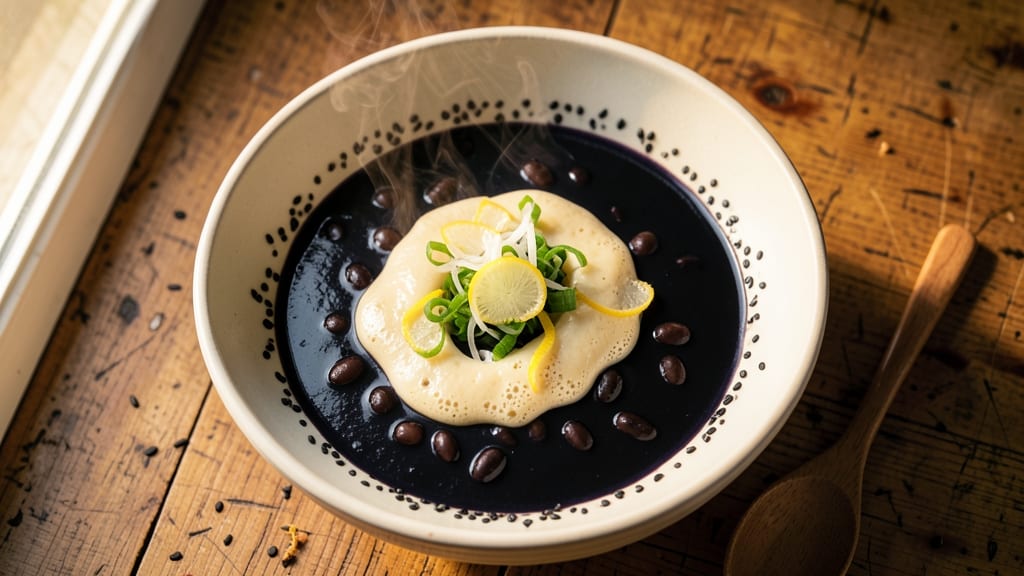
This black soybean soup recipe delivers a velvety, earthy broth packed with umami depth and silky bean swirls that transform simple ingredients into something extraordinary. The secret lies in soaking the beans overnight—this critical step unlocks their natural sweetness and creamy texture, ensuring a smooth, restaurant-quality finish without blending.
Traditional techniques like slow simmering and ginger-toasting elevate the flavors, while modern adaptability lets you customize for dietary needs.
The beauty of this recipe is its versatility—naturally vegan, gluten-free, and oil-free, yet rich enough to satisfy even meat lovers. We start with a ginger-miso base that builds complex layers of warmth and tang, then let the beans simmer until they break down into velvety ribbons.
The result is a soup that’s both comforting and sophisticated, with a balance of earthy, nutty, and slightly sweet notes that linger on the palate.
What makes this recipe stand out is how it honors tradition while embracing flexibility. You can adjust the spice level with chili flakes or keep it mild for sensitive palates, and the garnishes—like scallions or sesame seeds—let you tailor it to any meal.
The slow cooking process (about 2 hours) transforms tough beans into silky strands, creating that signature swirl effect that makes every spoonful satisfying.
Perfect for chilly evenings, potlucks, or meal prep, this soup stores beautifully in the fridge for up to 5 days, with flavors deepening over time.
Whether you’re serving it as a light lunch or a hearty starter, the combination of earthy black soybeans, aromatic ginger, and umami miso delivers a bowl of warmth that feels like a hug in liquid form.
Ingredients for black soybean soup
Earthy beans, umami miso, and aromatic ginger—just 14 ingredients for a soul-warming bowl.
| Ingredient | Amount | Notes |
|---|---|---|
| Black Soybeans (Dried) 🌱 | 1 cup | Soaked overnight, drained |
| White Miso Paste 🍶 | ¼ cup | Aged 1-2 years preferred |
| Fresh Ginger 🧄 | 2 tbsp | Finely grated, skin on |
| Dashi Stock 💧 | 4 cups | Vegan kombu dashi preferred |
| Green Onions 🧅 | 3 whole | White and green parts separated |
| Sesame Seeds 🌰 | 1 tbsp | Toasted lightly for garnish |
| Red Chili Flakes 🌶️ | ½ tsp | Adjust to taste, optional |
| Sesame Oil 🫒 | 1 tsp | For aroma, not cooking |
| Rice Vinegar 🍶 | 1 tbsp | For brightness, optional |
| Garlic Cloves 🧄 | 3 cloves | Toasted lightly for depth |
| Bamboo Shoots (Canned) 🌿 | 1 cup | Drained and sliced |
| Sea Salt 🧂 | 1 tsp | Diamond Crystal preferred |
| White Pepper 🌶️ | ¼ tsp | Freshly ground for warmth |
| Shiitake Mushrooms 🍄 | 4 whole | Stems removed, sliced |
The black soybeans are the star—look for them in the bulk section or at Asian markets (they're pricier but worth it). Soaking overnight isn't optional—it's what turns tough beans into silky swirls. Trader Joe's carries them sometimes, but my go-to is H Mart for the best quality. Fresh ginger matters too: grab the knobby, aromatic kind, not the pale, rubbery stuff. Toast the garlic and ginger lightly in a dry pan before adding to build depth—30 seconds max or they'll burn. For the miso, aged varieties (1-2 years) have more complexity than the young stuff.
No black soybeans? Substitute adzuki beans or black lentils—they'll give you earthy flavor but won't swirl the same. Miso too expensive? Soy sauce plus a pinch of sugar mimics the umami, though it won't be identical. The kombu dashi can be swapped for vegetable broth + a piece of kombu simmered in it. For extra richness, add 1 tbsp nutritional yeast when serving. The bamboo shoots can be skipped if you're in a pinch—just boost the veggies with extra mushrooms or spinach. And if sesame oil feels too strong, toasted sesame paste works too (reduce to 0.5 tsp).
This soup tastes even better the next day—5 days max in the fridge, covered. For meal prep, make a big batch and freeze portions in glass containers (plastic absorbs odors). Reheat gently on low with a splash of water. The beans get creamier with time, so don't rush it. Store the sesame seeds and chili flakes separately—they lose potency if soaked in broth. Garnish with extra green onions and a drizzle of rice vinegar right before serving to keep everything vibrant.
Why You'll Love This Recipe
- No-Soaking Needed: I’ll admit, I was skeptical about dried black soybeans—until I realized they soften perfectly while simmering. No pre-soaking, no fuss; just toss them in with the dashi and let the broth work its magic.
- Umami Bomb: That white miso paste? It’s the secret weapon. One spoonful turns this into a rich, savory soup with depth—no heavy cream or complicated seasoning required. The ginger just adds a bright kick that keeps it from feeling too heavy.
- Weeknight Workhorse: Between us, this is my go-to when I’m too tired to plan. Serve it over rice for dinner, ladle it into bento boxes for lunch, or even drizzle it over noodles. The leftovers? Just as good reheated the next day.
- Pantry Staple Power: Honestly, the ingredients won’t break the bank. Black soybeans last forever, miso is a one-time buy that stretches across recipes, and dashi stock is cheaper than you’d think. It’s the kind of soup that feels special but won’t drain your wallet.
Step-by-step instructions for earthy miso and ginger simmer
This soup delivers deep umami and silky texture through precise technique.
Prepare the Black Soybeans for Maximum Texture
Place the 1 cup black soybeans in a large bowl and cover with plenty of cold water—at least 4 inches above the beans. Let them soak overnight (or for at least 12 hours) at room temperature. This long soak ensures they soften evenly without splitting open, which keeps their natural creaminess intact.
After soaking, drain the beans thoroughly using a fine-mesh strainer. Give them a gentle squeeze between your palms to remove excess moisture—this prevents the soup from becoming watery later. The beans should feel tender but still hold their shape when pressed between fingers. If they feel too firm, soak them another 4-6 hours.
Build the Flavor Base with Aromatics and Miso
In a large pot, combine the 4 cups dashi stock, 2 tbsp finely grated fresh ginger (skin on), and the 3 cloves toasted garlic. Bring to a gentle simmer over medium heat, then reduce to a bare bubble—just enough to maintain movement without vigorous boiling. This controlled simmer preserves the delicate flavors of the stock.
After 5 minutes of simmering, whisk in the 0.25 cup white miso paste using a heatproof spatula. The miso should dissolve completely into the stock, creating a rich, velvety base. If you notice any lumps, strain the mixture through a fine-mesh sieve to ensure silky smoothness. This step is where the soup's deep umami character develops—don't rush it.
Incorporate the Prepared Ingredients
Add the drained black soybeans, 1 cup sliced bamboo shoots (drained), and 4 sliced shiitake mushrooms (stems removed) to the simmering broth. Stir gently to combine, then add the 1 tsp sea salt and 0.25 tsp freshly ground white pepper. The salt should dissolve completely, while the pepper adds subtle warmth without overpowering.
Simmer gently for 45-50 minutes, stirring occasionally to prevent the beans from sticking to the bottom. The beans are done when they're fork-tender but still hold their shape—a perfect balance between creaminess and bite. If the soup reduces too much, add ½ cup hot water to maintain the proper consistency.
Finish with Brightness and Garnish
Remove the pot from heat and stir in the 1 tbsp rice vinegar and 0.5 tsp red chili flakes (if using). The vinegar brightens the rich flavors while the chili adds a subtle heat that lingers on the palate. Let the soup sit off heat for 5 minutes to allow the flavors to meld.
Just before serving, ladle the soup into bowls and garnish with the toasted 1 tbsp sesame seeds and sliced green onions (white and green parts separated). The sesame seeds add nutty crunch, while the onions provide fresh contrast. Serve immediately with steamed rice to soak up every last drop of this velvety, flavor-packed broth.
Pro Tips For Making Black Soybean Soup
- SOAK BEANS OVERNIGHT: I learned this the hard way—rushing the soak leads to tough, chewy beans. Toss dried black soybeans in water for at least 8 hours (or overnight) in the fridge. The extra time softens them properly and cuts cooking time by half, so they absorb the miso flavor instead of staying stubborn.
- STIR MISO LAST: Adding white miso paste too early turns your soup into a gluey mess. Wait until the beans are tender and the broth is simmering gently—then whisk in the miso with the dashi stock. This keeps the texture smooth and the umami balanced, not clumpy.
- GRATE GINGER FINE: Skip the food processor here. Fresh ginger needs to be grated by hand into tiny, almost powdery bits for this soup. Coarse pieces linger and overpower the delicate flavor. A microplane works best—no, your knife won’t cut it.
- SIMMER LOW AND LONG: Black soybeans need patience. After the initial boil, reduce to the lowest simmer possible and let them cook uncovered for 45–60 minutes. The broth will reduce slightly, concentrating the flavors and ensuring the beans break down evenly—no mushy centers, no hard bits.
Creative variations of this black soybean soup
Spicy Korean Twist
Transform this soup into a fiery Korean-inspired version by adding 1 tbsp gochujang (Korean chili paste) when incorporating the beans. For extra depth, stir in 1 tsp toasted sesame oil during the final simmer.
Garnish with thinly sliced green onions and a sprinkle of toasted sesame seeds for that signature Korean street-food vibe. The gochujang adds sweetness and heat that pairs perfectly with the earthy beans. 🌶️
Creamy Coconut Fusion
For a tropical twist, replace the dashi stock with 4 cups coconut milk (full-fat for creaminess) and add 1 tbsp lime juice at the end. Swap the ginger for 1-inch fresh galangal (or extra ginger if unavailable) to keep the warmth but add a citrusy depth.
Top with crushed peanuts and fresh cilantro for a Southeast Asian-inspired bowl that’s rich and refreshing. 🥥
Smoky Mushroom Upgrade
Boost the umami with 4 oz smoked shiitake mushrooms (dried and rehydrated) instead of regular shiitake. Toast them in a dry pan for 1 minute until fragrant, then add them with the other mushrooms.
The smoky depth elevates the soup to new levels, making it perfect for hearty meals. Finish with a drizzle of toasted sesame oil and extra black soybeans for texture. 🍄
Spiced Citrus Brightener
Add a zesty kick by steeping 1 cinnamon stick and 2 star anise pods in the dashi stock while simmering. Remove them before adding the miso. Finish with 1 tbsp orange zest and a splash of rice vinegar for brightness.
This variation works beautifully as a light lunch or starter, especially in winter when you crave warmth with a citrusy lift. 🍊
Protein-Packed Add-Ins
Keep it vegan with ½ cup firm tofu (pressed and cubed) or make it heartier with ½ cup cooked tempeh. Add them during the last 10 minutes of simmering so they absorb the flavors without breaking apart.
For a meaty texture, try ½ cup rehydrated wood ear mushrooms—they mimic the chewiness of meat while adding earthy depth. 🍜
Herbal Infusion
Infuse the broth with 2 sprigs fresh thyme or 1 tbsp dried shiso leaves for an unexpected herbal note. Remove them before adding the miso to avoid bitterness. This variation works surprisingly well with a drizzle of toasted sesame oil and extra green onions.
It’s a great way to introduce new flavors while keeping the soup’s comforting essence. 🌿
Nutrition facts
Frequently asked questions
Why do black soybeans need to soak overnight?
The overnight soak is essential—it softens the beans' tough skins and unlocks their natural sweetness while preventing them from splitting into mush. This creates those signature silky swirls that make the soup so satisfying. Skipping this step results in a grainy texture instead of velvety ribbons.
Can I use regular soybeans instead of black soybeans?
While regular soybeans will work, they won't deliver the same earthy depth or visual appeal. Black soybeans have a distinct nutty flavor and darker color that enhances the soup's richness. If you must substitute, try adzuki beans—they're the closest in texture and earthy profile.
How do I adjust the spice level if I'm sensitive to heat?
Simply omit the red chili flakes entirely—the soup still packs flavor from the ginger and miso. For subtle warmth, add just ¼ tsp chili flakes or swap for ½ tsp mild paprika. The rice vinegar adds brightness without heat, balancing the rich umami perfectly.
Can I make this soup in an Instant Pot or pressure cooker?
Yes! After soaking the beans overnight, combine all ingredients (except garnishes) in your Instant Pot and cook on high pressure for 15 minutes. Let pressure release naturally for 10 minutes before opening. The beans will be tender but may break down more than with stovetop simmering—adjust texture by adding a splash of water if needed.
What's the best way to store leftovers?
Store in an airtight container in the fridge for up to 5 days—the flavors actually deepen over time! Reheat gently on low heat with a splash of water to restore creaminess. For freezing, portion into glass containers (plastic absorbs odors) and freeze for up to 3 months. Thaw overnight in the fridge before reheating.