
Main Courses
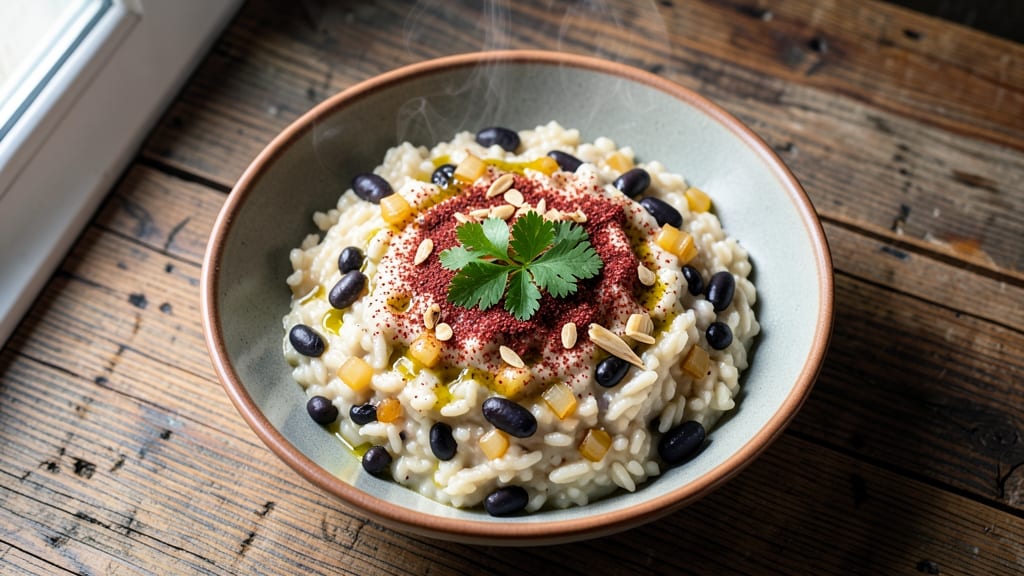
This black bean risotto recipe transforms a classic Italian dish into a hearty, plant-based masterpiece with smoky depth and earthy richness—perfect for vegans and flavor seekers alike.
The secret lies in balancing Arborio rice with black beans for creamy texture and protein-packed satisfaction, while constant stirring and gradual broth additions create that signature al dente finish.
I developed this version after years of perfecting risotto techniques, ensuring every bite delivers the same luxurious mouthfeel without dairy or meat.
The foundation starts with toasted Arborio rice, which unlocks nutty flavors as it absorbs warm vegetable broth in stages. Black beans, pre-cooked and seasoned with smoked paprika, add substantial body and smoky warmth, while garlic and onion build the aromatic base.
Unlike traditional risotto, this version relies on vegetable broth and a touch of nutritional yeast for that unmistakable umami richness that keeps everyone asking for seconds.
By the final stir, you’ll have creamy yet distinct rice grains with tender black beans woven throughout—a dish that’s restaurant-worthy but simple to execute. The smoky paprika and toasted spices create a depth that pairs beautifully with crusty bread, a simple arugula salad, or roasted vegetables.
What makes this risotto truly special is how it satisfies both texture cravings (creamy yet al dente) and nutritional needs (high-protein, fiber-rich, and completely plant-based).
Ready in 30 minutes, this recipe proves vegan cooking can be just as indulgent as the original. The key is patience—constant stirring, gradual broth additions, and off-heat resting—but the result is worth every minute. Let’s get cooking!
Ingredients for black bean risotto
Toasted Arborio rice meets smoky black beans for a vegan risotto with restaurant-quality texture and depth.
| Ingredient | Amount | Notes |
|---|---|---|
| Arborio Rice 🍚 | 1 ½ cups | Unrinsed for optimal starch release |
| Black Beans 🫘 | 1 ½ cups | Cooked, drained, and seasoned |
| Vegetable Broth 💧 | 4 cups | Low-sodium, homemade preferred |
| Yellow Onion 🧅 | 1 whole | Finely diced, about 1 cup |
| Garlic Cloves 🧄 | 4 cloves | Minced, for aromatic base |
| Smoked Paprika 🌶️ | 1 tbsp | High-quality for smoky depth |
| Nutritional Yeast 🧀 | ¼ cup | For umami richness, finely grated |
| Extra-Virgin Olive Oil 🫒 | ½ cup | Lightly toasted for nutty flavor |
| White Wine 🍷 | ½ cup | Dry, vegan-friendly variety |
| Fresh Thyme Leaves 🌿 | ¼ cup | Chopped, or 1 tbsp dried |
| Salt 🧂 | 1 ½ tsp | Diamond Crystal preferred |
| Ground Black Pepper 🌶️ | ½ tsp | Freshly cracked preferred |
| Lemon Zest 🍋 | 1 tbsp | Brightens final flavor profile |
The Arborio rice is the star here—Carolina Gold or Calrose varieties work best for their high starch content. Whole Foods or specialty grocery stores carry these premium options, but any Arborio will do in a pinch. The black beans should be pre-cooked and drained—canned works, but rinse them well to remove excess sodium. For the vegetable broth, Homemade is ideal, but low-sodium store-bought brands like Pacific Foods or Imagine save time. Smoked paprika is non-negotiable for that authentic depth—Penzeys or La Boîte offer top-tier options, but the bulk section at Trader Joe's is a budget-friendly alternative.
No Arborio rice? Carnaroli or Vialone Nano are excellent substitutes, though Arborio remains the gold standard. Running out of white wine? Substitute with extra vegetable broth—just reduce the total liquid by 0.5 cup to maintain texture. Fresh thyme unavailable? Dried thyme at one-third the amount works, though the flavor will be less vibrant. For the nutritional yeast, Bob's Red Mill or Bragg are reliable brands—ensure it's fortified for that cheesy umami kick. Lemon zest can be omitted if you prefer a more neutral profile, but it adds a bright contrast to the smoky, earthy flavors.
Store pre-toasted Arborio rice in an airtight container for up to 6 months—it keeps beautifully. The cooked risotto reheats beautifully, but add a splash of broth to restore creaminess. Portion into containers with a layer of olive oil on top to preserve freshness for 4-5 days in the fridge or 3 months frozen. For best results, let the risotto rest 5 minutes off heat before serving—this allows the starches to fully absorb and creates that signature creamy texture.
Why You'll Love This Recipe
- Here’s what sold me: that deep, earthy flavor from black beans and garlic cloves? It’s ridiculously good. The beans add a meaty richness without needing extra protein, and the Arborio rice soaks up all the savory broth like a sponge. Honestly, I’ve made this for people who “don’t like beans,” and they’ve come back for seconds.
- I’ll be real: Arborio rice isn’t cheap, but black beans and vegetable broth stretch it into something hearty. One batch feeds my family of four for two meals, and the leftovers? Even better the next day—just a splash of broth to loosen it up. It’s the kind of recipe that makes grocery day feel like a win.
Step-by-step instructions for black bean risotto
This method delivers a creamy, flavor-packed risotto where smoky depth meets earthy bean richness.
Toast the Arborio Rice for Nutty Depth
Heat 0.5 cup extra-virgin olive oil in a heavy-bottomed pot over medium heat until shimmering. Add the 1.5 cups unrinsed Arborio rice and stir constantly for 2-3 minutes until the grains become translucent at the edges and release their nutty aroma.
This toasting step is crucial—it develops the rice's natural starches and prevents a bland final texture. Watch carefully as the rice toasts; you want it to turn slightly golden but not brown. If it starts to smell burnt, reduce the heat immediately. The rice should coat the bottom of the pot in a thin, even layer during toasting.
Sauté Aromatics and Deglaze with Wine
Add the finely diced yellow onion and minced garlic cloves to the pot, stirring for 1-2 minutes until softened but not colored. Sprinkle in the 1 tbsp smoked paprika and stir for 30 seconds until fragrant.
Pour in the 0.5 cup white wine and stir vigorously, scraping up any browned bits from the bottom of the pot. Let the wine simmer until completely evaporated—this deglazing step builds flavor depth. The rice should begin to absorb the liquid but shouldn't stick to the pot. If it does, add 1-2 tablespoons vegetable broth to maintain moisture.
Cook the Risotto with Methodical Stirring
Begin adding the 4 cups vegetable broth 1 ladle at a time, stirring frequently after each addition. The rice should simmer gently, absorbing each ladle before adding the next. This process takes 18-20 minutes total—don't rush it.
After 12 minutes, stir in the 1.5 cups cooked black beans and 0.25 cup nutritional yeast. The beans will break down slightly, creating a creamy texture while adding protein. Continue adding broth until the rice reaches al dente texture—it should be tender but still have a slight bite with a creamy coating.
Finish with Thyme and Lemon Brightness
When the rice is nearly tender, stir in the 0.25 cup chopped fresh thyme leaves and 1 tbsp lemon zest. Season with 1.5 tsp salt and 0.5 tsp ground black pepper, tasting as you go. The lemon zest should brighten the dish while the thyme adds herbal complexity.
Remove from heat and let the risotto sit for 2 minutes before serving. The residual heat will finish cooking the rice while allowing the flavors to meld. For extra creaminess, stir in 1-2 tablespoons reserved broth if needed. Serve immediately with additional lemon zest and fresh thyme sprigs.
Pro Tips For Making Black Bean Risotto
- TOAST THE BEANS FIRST: I learned this the hard way—raw black beans in risotto turn it into a mushy, flavorless swamp. Drain and rinse them, then dry in a skillet over medium heat for 3-4 minutes until they darken slightly. This concentrates their flavor and prevents the rice from turning into glue.
- STIR LIKE YOU MEAN IT: Risotto’s magic happens in the stirring, but most people treat it like a lazy stir-fry. Use a wooden spoon and work the rice in quick, aggressive circles against the pot’s sides every 30 seconds—this releases starch and builds that creamy texture. (Yes, even if you’re impatient like me.)
- RESERVE THAT BROTH: Skimping on broth is how you end up with dry risotto. Measure out 1.5 cups before you start cooking and keep it simmering in a separate pot. Cold broth works better than lukewarm, and you’ll need every drop to reach that perfect al dente finish.
- SAUTÉ ONIONS UNTIL GOLDEN: My grandmother swore by this, and she was right: cook the onions until they’re deep golden, not just soft. That means 8-10 minutes over medium-low heat, stirring occasionally. It’s the base flavor for everything else, and skipping this step makes the dish taste flat. (I know, I know—it takes longer, but trust the process.)
Creative variations of these flavors
Smoky Chipotle Twist
Swap the smoked paprika for 1 tbsp chipotle powder (adjust to taste) and add 1 diced chipotle pepper in adobo during the toasting step. This adds a deep, smoky heat that pairs perfectly with the beans.
I like to finish with ½ cup avocado slices and a drizzle of lime crema (blend ½ cup vegan sour cream with 1 tbsp lime juice and 1 tbsp cilantro) for a Mexican-inspired fusion. 🌶️
Creamy Mushroom Fusion
Sauté 8 oz cremini mushrooms (finely chopped) with the onions and garlic for extra umami. Replace half the vegetable broth with 4 cups mushroom broth and stir in 2 tbsp white miso paste during the final 5 minutes of cooking.
Top with toasted walnuts and fresh parsley for a rich, earthy variation. This version feels decadent yet remains vegan.
Spicy Cajun-Inspired
Add 1 tsp Cajun seasoning (like Tony Chachere’s) with the smoked paprika, and stir in ½ cup diced bell peppers during the sauté step. Finish with 1 tbsp hot sauce (like Crystal or Louisiana) and a sprinkle of green onions.
Serve with a side of cornbread for a Southern-inspired twist that’s packed with bold flavors. 🔥
Lemon-Herb Brightness
Boost the lemon zest to 2 tbsp and add 1 tbsp fresh basil (chopped) with the thyme. Replace half the black beans with ½ cup cooked lentils for extra protein.
This lighter version shines with a white wine reduction drizzle—simmer ½ cup white wine with 1 tbsp vegan butter> until syrupy, then drizzle over the risotto. Perfect for spring or summer meals.
Coconut Curry Risotto
Replace the vegetable broth with 4 cups coconut milk> and add 1 tbsp red curry paste> with the smoked paprika. Stir in ½ cup shredded coconut> and 1 tbsp lime juice> at the end.
Top with toasted coconut flakes> and cilantro> for a tropical-inspired dish that’s creamy, fragrant, and utterly satisfying. 🌴
Protein-Packed Lentil Version
Swap the black beans for 1.5 cups cooked green or brown lentils> and add 1 tbsp soy sauce> during the final 5 minutes of cooking. The lentils hold their shape better, creating a heartier texture.
Finish with 1 tbsp sesame seeds> and scallions> for a savory, umami-rich twist that’s perfect for a weeknight dinner. 💪
Nutrition facts
Frequently asked questions
Why do I need to toast the Arborio rice?
Toasting releases the rice's natural starches, which create a creamy texture as they absorb the broth. This step also adds nutty depth that prevents bland flavor. Skipping it results in a gummy, underdeveloped risotto—don't rush this crucial first step!
Can I use instant rice instead of Arborio?
Not recommended! Instant rice lacks the high starch content needed for creamy risotto. Arborio's slow absorption creates the signature texture. If you're short on time, try Carnaroli rice—it's the next best option for texture, though it costs more.
How do I prevent the risotto from getting mushy?
Add broth 1 ladle at a time and stir constantly—never let the rice sit in liquid. Remove from heat 1-2 minutes early (it finishes cooking off-heat) and rest for 2 minutes before serving. This resting time lets starches absorb properly.
What's the best way to reheat leftovers?
Reheat gently in a pot with 1-2 tablespoons broth over low heat, stirring frequently. Microwaving dries it out—always add moisture first. For best results, store in airtight containers with a layer of olive oil on top to preserve freshness.
Can I make this risotto gluten-free?
Yes! Use gluten-free Arborio rice substitutes like sushi rice (though texture differs) or certified gluten-free Arborio brands. Ensure your broth, nutritional yeast, and smoked paprika are also gluten-free. The method remains identical—just monitor cooking times closely.