
Side Dishes
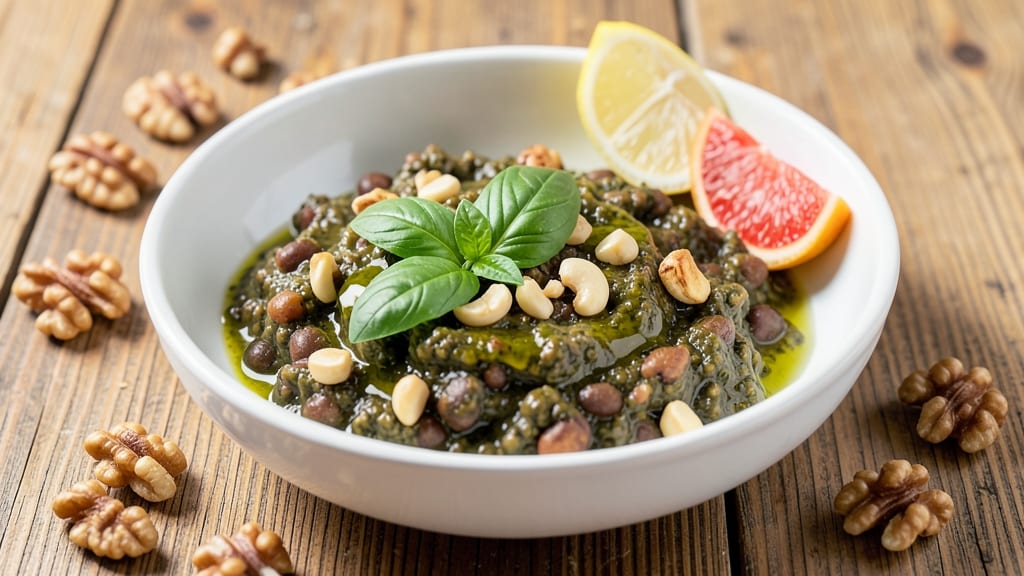
This vegan black bean pesto transforms ordinary meals into vibrant, protein-packed dishes with just a handful of ingredients. The rich texture comes from blending black beans, toasted nuts, and fresh basil—no dairy or cheese needed.
I developed this recipe after realizing how versatile black beans could be beyond tacos and salads, and it’s now my go-to for adding depth to pasta, sandwiches, and dips.
The key to a perfect black bean pesto lies in balancing flavors: the earthiness of black beans, the nuttiness of walnuts or cashews, and the bright acidity of lemon juice. A splash of olive oil keeps it creamy while garlic and red pepper flakes add layers of complexity.
Unlike traditional pesto, this version stays fresh for days and packs a protein punch, making it ideal for vegan diets or anyone looking to reduce dairy.
What sets this pesto apart is its adaptability—spread it on toast for a hearty breakfast, swirl it into soups for extra richness, or use it as a dip with veggie sticks.
The texture is chunky yet smooth, with just enough bite from the beans and herbs to keep every bite interesting. It’s also a great way to use up leftover black beans, turning them into something exciting instead of tossing them.
Storage is simple: keep it refrigerated in an airtight container for up to 5 days, or freeze it for longer shelf life. For best results, let it sit at room temperature for 10 minutes before using—this allows the flavors to meld and the texture to soften slightly.
Ready to elevate your meals with this nutty, basil-infused twist on a classic? Let’s make it.
Ingredients for black bean pesto
Nine ingredients blend into a vibrant, protein-packed vegan pesto that’s perfect for pasta, sandwiches, or dips.
| Ingredient | Amount | Notes |
|---|---|---|
| Canned Black Beans 🌱 | 1 ½ cups | Drained, rinsed, no salt added |
| Fresh Basil Leaves 🌿 | 1 ½ cups | Packed, stems removed |
| Raw Walnuts 🥜 | ½ cup | Toasted for nuttiness |
| Extra-Virgin Olive Oil 🫒 | ½ cup | High quality, fruity |
| Garlic Cloves 🧄 | 3 cloves | Peeled, roughly chopped |
| Lemon Juice 🍋 | 2 tbsp | Freshly squeezed |
| Red Pepper Flakes 🌶️ | ½ tsp | Adjust for heat preference |
| Salt 🧂 | ½ tsp | Sea salt preferred |
| Raw Cashews 🥜 | ¼ cup | Toasted for creaminess |
The black beans are the secret star here—canned, no-salt-added works perfectly, but if you’ve got cooked beans from scratch, use those instead. Fresh basil is non-negotiable for that bright, herbal punch, but if you’re short, cilantro or parsley at half the amount adds a different twist. Walnuts and cashews can be swapped—almonds or pecans work too, though they’ll change the texture slightly. Toasting the nuts in a dry pan for 2-3 minutes brings out their flavor and makes them easier to blend. I grab my nuts from Trader Joe’s or the bulk section at Whole Foods—cheaper and fresher than pre-packaged.
No fresh basil? Dried basil at one-third the amount gets you close, but the texture won’t be the same. Short on walnuts? Sunflower seeds or pumpkin seeds add a different crunch and work surprisingly well. The olive oil is where you shouldn’t skimp—use something you’d drizzle on bread, not the cheap cooking oil. The red pepper flakes are optional but add a nice kick; skip them if you’re sensitive to heat. For extra creaminess, add a splash of unsweetened almond milk while blending. And if you’re using a high-powered blender, you can skip toasting the nuts—just blend them raw for a quicker version.
This pesto keeps beautifully—5 days in the fridge sealed in an airtight container, or 3 months frozen in ice cube trays for single-serving portions. The texture thickens as it chills, so add a splash of water or olive oil when you’re ready to use it. I like to make a double batch and freeze half—it’s perfect for quick meals when I’m in a rush. For best flavor, let it sit at room temperature for 10 minutes before using, so everything melds together. Store it in a glass jar if you can—plastic can absorb flavors over time.
Why You'll Love This Recipe
- Pantry Magic: I swear by this recipe when I forget to buy fresh basil or walnuts—canned beans and frozen garlic work just as well. The texture’s still rich, the flavor’s still bold, and honestly? You’d never know the shortcut.
- Umami Bomb: That walnut-basil-garlic combo? It’s like a flavor party in your mouth. The beans add this deep, earthy punch while the olive oil ties it all together—smooth, herby, and impossible to resist.
- Dinner Party Hack: Spread it on toast for a fancy appetizer, dollop it into pasta for a hearty meal, or mix it into scrambled eggs for a protein boost. It’s my go-to when I need something that feels special but doesn’t require hours of prep.
- Budget Win: A single can of beans and a small bag of walnuts stretch across multiple meals—no wasted ingredients here. Plus, it’s cheaper than buying pre-made pesto, and frankly, this tastes better. (Yes, even on a Tuesday night.)
Step-by-step instructions for black bean pesto
This vibrant pesto comes together faster than you'd think—just blend, taste, and enjoy.
Toast the Nuts for Maximum Flavor
Heat a dry skillet over medium heat. Add the 0.5 cup raw walnuts and 0.25 cup raw cashews together and toast for 3-4 minutes, stirring constantly until they turn a rich golden brown and release their nutty aroma. You want them fragrant but not burned—watch closely as they toast quickly.
Transfer the toasted nuts to a cutting board and let them cool for 2 minutes. While they cool, roughly chop them with a knife—you don't need perfect uniformity here, just small pieces that'll blend smoothly. This step is crucial because toasting deepens the nutty flavor that makes this pesto special.
Pulse the Nuts and Garlic
In a food processor, combine the toasted nuts with the 3 cloves peeled garlic. Pulse 4-5 times until the nuts break down into small crumbs but don't turn into a paste. You want texture here—this creates the perfect balance between creamy and chunky in the final pesto.
Stop and scrape down the sides of the processor bowl with a spatula to ensure everything gets evenly processed. I like to give it a quick sniff at this point—you should smell that toasty nut aroma mixed with garlic's sharp punch. This is the flavor foundation we're building.
Add the Black Beans and Pulse
Add the 1.5 cups drained black beans to the processor. Pulse again 6-8 times until the beans break down into small pieces but still maintain some texture. You're looking for a chunky consistency—not smooth like traditional pesto, but not whole beans either.
The black beans add an earthy depth that pairs perfectly with the basil and nuts. If your processor struggles with the beans, stop and use a spatula to break them up by hand before continuing. This step is where the pesto starts taking on its signature color—deep green with black speckles.
Blend with Basil and Oil
Add the 1.5 cups packed fresh basil leaves and 0.5 cup extra-virgin olive oil to the processor. Pulse 10-12 times until everything comes together into a thick, vibrant paste. Scrape down the sides again to make sure all the basil gets incorporated—you want that fresh, bright basil flavor throughout.
Here's where it gets fun—taste the mixture right now. It should be rich and herby with nutty undertones. If it's too thick, add 1-2 tablespoons more olive oil to loosen it. The texture should be like a thick, vibrant sauce that coats the back of a spoon.
Finish with Seasonings and Adjust
Add the 0.5 tsp salt, 0.5 tsp red pepper flakes, and 2 tbsp lemon juice to the processor. Pulse just 2-3 times to combine—we don't want to over-blend these delicate seasonings. The lemon juice brightens everything up while the red pepper flakes add just a hint of heat.
Taste again and adjust seasoning if needed. You might want more salt, more lemon, or even a pinch more red pepper flakes. Remember, this pesto should taste amazing on its own—like a flavor bomb waiting to be spread. Transfer to a jar and store in the refrigerator for up to 5 days or freeze for longer storage.
Pro Tips For Making Black Bean Pesto
- Drain and Rinse Beans: Fresh basil and walnuts can’t handle the salt bomb hiding in canned beans—even low-sodium ones. Drain, rinse them under cold water, then pat very dry with a towel. Wet beans turn your pesto into a sad, watery paste.
- Toast Walnuts First: Cold walnuts taste bland and release their oils unevenly, making your pesto greasy or bitter. Pulse them raw in a food processor for 10 seconds, then dump them into a dry pan. Toast over medium heat for 3–4 minutes until they smell nutty and golden. Let cool before blending—this prevents the oil from separating.
- Pulse Don’t Blend: Black beans and basil don’t like long marriages. Pulse the beans first in batches until they’re broken down but still chunky, then add the walnuts, garlic, and half the basil. Only blend briefly at the end—you want texture, not a puree. (I learned this after making a single-serving pesto that looked like mud.)
- Add Oil Gradually: The first splash of olive oil should be just enough to coat the blade. Then add it in drizzles while blending, tasting between each. Too much upfront dilutes the flavor; too little later makes it gritty. Aim for a spreadable consistency—like hummus, but with more soul.
Make-ahead tips for this recipe
Prep Ahead for Pasta
Make this pesto 2 days in advance if you're planning to use it on pasta—it develops deeper flavors over time.
Store it in an airtight container in the fridge, and when ready to cook, toss it with 8 oz cooked pasta (I love farfalle or penne) and 1 tbsp olive oil to keep it from sticking.
The pesto will cling beautifully to the pasta, creating a vibrant, protein-rich meal in minutes. 🍝
Freezer-Friendly Portions
Portion the pesto into 1-tablespoon servings using ice cube trays for easy grab-and-go meals. Once frozen, transfer the cubes to a ziplock bag and store for up to 3 months.
Thaw overnight in the fridge or microwave for 10 seconds to soften before using. This works perfectly for quick lunches or as a last-minute sauce for grilled veggies. ❄️
Toast Toppings in Advance
Toast 1 cup of breadcrumbs or ½ cup of panko separately and store them in a sealed container. When ready to use, sprinkle them over soups, salads, or pasta to add crunch.
The toasted breadcrumbs absorb any excess moisture from the pesto, creating a perfect textural contrast. I keep mine in a glass jar with a tight lid to maintain freshness. 🥖
Dip Prep for Parties
Double the recipe and store half in the freezer for future parties. Serve the pesto as a dip with carrot sticks, cucumber slices, and toasted baguette pieces. Arrange everything on a platter and let guests assemble their own dippers.
The pesto stays fresh for hours at room temperature when kept in a cooling tray with ice packs nearby. 🎉
Blend Variations First
Experiment with flavor variations before making the full batch. Try adding 1 tbsp nutritional yeast for a cheesy note or ½ tsp smoked paprika for depth. Store small test batches in mini jars in the fridge to compare flavors.
This way, you can perfect your taste before committing to a larger quantity. 💡
Label for Clarity
Label your stored pesto with the date and flavor notes. Use a permanent marker on a piece of tape wrapped around the jar lid. I include details like "spicy" or "nutty" to remind myself of any adjustments I made.
This helps me quickly identify which batches to use first and keeps my pantry organized. ✨
Nutrition facts
Frequently asked questions
Can I make this black bean pesto without fresh basil?
Yes! Use ½ cup dried basil instead, but expect a slightly different texture and less vibrant flavor. For a similar taste, try ½ cup fresh parsley or cilantro—they add brightness while keeping the creamy consistency. If you're using dried herbs, add them with the nuts and pulse first to distribute them evenly.
How do I adjust the texture if it turns out too thick or too thin?
For a thicker pesto, blend in 1-2 tablespoons of toasted nuts or black beans to add body. If it's too thin, stir in 1-2 teaspoons of olive oil or let it sit uncovered in the fridge for 10-15 minutes to thicken naturally. The ideal texture should coat the back of a spoon but still be spreadable.
What are the best ways to use this pesto beyond pasta?
This versatile pesto works as a sandwich spread (try it on toast with avocado), a soup garnish, or a veggie dip. Mix it into hummus for extra protein, or use it as a marinade for grilled chicken or tofu. It also adds depth to omelets or scrambled eggs—just stir in 1-2 tablespoons at the end of cooking.
Can I substitute cashews or walnuts with another nut?
Swap walnuts or cashews for almonds, pecans, or even sunflower seeds for a different flavor profile. Toast them first to enhance their nuttiness. If you're using seeds, add 1 extra tablespoon of olive oil to compensate for their lower fat content. The texture may become slightly grainier, but it’ll still taste delicious.
Why does my pesto taste bland after storing it?
Flavor often deepens after 24 hours in the fridge, but if it tastes flat, add a splash of lemon juice or vinegar (start with ½ teaspoon) to brighten it. A pinch of salt or red pepper flakes can also help. If stored properly in an airtight container, this pesto should stay flavorful for up to 5 days—just give it a taste and adjust before using.