
Soups & Stews
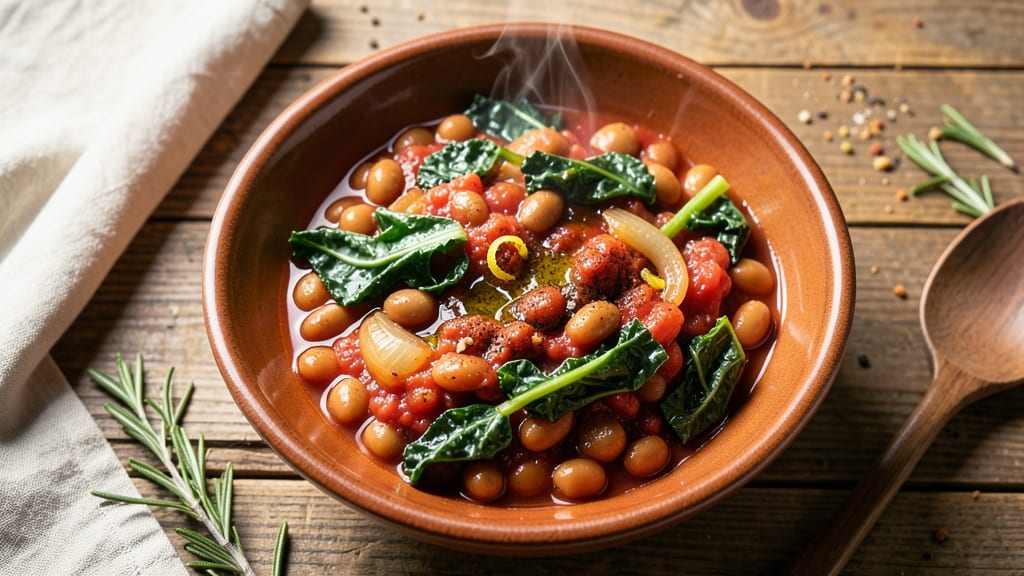
This bean and kale stew recipe delivers hearty, smoky comfort in every spoonful—no meat required. 🌱 The secret lies in slow-braised tomatoes and aromatic spices that transform humble beans and kale into a restaurant-worthy bowl of warmth.
Perfect for chilly evenings or meal prep, this one-pot wonder simmers into rich, velvety perfection without skimping on flavor. What sets this stew apart is the deep, caramelized tomato base that forms the foundation, while smoked paprika and cumin add layers of earthy warmth.
The kale wilts just enough to soak up all that savory goodness, and the beans stay tender yet hold their shape—no mushy texture here. It’s the kind of dish that tastes even better the next day, making it ideal for busy weeks.
By the time you’re done, you’ll have a steaming pot of stew with a glossy, inviting surface and aromas that fill your kitchen. The texture is where it truly shines: creamy from the beans, crisp-tender from the kale, and thickened just enough to coat every spoonful.
Serve it with crusty bread to soak up every last drop, or let it stand alone as a satisfying plant-based main. The best part? This recipe comes together in under an hour with minimal prep, yet it feels like a labor of love. No fancy techniques—just good ingredients and patience.
Let’s get cooking!
Ingredients for bean and kale stew
Pantry staples plus a handful of fresh ingredients—this stew comes together faster than you'd think.
| Ingredient | Amount | Notes |
|---|---|---|
| Dried Cannellini Beans 🌱 | 1 ½ cups | Rinsed if canned, or soaked overnight |
| Fresh Kale 🥬 | 4 cups | Chopped, stems removed |
| Crushed Tomatoes 🍅 | 2 cups | San Marzano preferred |
| Onion 🧅 | 1 whole | Diced, yellow or red |
| Garlic Cloves 🧄 | 4 cloves | Minced, fresh preferred |
| Smoked Paprika 🌶️ | 1 tbsp | For deep smoky flavor |
| Ground Cumin 🌿 | 1 tsp | Toasted for warmth |
| Vegetable Broth 💧 | 2 cups | Low-sodium preferred |
| Extra-Virgin Olive Oil 🫒 | ¼ cup | For richness |
| Lemon Juice 🍋 | 1 tbsp | Freshly squeezed |
| Salt 🧂 | 1 tsp | Kosher or sea salt |
| Black Pepper 🌶️ | ½ tsp | Freshly ground |
| Bay Leaf 🌿 | 1 whole | Removed before serving |
| Fresh Thyme 🌿 | ¼ cup | Chopped, or dried at 1/3 amount |
The beans are the heart of this stew, so don’t skimp on quality. Canned Cannellini beans (rinsed) work fine, but if you’ve got time, soaking dried overnight gives the best texture. I always grab the no-salt-added kind from the bulk bins at Whole Foods—they hold up better during cooking. For the kale, curly green or lacinato both work, but avoid anything wilted or yellow. Fresh thyme is ideal, but dried works in a pinch (just use a third the amount). The tomatoes? San Marzano is worth the splurge for that sweet, rich flavor—no watery aftertaste here.
No smoked paprika? Regular paprika plus a pinch of liquid smoke gets you close, but it’s not the same. Running low on thyme? Fresh oregano or marjoram adds a similar earthy note. The crushed tomatoes can be swapped for whole peeled tomatoes (just crush them yourself)—just watch for any liquidy cans. And if you’re short on broth, water plus a bouillon cube works, but it’ll taste less complex. The lemon juice is key for brightness, so don’t skip it—frozen lemon juice from Trader Joe’s works in a pinch if you don’t have fresh.
This stew only gets better with time, so make a big batch—it reheats beautifully. Keeps in the fridge for 4-5 days and freezes for up to 3 months. I like to portion it into containers with a side of crusty bread for easy lunches. The flavors meld even more overnight, so if you’ve got leftovers, reheat gently on the stove with a splash of water to loosen it up. Store the broth separately if you want to use it for another recipe—it’s packed with flavor!
Why You'll Love This Recipe
- No-Soaking Needed: I’ll admit, I used to dread soaking beans—until I discovered these dried cannellinis just work when simmered long enough. Toss them in cold water with the onions and garlic, and by the time the tomatoes deepen in color, they’re tender and creamy without a single extra step.
- Garlic-Kissed Depth: That moment when you pull the pot off the stove and the kitchen smells like a garlic festival? Yes. The cloves here aren’t just background players—they caramelize into the tomatoes, turning the stew into something rich and layered, with just enough bite to keep it interesting.
- Leftover Luxury: Between us, this stew only gets better after day two. The kale softens into silky strands, the beans absorb all the flavors, and reheating it feels like a warm hug. I make a double batch on Sundays because by Wednesday, I’m craving it again—no takeout needed.
- Budget Meal Hero: Honestly, I could feed my whole family for under $10 with this. Cannellinis are a steal, kale’s cheap at farmers’ markets, and a single can of tomatoes stretches into three servings. It’s the kind of dish that makes grocery budgets breathe easier while still tasting like you slaved over it.
Step-by-step instructions for bean and kale stew
This one-pot wonder delivers hearty, smoky goodness with minimal effort.
🍳 Step 1: Sauté Aromatics Until Fragrant
Heat the 0.25 cup extra-virgin olive oil in a large Dutch oven over medium heat. Add the 1 whole diced onion and cook for 5-6 minutes until softened and translucent. Here's the thing—don't rush this step. You want the onions to become sweet and caramelized before moving forward.
Add the 4 cloves minced garlic and cook for 30 seconds until fragrant. Immediately stir in the 1 tbsp smoked paprika and 1 tsp toasted ground cumin. You'll notice the spices release their aromas instantly—this builds the stew's deep, smoky foundation. Let them cook for 1 minute until the paprika stops popping and the cumin smells toasty.
🍳 Step 2: Build the Tomato Base
Pour in the 2 cups crushed tomatoes and stir well to combine with the spices. Let the mixture simmer for 5 minutes until slightly thickened. This reduces the acidity and concentrates the tomato flavor. Add the 2 cups vegetable broth, 1 whole bay leaf, 1 tsp salt, and 0.5 tsp black pepper, stirring to dissolve the salt completely.
Bring the mixture to a gentle boil, then reduce heat to low and add the 1.5 cups dried cannellini beans. Here's where it gets important: if you're using canned beans, make sure they're well-rinsed first. The beans will expand significantly, so don't be tempted to add more liquid later—this stew needs to thicken properly as it cooks.
🥘 Step 3: Simmer Until Beans Are Tender
Cover the pot and let the stew simmer for 45-50 minutes on low heat. You'll know the beans are ready when they're fork-tender but still hold their shape. I like to check at the 40-minute mark—press a bean gently with a fork. If it crushes easily, they're done. If not, give them another 5-10 minutes.
About 15 minutes before the beans are ready, stir in the 0.25 cup fresh thyme and 1 tbsp lemon juice. The thyme adds herbal brightness while the lemon juice cuts through the richness of the beans and tomatoes. This timing ensures the flavors meld perfectly without overpowering the dish.
🍳 Step 4: Wilt the Kale and Finish
Add the 4 cups chopped kale to the pot and stir gently to distribute evenly. Cover and cook for 5-7 minutes until the kale wilts completely. You want it to soften but still retain some texture—it should look vibrant green, not mushy. If the stew looks too thick, add ¼ cup water to loosen it slightly.
Remove the whole bay leaf before serving—it's done its job and can be a bit tough. Taste and adjust seasoning if needed. The stew should be rich, smoky, and slightly tangy with a perfect balance of earthy beans, bright kale, and aromatic spices. Serve hot with crusty bread to soak up every last drop of that delicious broth!
Pro Tips For Making Bean And Kale Stew
- SOAK BEANS 8 HOURS (OR OVERNIGHT): I learned this the hard way—skipping the long soak leaves cannellini beans tough no matter how long you simmer. Use 4 cups water per cup beans, cover, and let them sit. The next morning, they’ll be tender, flavorful, and ready to cook down without splitting into mush.
- SAUTE ONIONS UNTIL GOLDEN: Don’t rush this step—cook the onions over medium heat until they’re deep golden, not just soft. I used to walk away too soon, and the stew always tasted flat. Five minutes of patience here makes the whole dish richer.
- STRIP KALE STEMS FIRST: Kale stems are tough and take forever to break down. Pull them off before chopping the leaves, then slice the stems into thin matchsticks. They’ll soften eventually, but the leaves stay tender and the texture stays balanced.
- ADD TOMATOES LATE: Dump crushed tomatoes in too early, and they’ll turn the stew into a watery sauce. Wait until the beans are almost tender—about 45 minutes in—then stir them in. This keeps the stew thick and lets the tomato flavor shine without thinning everything out.
Essential equipment for great bean and kale stew
Dutch Oven
A 6-quart Dutch oven is my go-to pot for this stew because it creates the perfect balance of heat distribution and depth. The thick base ensures even cooking, while the tall sides prevent spills during stirring.
I recommend a Lodge cast iron Dutch oven—it retains heat beautifully and adds a subtle iron-rich depth to the flavor. If you don’t own one, a heavy-bottomed stainless steel pot works too, but monitor the heat more closely to avoid scorching.
For smaller batches, a 3-4 quart pot suffices, but you’ll need to adjust cooking times slightly—beans take a few extra minutes in smaller vessels. If you’re cooking for a crowd, consider a 7-8 quart Dutch oven or even a slow cooker (more on that below).
The key is finding a pot with enough depth to handle the beans as they expand.
Immersion Blender
While this stew doesn’t require blending, an immersion blender comes in handy if you want to create a smooth tomato base for a creamier texture. Simply blend a portion of the stew before adding the beans, then stir it back in.
I like the Ninja Foodi Immersion Blender—it’s powerful enough to handle thick stews without overheating. If you don’t have one, a regular blender works, but let the stew cool slightly first to avoid splattering.
Pro tip: If you’re making this stew ahead, blend a small portion of the cooked broth separately and stir it back in when reheating. This adds a velvety finish without overworking the entire pot.
Slow Cooker
A 6-quart slow cooker is a game-changer for this recipe, especially on busy days. Transfer all ingredients to the slow cooker (except the kale) and cook on LOW for 6-7 hours or HIGH for 3-4 hours.
Add the kale during the last 30 minutes of cooking to prevent it from turning mushy. The slow cooker’s gentle heat ensures the beans stay tender and the flavors meld beautifully. I swear by my Hamilton Beach slow cooker—it’s affordable and reliable.
For a hands-off approach, use the slow cooker’s keep-warm setting to hold the stew for up to 4 hours after cooking. This is perfect for meal prep—just reheat gently on the stovetop before serving.
Knife Skills Kit
Sharp knives and a cutting board are non-negotiable for this recipe. A 8-inch chef’s knife is ideal for dicing the onion and mincing the garlic, while a serrated knife helps remove kale stems cleanly.
I recommend a Wüsthof or Victorinox knife—they stay sharp longer and make prep a breeze. A non-slip cutting board (like a MapleHollow bamboo board) keeps ingredients in place and protects your knives.
For efficiency, prep all your ingredients before starting—this is what chefs call mise en place. Chop the onion, mince the garlic, and measure out your spices. This keeps the cooking process smooth and prevents burning while you’re multitasking.
Measuring Tools
Precision matters, especially with spices and liquids. A set of stainless steel measuring spoons (like OXO Good Grips) ensures accurate measurements for the smoked paprika, cumin, and thyme.
For liquids, a liquid measuring cup with clear markings helps you pour the 2 cups of broth and 0.25 cup of olive oil without spills. I also keep a digital kitchen scale handy for weighing beans if I’m feeling fancy—it’s surprisingly accurate for dried legumes.
Don’t skimp on the smoked paprika—this is where the stew’s depth comes from. A high-quality brand like Penzeys makes all the difference. If you’re using dried thyme, measure it by the teaspoon (about 1 tsp) and adjust to taste after cooking.
Nutrition facts
Frequently asked questions
Can I substitute white beans for cannellini?
White beans like Great Northern or Navy beans work perfectly—they just have a slightly firmer texture. For a creamier stew, try butter beans or lima beans. If using canned beans, always rinse them thoroughly to remove excess sodium. The cooking time remains the same as long as you're using dried beans.
How do I make this stew creamier without dairy?
Blend ½ cup of the cooked broth until smooth, then stir it back into the pot. For extra richness, add 2 tablespoons of tahini or 1 tablespoon of nutritional yeast at the end. The beans' natural starches will also thicken the stew naturally if you simmer it uncovered for the last 5 minutes.
What if my stew tastes too acidic?
Add a pinch of sugar or a splash of maple syrup to balance the acidity from the tomatoes and lemon. For a savory fix, stir in ½ teaspoon of baking soda**—it neutralizes acidity instantly (just taste first!). If the stew is too thin, simmer uncovered for 5-10 minutes to reduce the liquid naturally.
Can I make this ahead for meal prep?
This stew tastes even better the next day! Store in an airtight container in the fridge for 4-5 days or freeze for up to 3 months. Reheat gently on the stove with a splash of water or broth to restore thickness. The flavors deepen overnight, making it perfect for busy weeks.
Why did my kale turn mushy?
Overcooking is the most common cause—kale should wilt in 5-7 minutes, not soften like spinach. Add it later in the cooking process (last 10 minutes) and keep the heat low. If using frozen kale, thaw and drain it first to avoid excess moisture. For extra texture, stir in ½ cup of chopped celery or carrots with the kale.