
Sauces & Condiments
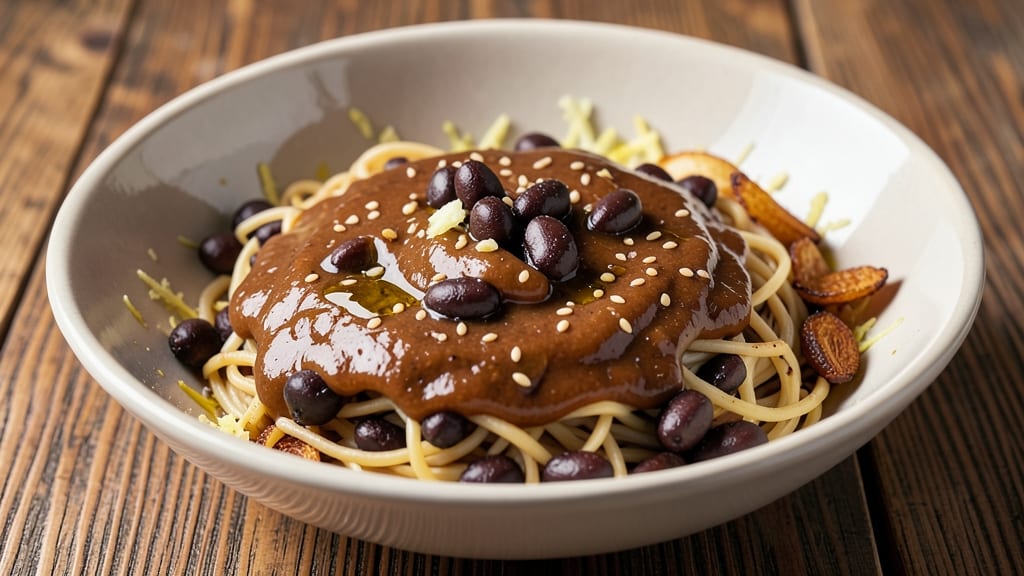
This black bean noodles sauce recipe delivers a rich, umami-packed base that transforms simple noodles into a restaurant-worthy dish in just 10 minutes. The secret lies in blending black beans with soy sauce, garlic, and ginger for a velvety, savory sauce that coats every strand of noodle perfectly.
I developed this sauce after craving a quick but flavorful meal that didn’t require hours of prep—it’s now my go-to for weeknight stir-fries and cold noodle salads.
The sauce’s magic comes from a simple blend of black beans, soy sauce, and miso paste, which work together to create a deep, savory flavor without overpowering the noodles. Garlic and ginger add a bright, aromatic kick, while a touch of sesame oil ties everything together.
This sauce is versatile enough to work with fresh or dried noodles, making it perfect for everything from quick lunches to meal prep.
What sets this sauce apart is its creamy yet light texture—it clings to noodles without weighing them down, and the black beans add a subtle earthiness that balances the saltiness of the soy.
The sauce keeps well in the fridge for up to 5 days or freezes for 3 months, so you can always have a flavorful base on hand. It’s the kind of sauce that turns a simple bowl of noodles into something extraordinary.
Pair it with rice noodles, soba, or even spaghetti for a quick, plant-based meal. The sauce’s bold flavor also makes it a great marinade for tofu or a dipping sauce for dumplings. Let’s make this 10-minute wonder—your noodles will thank you.
Ingredients for black bean noodles sauce
Nine ingredients blend into this velvety sauce—rich, umami-packed, and ready in minutes.
| Ingredient | Amount | Notes |
|---|---|---|
| Black Beans 🫘 | 1 cup | Canned, drained and rinsed |
| Soy Sauce 🥢 | ½ cup | Low-sodium preferred |
| White Miso Paste 🍶 | 2 tbsp | High-quality for depth |
| Garlic Cloves 🧄 | 4 cloves | Minced for aromatic punch |
| Fresh Ginger 🌿 | 2 tbsp | Finely grated, peeled |
| Sesame Oil 🌰 | 1 tbsp | Toasted for nutty aroma |
| Lime Juice 🍋 | 1 tbsp | Freshly squeezed |
| Water 💧 | ½ cup | Room temperature |
| Maple Syrup 🍁 | 1 tsp | For subtle sweetness |
| Red Chili Flakes 🌶️ | ½ tsp | Adjust for heat preference |
| Toasted Sesame Seeds 🌰 | 1 tsp | For garnish and crunch |
The black beans are the heart of this sauce. Trader Joe's or Whole Foods carry high-quality canned varieties with minimal additives—look for BPA-free lining if you're health-conscious. Miso paste makes all the difference here; Miso Master or Hessian brands deliver that deep, fermented flavor. Fresh ginger and garlic should be vibrant and firm—no shriveled bits. Toast your sesame seeds in a dry pan for 30 seconds before adding them to the sauce for maximum aroma. The soy sauce? Kikkoman or San-J are reliable, but any low-sodium option works.
No miso paste? Substitute 1 tbsp soy sauce plus 1 tsp nutritional yeast—it won’t be identical, but it’ll work in a pinch. Short on sesame oil? Avocado oil at half the amount keeps the flavor neutral. The maple syrup can be swapped for agave or coconut sugar dissolved in water. For extra creaminess without beans, blend ½ cup silken tofu with the water. Chili flakes can be omitted entirely if you prefer mild sauce, or boosted to 1 tsp for heat lovers. The lime juice is non-negotiable though—it brightens everything.
This sauce keeps beautifully in an airtight jar for 5 days in the fridge, or 3 months frozen. I like to portion it into ice cube trays before freezing—just pop out what you need for quick meals. The texture thickens as it cools, so stir in a splash of water if it seems too stiff. Garnish with those toasted sesame seeds right before serving—they add crunch and visual appeal. Perfect for tossing with noodles, drizzling over tofu, or using as a marinade for veggie stir-fries.
Why You'll Love This Recipe
- Pantry Magic: I swear by this sauce—no fresh herbs, no fancy prep. Just toss in canned black beans, a spoon of miso, and a splash of soy, then let the garlic and ginger sizzle. Honestly, it’s the kind of sauce that makes me feel like I actually cooked something when I’m just stirring a pot.
- Umami Bomb: That white miso paste? It’s the MVP here. The black beans add depth, the soy gives it that salty punch, and the ginger keeps it bright. One bite and you’ll forget about takeout—it’s that good, even if the noodles are store-bought.
- Leftover Hero: This sauce keeps perfectly for days in the fridge. Toss it with cold noodles for lunch, stir it into rice for dinner, or even drizzle it over eggs in the morning. Between us, I’ve had it three times this week and it’s never gotten old.
- Budget Flex: You’re looking at a sauce that costs pennies to make but tastes like a splurge. Black beans and miso stretch forever, and the flavor is so rich you’ll use less oil than in most stir-fries. My wallet and my taste buds both win.
Step-by-step instructions for black bean noodles sauce
This umami-packed sauce comes together faster than you can say "stir-fry."
Toast the Black Beans for Depth of Flavor
Heat a dry skillet over medium heat and add the 1 cup Black Beans. Toast them for 3-4 minutes, stirring constantly, until they develop a nutty aroma and begin to darken slightly. This step enhances their natural sweetness and creates a rich base for your sauce.
Watch closely—they should smell toasty but not burn. If they start to smoke, reduce the heat immediately. Once toasted, transfer the beans to a small bowl and set aside. This quick toasting step is what transforms ordinary black beans into the star of your sauce.
Bloom the Aromatics in Sesame Oil
In the same skillet, add 1 tablespoon Sesame Oil over medium heat. Once shimmering, add the 4 cloves Garlic Cloves and 2 tablespoons Fresh Ginger. Sauté for 1-2 minutes until the garlic becomes light golden and fragrant—this prevents bitterness and builds the aromatic foundation.
Here's the thing—don't overcook the garlic. It should smell heavenly but not burn. If it starts to darken too quickly, remove the skillet from heat for 10 seconds to cool slightly. The goal is to extract all that flavor without turning it harsh.
Build the Sauce Base with Miso and Soy
Reduce heat to low and stir in the 2 tablespoons White Miso Paste and 0.5 cup Soy Sauce. Let the mixture simmer gently for 2 minutes, stirring constantly, until the miso dissolves completely and the sauce begins to thicken slightly. This creates the umami backbone of your sauce.
I like to use a wooden spoon here—it helps scrape up any browned bits from the bottom of the pan, which adds even more depth of flavor. If the mixture looks too thick, add 1-2 tablespoons of the 0.5 cup Water to loosen it while keeping the sauce cohesive.
Finish with Sweetness and Acid
Return the toasted black beans to the skillet and stir to combine. Add the 1 tablespoon Lime Juice, 1 teaspoon Maple Syrup, and 0.5 teaspoon Red Chili Flakes. Simmer for 2-3 minutes until everything is well incorporated and the sauce reaches your desired consistency—it should coat the back of a spoon but still be pourable.
Taste and adjust seasoning if needed. You might want to add a bit more soy sauce for saltiness or lime juice for brightness. The balance should be complex—sweet, salty, umami, and just a hint of heat. This is where all the flavors come together in harmony.
Garnish and Serve Immediately
Transfer the sauce to a serving bowl and drizzle with 1 tablespoon Sesame Oil just before serving. Sprinkle with 1 teaspoon Toasted Sesame Seeds for texture and visual appeal. The contrast of the toasty seeds against the smooth sauce adds another layer of complexity.
This sauce is best served immediately over noodles or as a dipping sauce for dumplings. The flavors will continue to meld as it sits, but the fresh toasted sesame seeds will lose their crunch if left too long. Serve with steamed rice or your favorite stir-fry vegetables for a complete meal.
Pro Tips For Making Black Bean Noodles Sauce
- Cook the beans low and slow: I used to blast the black beans in a pan thinking it’d speed things up—big mistake. Simmer them on medium-low for 15-20 minutes until they’re tender but still hold shape. Overcooking turns them mushy, and you’ll end up with a gluey sauce instead of a rich, chunky one.
- Toast the miso first: Stir the white miso paste into the warm sauce after removing it from direct heat. If you add it straight to the boiling pot, you’ll kill its delicate umami flavor and turn the sauce bitter. Just a spoonful of miso into the finished sauce is enough—it’s potent stuff.
- Mince the ginger finer than you think: I was skeptical until I tried it: grating the ginger on the small holes of a box grater (or even pulsing it in a food processor) makes a real difference. Fresh ginger adds depth, but if it’s just visible chunks, you’ll taste it instead of letting it blend into the sauce’s complexity.
- Balance the salt with a taste test: Soy sauce and miso are both salty, so after combining them, taste before adding more. If the sauce tastes flat, a splash of rice vinegar (½ teaspoon) brightens it up without overpowering. I skip this step half the time and end up with a dish that’s too heavy—don’t be that person.
Regional styles of this dish
Asian-Inspired Stir-Fry
This sauce shines in classic Asian stir-fry bowls, where its umami depth complements the bright flavors of fresh veggies and protein. I love tossing it with rice noodles, shredded cabbage, and crispy tofu for a quick weeknight meal.
The black beans add a satisfying texture that holds up perfectly to quick cooking over high heat in a wok. 🔥
Mexican-Inspired Tacos
For a fusion twist, use this sauce as a spicy salsa base for tacos. Mix it with diced avocado, red onion, and cilantro for a creamy, smoky topping.
The lime juice and chili flakes bridge the gap between Asian and Latin flavors beautifully. Serve with warm corn tortillas and grilled veggies for a vibrant, plant-based meal.
Thai-Inspired Peanut Noodles
Add 2 tablespoons peanut butter and 1 teaspoon sriracha to the finished sauce for a Thai-inspired twist. The peanut butter thickens the sauce while adding nutty richness, and the sriracha boosts heat.
Toss with rice noodles and top with crushed peanuts and bean sprouts for a restaurant-quality dish. The black beans keep it hearty and satisfying. 🌶️
Japanese-Inspired Ramen
Use this sauce as a base for homemade ramen by adding 1 cup dashi broth and 1 tablespoon mirin to loosen the texture. The miso and soy sauce create an instant umami broth that pairs perfectly with ramen noodles, soft-boiled eggs, and sliced mushrooms.
Garnish with scallions and nori strips for an authentic touch.
Korean-Inspired Bibimbap
Transform this sauce into a Korean-style gochujang by adding 1 tablespoon gochujang paste and 1 teaspoon rice vinegar. Use it as a dipping sauce for steamed rice bowls loaded with sautéed veggies and tofu.
The black beans add a subtle earthiness that complements the spicy, tangy flavors of Korean cuisine. 💛
Mediterranean-Inspired Pasta
Swap the sesame oil for extra virgin olive oil and add 1 teaspoon za'atar to create a Mediterranean-inspired sauce. Toss with whole wheat pasta, roasted cherry tomatoes, and fresh parsley. The black beans add protein and depth, making this a hearty, plant-based meal perfect for summer dinners.
Nutrition facts
Frequently asked questions
Can I make this sauce without miso paste?
The miso adds incredible umami depth, but you can substitute 1 tbsp soy sauce plus 1 tsp nutritional yeast for a similar savory profile. For extra richness, blend ½ cup silken tofu with the water instead—it’ll create a creamier texture while keeping the plant-based focus. The flavor won’t be identical, but it’ll still be delicious!
How do I adjust the consistency for different noodle types?
For thin rice noodles, keep the sauce slightly thinner (add 1-2 tbsp water) so it clings without weighing them down. For thick udon or spaghetti, let it reduce longer or add 1 tsp cornstarch mixed with water to thicken. The key is pourable but coating—test with a spoon!
Can I use this sauce as a marinade for tofu?
Use it as-is for 15-20 minutes of marinating time (no longer, or the tofu will absorb too much liquid). For extra tenderness, add 1 tbsp maple syrup to the marinade. The black beans and miso create a perfect balance of savory and umami that soaks into tofu beautifully.
Why does my sauce taste too salty?
Miso and soy sauce pack serious saltiness! Balance it by adding 1 extra tbsp lime juice (cuts saltiness) or 1 tsp maple syrup (adds sweetness to counterbalance). If using low-sodium soy sauce, you might need to add ½ tsp salt to compensate. Always taste as you go—this sauce is forgiving but needs that perfect harmony!
How can I make this sauce spicier?
Double the red chili flakes to 1 tsp or add ½ tsp sriracha at the end. For heat with depth, stir in 1 tsp gochujang paste while simmering. If you love fire, try ½ tsp cayenne pepper—but add it gradually and taste frequently to avoid overpowering the other flavors.