
Soups & Stews
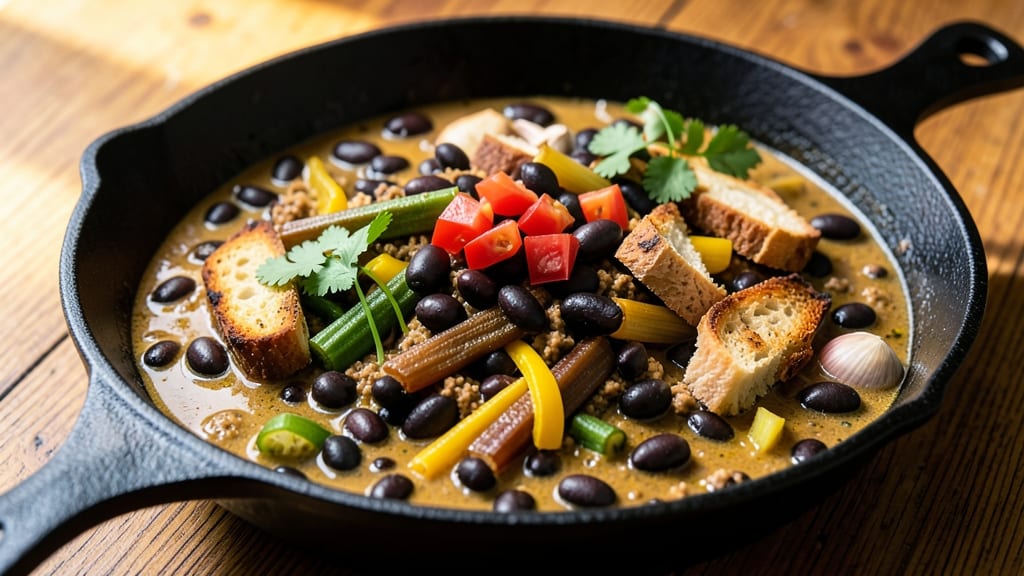
This black bean gumbo recipe delivers the soul-soothing depth of Louisiana Creole cooking in a plant-based bowl that's rich, velvety, and packed with smoky, spiced layers.
The secret lies in a deep-roasted roux that forms the foundation, while okra and the holy trinity create that signature gumbo texture—thick enough to coat a spoon but light enough to let every ingredient shine.
I developed this version after years of perfecting the balance between earthy black beans, aromatic spices, and the subtle crunch of okra.
The cooking process transforms simple ingredients into something extraordinary: first, the roux develops a rich mahogany color through careful monitoring (no burning!), then the vegetables and spices infuse the pot with their flavors over 1 hour of gentle simmering.
Black beans absorb the complex broth while maintaining their structure, creating a hearty base that's both satisfying and nutritious. The dish builds flavor progressively, with each layer—tomatoes, spinach, thyme—adding depth until you have a gumbo that tastes like it's been simmering all day.
What you'll end up with is a plated meal worthy of any gathering: a deep, aromatic bowl with tender black beans, silky okra threads, and a sauce so rich it clings to every spoonful.
The spices—smoky paprika, cayenne, and earthy thyme—create a perfect balance of heat and depth, while the okra adds that signature gumbo texture that's impossible to resist. This recipe proves you don't need meat to create a dish this soulful and satisfying.
Serve with crusty bread to soak up every last drop of that velvety sauce, or pair with steamed rice for the full Creole experience. The leftovers actually improve overnight as flavors meld further, making this the perfect make-ahead meal for busy weeks.
Here's how to create this restaurant-quality gumbo at home.
Ingredients for black bean gumbo
Soulful gumbo starts with these 18 ingredients—simple but powerful for deep flavor.
| Ingredient | Amount | Notes |
|---|---|---|
| Extra-Virgin Olive Oil 🫒 | ½ cup | High-quality, fruity variety |
| All-Purpose Flour 🌾 | ½ cup | White or whole wheat |
| Yellow Onion 🧅 | 2 whole | Diced, medium size |
| Green Bell Pepper 🌶️ | 1 whole | Diced, any color |
| Celery Stalks 🥬 | 3 whole | Diced, stringy parts removed |
| Fresh Okra 🌱 | 1 lb | Trimmed, sliced into rounds |
| Dried Black Beans 🌱 | 1 ½ cups | Uncooked, rinsed well |
| Smoked Paprika 🌶️ | 2 tbsp | High-quality, not sweet |
| Garlic Cloves 🧄 | 6 cloves | Fresh, minced |
| Cayenne Pepper 🔥 | 1 tsp | Adjust for heat preference |
| Dried Thyme 🌿 | 1 tsp | Or 1 tbsp fresh |
| Bay Leaves 🌿 | 2 whole | Dried, removed before serving |
| Crushed Tomatoes 🍅 | 15 oz | High-quality canned |
| Vegetable Broth 💧 | 4 cups | Low-sodium preferred |
| Fresh Spinach 🌿 | 4 cups | Chopped, packed |
| Lemon Juice 🍋 | 1 tbsp | Freshly squeezed |
| Sea Salt 🧂 | 1 ½ tsp | Diamond Crystal preferred |
| Black Pepper 🌶️ | ½ tsp | Freshly ground |
The roux is non-negotiable here. High-quality olive oil and flour create that signature mahogany color—no shortcuts. Whole Foods bulk bins or Trader Joe's have the best flour for this. For the okra, look for fresh, firm pods—Trader Joe's or local farmers markets carry the best. Black beans? Dried are superior—soak overnight for best texture. The smoked paprika should be deep red and fragrant—none of that dusty stuff. If you're in a pinch, Penzeys sells it online.
No smoked paprika? Regular paprika plus a pinch of liquid smoke works in a bind. Fresh thyme unavailable? Dried at one-third the amount gets you close. Short on spinach? Kale or Swiss chard hold up well too. The crushed tomatoes can be San Marzano if you want to splurge—they're sweeter and less acidic. For the roux, stir constantly or it'll burn. I've ruined more roux than I care to admit. The vegetable broth? Homemade is ideal, but low-sodium store-bought works fine.
This gumbo tastes even better the next day—3-4 days in the fridge, 3 months frozen. Portion into containers with a layer of broth on top to preserve texture. The roux keeps for 1 week in the fridge if you make it ahead. Freeze the roux in ice cube trays for easy use later. The beans and okra hold up beautifully—reheat gently on the stove with a splash of broth to restore richness.
Why You'll Love This Recipe
- One-Pot Magic: I swear by this recipe—just a big pot, no extra dishes. Toss in your onion, bell pepper, and celery (the classic "holy trinity"), let them soften in olive oil, then add flour to make that rich roux. By the time the black beans and broth bubble together, the kitchen’s clean and the house smells like home.
- Roux That Sticks: Here’s what sold me—the roux. Not too dark, not too light, just that perfect peanut-butter hue where the flour-to-oil ratio turns everything velvety. It’s the backbone of the dish, and honestly? It makes even the simplest ingredients taste like you spent hours on it.
- Weeknight or Dinner Party: Between us, this gumbo is my go-to for both lazy Tuesdays and when I’ve got a houseful of people. Double the batch, add some andouille sausage if you’re feeling fancy, and it’s still unfussy enough that no one notices if you skipped the fancy garnish. (Yes, even on a Tuesday night.)
- Budget-Friendly Leftovers: Black beans and celery don’t break the bank, and this recipe stretches easily—feed four tonight, four tomorrow. The flavors actually improve the next day, like a cozy hug in a bowl. Freeze half if you’re not a fan of meal prep; just thaw and reheat. No guilt, all comfort.
Step-by-step instructions for black bean gumbo
Here's how to build a rich, smoky gumbo with deep-roasted spices and a velvety okra base.
Deep-Roast the Holy Trinity Vegetables
Heat the 0.5 cup extra-virgin olive oil in a large, heavy pot over medium-high heat. Add the diced yellow onion, green bell pepper, and celery stalks, spreading them evenly in the pan. Cook undisturbed for 8-10 minutes, stirring occasionally, until the vegetables soften and develop a deep golden brown color—this is your flavor foundation.
The key here is patience. You want those vegetables to caramelize and release their natural sugars, which will form the base of your gumbo's complex flavor. If they start to stick before browning, reduce the heat slightly and let them cook longer. Once properly roasted, they'll release easily from the pot, signaling they're ready for the next step.
Toast the Spices and Build the Roux
Push the roasted vegetables to one side of the pot and add the 0.5 cup all-purpose flour to the empty space. Stir constantly over medium heat for 3-4 minutes until the flour turns a rich, nutty brown—this is your roux. Here's the thing: don't rush this step. A properly toasted roux is the secret to a flavorful gumbo.
Once the roux reaches a deep brown color, add the 2 tablespoons smoked paprika, 1 teaspoon cayenne pepper, and 1 teaspoon dried thyme. Stir for 30 seconds to toast the spices and release their aromas. Then add the 6 minced garlic cloves and cook for another 30 seconds until fragrant. Immediately add the 15 ounces crushed tomatoes and stir to deglaze the pot, scraping up any browned bits from the bottom.
Simmer the Okra and Black Beans
Add the 1 pound sliced fresh okra and 1.5 cups rinsed dried black beans to the pot. Pour in the 4 cups vegetable broth and bring the mixture to a gentle boil. Reduce heat to low and add the 2 whole bay leaves. Let it simmer uncovered for 45-50 minutes, stirring occasionally, until the beans are tender and the gumbo has thickened slightly.
During this time, the okra will break down and release its natural thickening agents, creating that signature gumbo texture. If the gumbo looks too thin after 30 minutes, reduce the heat further and let it simmer longer. The beans should be soft but not mushy—you want them to hold their shape while still being tender.
Finish with Spinach and Brighten with Lemon
Stir in the 4 cups chopped fresh spinach and cook for 2-3 minutes until wilted. Remove the bay leaves and add the 1 tablespoon freshly squeezed lemon juice, 1.5 teaspoons sea salt, and 0.5 teaspoon freshly ground black pepper. Taste and adjust the seasoning—this is where you can really fine-tune the balance of flavors.
The lemon juice adds a bright contrast to the deep, smoky flavors of the gumbo, cutting through the richness while enhancing the overall complexity. If you prefer a smoother texture, use an immersion blender to lightly purée about half of the gumbo while leaving the other half chunky for texture. Serve immediately with hot rice and crusty bread to soak up every delicious bite.
Pro Tips For Making Black Bean Gumbo
- Sweat the Holy Trinity: I learned this the hard way—don’t rush the onion, bell pepper, and celery step. Cook them low and slow (about 8-10 minutes) until they’re soft and the onion’s edges start to caramelize. This builds flavor that’ll carry through the whole pot, not just a sad, raw-tasting base.
- Bloom the Flour Properly: Skip the urge to dump the flour all at once. Instead, whisk it into the oil over medium heat for 2-3 minutes until it turns a light golden brown—this removes the raw taste. If you rush it, your gumbo will taste like flour soup, and nobody wants that.
- Deglaze Aggressively: After browning your protein (if using), don’t just splash in the liquid and stir. Scrape every last bit of stuck-on bits from the bottom with a wooden spoon while adding the liquid—this adds depth. I used to miss this, and the gumbo always felt flat afterward.
- Simmer, Don’t Boil: Once everything’s in the pot, keep the heat low enough that you see tiny bubbles breaking the surface, not a rolling boil. Boiling can make the beans mushy and the roux break. Sounds weird, but it works: patience here means a thicker, creamier gumbo.
Essential equipment for black bean gumbo
Heavy-Bottomed Pot
A 5-7 quart Dutch oven is my go-to for gumbo—its thick base distributes heat evenly and prevents scorching during the long simmer. I swear by the Lodge 5.5 Quart Cast Iron Dutch Oven because it retains heat beautifully and develops a natural nonstick surface over time.
If cast iron isn't your thing, a stainless steel pot with a heavy base works too, but stir more frequently to prevent sticking. The key is avoiding thin, flimsy pots that can't handle the roux's heat. 🔥
Wooden Spoon
You'll need a long-handled wooden spoon (at least 12 inches) to stir the roux without burning your hands. I prefer hickory or maple because they're heat-resistant and durable. Avoid plastic—it melts when exposed to high heat.
A good wooden spoon also helps scrape up those flavorful browned bits from the bottom of the pot, which are essential for depth. OXO Good Grips makes a great budget-friendly option.
Immersion Blender
An immersion blender (like the Ninja Foodi 1200W) is a game-changer for adjusting gumbo texture without transferring it to a separate pot. Use it to lightly purée half the gumbo for a smoother consistency while leaving the other half chunky.
If you don’t have one, a regular blender works—just blend in batches and return the puréed portion to the pot. Pro tip: Blend only after removing the bay leaves to avoid damaging your blender. ✨
Fine-Mesh Strainer
A fine-mesh strainer (like the OXO Good Grips Collapsible Strainer) comes in handy for rinsing black beans before cooking and straining any excess okra fibers if you prefer a smoother texture. I also use it to drain the spinach before adding it to the pot.
For gumbo prep, a 3-4 inch diameter strainer is perfect for small batches, while a larger one works for bigger pots. Stainless steel is best—it won’t retain odors or flavors.
Kitchen Timer
Gumbo requires precise timing, especially during the roux stage where it can go from perfect to burnt in seconds. A digital kitchen timer (I use the TimerTyme 30-Minute) ensures you don’t overcook the roux or forget to check on the beans.
Set it for 3-4 minutes during roux development and 45-50 minutes for simmering. A timer also helps track the 1 hour total cook time for the vegetables and spices—critical for building layers of flavor.
Measuring Spoons
Accurate measurements are key for spices like cayenne and smoked paprika, which can make or break your gumbo. Invest in a set of stainless steel measuring spoons (like OXO Good Grips) for precision.
A ¼ teaspoon of cayenne can add serious heat, while 2 tablespoons of smoked paprika deliver that signature smoky depth. I keep my spoons near the stove so I can adjust seasoning on the fly—trust me, you’ll want to taste as you go! 💡
Nutrition facts
Frequently asked questions
Can I substitute dried beans for canned black beans in gumbo?
The recipe calls for dried beans because they absorb more flavor during the long simmer. Soak them overnight for best texture, but if you're short on time, use 2 (15 oz) cans of black beans (drained and rinsed) instead. Just add them with the okra and simmer for 15-20 minutes less to avoid overcooking. The texture will be slightly softer, but still delicious!
Why does my roux burn so easily? What's the secret to a perfect dark roux?
The key is constant stirring and medium heat—never high! Use a wooden spoon and keep the heat low enough that you can hold your hand 2 inches above the pot without feeling heat. The roux should take 3-4 minutes to reach a deep mahogany color. If it starts smoking, immediately reduce heat and keep stirring. Patience is everything—rushing leads to burnt bits that ruin the flavor.
How can I make this gumbo spicier without cayenne?
For heat without cayenne, try these swaps: Add ½ teaspoon of crushed red pepper flakes with the smoked paprika, or stir in 1 teaspoon of hot sauce at the end. For smoky depth, increase smoked paprika to 3 tablespoons. If you love charred flavors, lightly char a jalapeño pepper, remove seeds, and dice it into the pot with the tomatoes. Always taste as you go!
Can I make this gumbo in an Instant Pot or pressure cooker?
Yes, but with adjustments! Sauté the holy trinity and roux first (same method), then add all ingredients except spinach. Pressure cook on high for 20 minutes, then quick-release. Stir in spinach and lemon juice at the end. The texture will be slightly different—less thick—but still flavorful. For extra richness, reduce the broth by 1 cup since pressure cooking concentrates flavors faster.
What's the best way to reheat leftover gumbo?
Gently reheat on the stove over low heat with a splash of water or broth to prevent drying. Stir frequently and simmer for 10-15 minutes—never microwave, as it makes the okra slimy. For frozen gumbo, thaw overnight in the fridge first, then reheat. Pro tip: Add a pinch of smoked paprika while reheating to revive the smoky flavor. Leftovers actually improve over 3-4 days as flavors meld!