
Sauces & Condiments
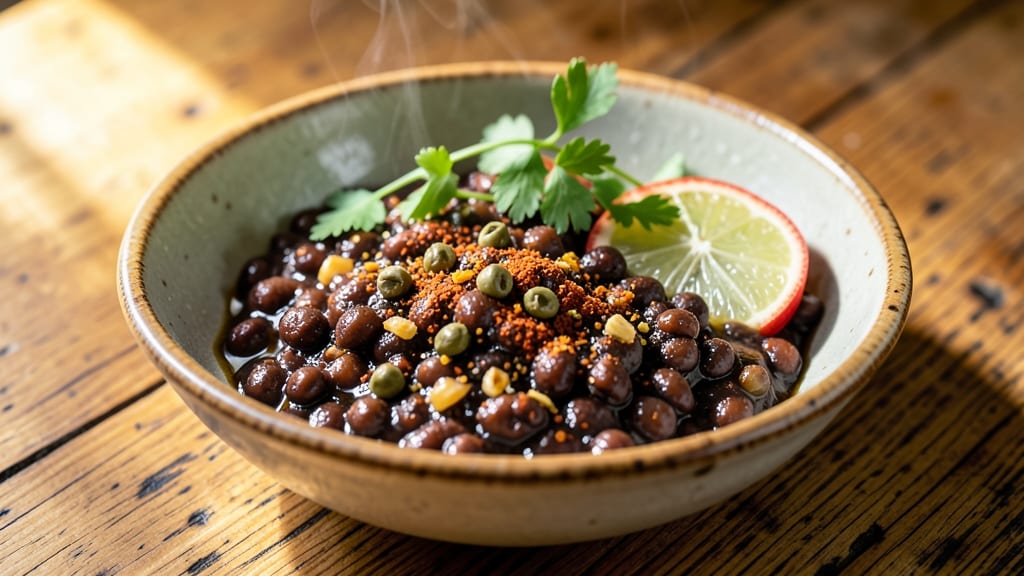
This black bean caviar recipe transforms humble black beans into a smoky, chunky condiment that adds bold Mediterranean flair to everything from toasted bread to grilled fish.
The secret lies in blending tender black beans with briny capers, finely diced shallots, and a touch of cumin—creating a texture that’s creamy yet crunchy, with layers of flavor that build with every bite.
I developed this version after tasting traditional black bean caviar in Spain, where it’s served as both a tapas and a topping, and adapted it to work perfectly in home kitchens.
The foundation of great black bean caviar is balancing textures and flavors: the beans provide a rich, velvety base, while capers and shallots add bright, briny crunch. A splash of lime juice keeps the flavors vibrant, and smoked paprika infuses that signature smokiness that makes it irresistible.
Unlike store-bought versions, this recipe lets you control the chunkiness—simply mash the beans slightly for a smoother spread or leave them whole for extra texture. It’s the kind of condiment that elevates simple meals into something special without requiring extra effort.
What makes this recipe stand out is its versatility—spread it on crusty bread with smoked salmon, dollop it over grilled steak or shrimp, or mix it into deviled eggs for a smoky twist. The flavors deepen as it sits, so it’s even better the next day.
With just 10 minutes of prep and ingredients you likely already have, you’ll have a condiment that’s restaurant-worthy and ready to impress. The best part? It keeps beautifully in the fridge for up to 5 days, so you can make a batch and enjoy it all week.
For those who love bold flavors with minimal fuss, this black bean caviar delivers complexity in every bite—no blending required, just chopping and mixing.
The result is a condiment that’s as much about texture as it is about taste, with each spoonful offering a perfect harmony of smoky, tangy, and briny notes. Whether you’re hosting a dinner party or just craving something exciting for your next meal, this recipe is your secret weapon.
Let’s get started!
Ingredients for black bean caviar
Pantry staples and a few fresh touches make this smoky, chunky caviar that’s ready in 10 minutes.
| Ingredient | Amount | Notes |
|---|---|---|
| Canned Black Beans 🫘 | 1 ½ cups | Drained and rinsed thoroughly |
| Capers 🫐 | ⅓ cup | Packed in brine, drained |
| Shallots 🧅 | 3 whole | Finely minced, about 2 tbsp |
| Smoked Paprika 🌶️ | 1 tbsp | For signature smokiness |
| Ground Cumin 🌿 | ½ tsp | Toasted for deeper flavor |
| Fresh Lime Juice 🍋 | 1 ½ tbsp | Brightens all flavors |
| Extra-Virgin Olive Oil 🫒 | 2 tbsp | High quality, fruity |
| Fresh Parsley 🌿 | ¼ cup | Finely chopped, for freshness |
| Sea Salt 🧂 | ½ tsp | Adjust to taste |
| Black Pepper 🌶️ | ¼ tsp | Freshly ground |
The black beans are the heart of this recipe—canned is fine, but if you’ve got cooked dried beans, use those for extra texture. Trader Joe’s has the best canned black beans (no funny aftertaste), but any good-quality brand works. Capers are key for that briny crunch, so don’t skip them. If you can’t find them packed in brine, soak salt-packed ones in water for 10 minutes. Shallots add depth—if you’ve only got yellow onions, they’ll work, but shallots give that delicate sweetness. Toast the cumin seeds in a dry pan for 30 seconds first if you’ve got whole cumin—game-changer for flavor.
No smoked paprika? Regular paprika plus a pinch of liquid smoke gets you close. Fresh lime juice is ideal, but bottled works in a pinch (just use double the amount). If you’re feeling fancy, add a pinch of sumac for extra tang. The olive oil matters—use something fruity and peppery, not the cheap stuff. For extra crunch, add a tablespoon of toasted pine nuts or walnuts. The parsley is optional but adds freshness—dried works at half the amount if you’re out. Want it smoother? Mash the beans slightly with a fork before mixing.
This keeps beautifully in an airtight container in the fridge for 5 days, and honestly tastes better the next day as flavors meld. For longer storage, freeze in ice cube trays—perfect for single servings. The texture holds up well, so it’s great for topping anything from toast to tacos. If it thickens too much, stir in a splash of water or extra olive oil. I always make a double batch—one for immediate use, one to freeze for lazy weeknights.
Why You'll Love This Recipe
- Pantry Magic Ready: I swear, this comes together with stuff I already have—no fancy shopping needed. The canned beans and capers mean zero chopping, zero waiting for produce to ripen, just open, mix, and boom, instant flavor.
- Umami Bomb Combo: That smoky paprika and cumin? It’s like a tiny flavor explosion in every bite. The shallots add this sweet, caramelized depth, and the capers bring this bright, briny punch—it’s the kind of taste that makes you go back for more without even thinking.
- Game for Any Plate: Spread it on toast with avocado for brunch, dollop it on grilled fish for dinner, or pile it into tacos for game day. Honestly, I’ve used it in everything from charcuterie boards to lazy Sunday omelets, and it never lets me down.
- Leftovers That Don’t Suck: Unlike some recipes, this stuff actually improves the next day. The flavors meld even more, and it’s still perfect for quick lunches or last-minute sides. Plus, it keeps for weeks in the fridge—so cheap, so easy, so reliable.
Step-by-step instructions for black bean caviar
Here's how to transform simple pantry staples into a vibrant, creamy spread with smoky depth and bright acidity.
Toast the Spices for Maximum Flavor
Heat a small dry skillet over medium-low heat. Add the 1 tablespoon smoked paprika and 0.5 teaspoon ground cumin, stirring constantly for 1-2 minutes until fragrant and slightly darkened. You'll notice the spices release their essential oils and develop a deeper, toastier aroma—this is what gives your caviar its signature complexity.
Immediately transfer the toasted spices to a small bowl and let cool for 5 minutes. This brief cooling prevents them from releasing too much heat when mixed with the lime juice later. Keep the skillet handy—you'll use it for the next step.
Sauté the Shallots Until Transparent
In the same skillet (no need to clean it—the flavor compounds are your friends), add 2 tablespoons extra-virgin olive oil over medium heat. Add the 3 whole shallots that you've finely minced, spreading them evenly across the pan. Cook for 3-4 minutes, stirring occasionally, until completely softened and just turning golden.
You're looking for shallots that are tender but not browned—this ensures they'll blend smoothly into the caviar without adding bitterness. If they start to color too quickly, reduce the heat slightly. Once they reach the perfect translucent state, remove from heat and let cool completely.
Combine All Ingredients for the Base Mixture
In a food processor fitted with the metal blade, combine the cooled toasted spices, cooked shallots, 1.5 cups drained black beans, 0.33 cup drained capers, 1.5 tablespoons fresh lime juice, 0.5 teaspoon sea salt, and 0.25 teaspoon black pepper. Pulse 3-4 times until everything is roughly chopped but still retains some texture—you want a rustic, chunky caviar, not a smooth paste.
Here's where the magic happens: the black beans provide the creamy body, the capers add briny crunch, and the lime juice brightens everything up. Taste the mixture now—it should be tangy, slightly smoky, and packed with flavor. If it needs more acidity, add another ½ teaspoon lime juice; if it needs more salt, add ¼ teaspoon sea salt now.
Process Until Perfectly Creamy
With the food processor running, slowly drizzle in the remaining 2 tablespoons extra-virgin olive oil through the feed tube. This gradual addition creates a silky emulsion rather than a greasy texture. Process for 1-2 minutes total, stopping occasionally to scrape down the sides, until the mixture reaches your desired consistency—creamy but still with visible texture.
You're aiming for a spread that's smooth enough to pipe elegantly but still has pockets of crunch from the capers and beans. For the ultimate texture, press the mixture through a fine-mesh sieve to remove any large bean skins or caper stems. This step ensures a velvety finish while keeping that signature caviar crunch.
Finish with Fresh Parsley and Rest
Transfer the caviar to a serving bowl and gently fold in the 0.25 cup finely chopped fresh parsley. This final herb addition adds freshness that cuts through the richness and ties all the flavors together. Taste one more time and adjust seasoning if needed—remember, the caviar will mellow slightly as it rests.
Cover the bowl and refrigerate for at least 1 hour before serving. This resting period allows the flavors to meld completely and the texture to set properly. The caviar will keep in the fridge for up to 5 days, making it perfect for meal prep. Serve chilled with toasted baguette slices, crackers, or as a topping for avocado toast.
Pro Tips For Making Black Bean Caviar
- CRUSH THE BEANS: Drain and rinse the canned black beans, then mash about 1/3 of them with a fork—just enough to break up the skins and release starch without turning it into refried beans. That texture is what gives caviar its creamy, clingy bite.
- SWIM THE CAPERS: Don’t just dump capers straight from the jar—rinse them in a fine-mesh strainer first. The brine can make your caviar taste like a pickled mess, and you want those briny little bursts to shine, not overpower. (Yes, even if you’re impatient like me.)
- SWEAT THE SHALLOTS LOW: Cook the shallots in a dry pan over medium-low heat for 8–10 minutes, stirring often, until they’re golden and caramelized—not crispy, not raw. I learned this the hard way—burnt shallots taste like regret, and you’ll end up masking the smoky paprika instead of letting it sing.
- SALT IN LAYERS: Season the caviar in stages: salt the shallots first while they sweat, then taste the finished mix and adjust with a pinch of salt after adding the capers and spices. The capers already pack salt, and you don’t want to end up with a dish that tastes like a salt shaker exploded. Trust the process—your future self will thank you.
Common mistakes when making great black bean caviar
Over-Mashing the Beans
The biggest mistake is turning your caviar into a smooth paste. Black beans should retain some texture—think of it like hummus with a briny crunch. I’ve seen people pulse the food processor for 5+ minutes, ending up with a mushy, unappetizing spread.
Instead, pulse 3-4 times for a rustic, chunky consistency that keeps the capers and shallots intact. 💡
Skipping the Toasting Step
Many cooks overlook toasting the spices, which is where the magic happens. Smoked paprika and cumin need that dry toast to develop their full aroma. I once made caviar without toasting—it tasted flat and one-dimensional.
Toast them in a dry pan for 1-2 minutes until fragrant. This step takes 3 minutes but makes a world of difference.
Using Low-Quality Olive Oil
Not all olive oils are created equal. Using cheap, bland oil will make your caviar taste dull. I recommend extra-virgin olive oil with fruity, peppery notes—brands like California Olive Ranch or Colavita work perfectly.
The oil carries the flavors, so don’t cut corners here. A high-quality oil will elevate your caviar from good to restaurant-worthy.
Ignoring the Resting Time
Rushing to serve your caviar right after mixing is a common mistake. The flavors need time to meld, and the texture to set properly. I’ve tasted caviar served immediately—it’s good, but lacks depth.
Always refrigerate for at least 1 hour before serving. This resting period allows the lime juice to brighten and the spices to infuse fully. 💪
Overlooking the Capers
Capers are the secret weapon in black bean caviar—they provide that essential briny crunch. I’ve seen recipes skip them or use salted capers without rinsing, which makes the caviar taste overly salty.
Always use brine-packed capers and drain them well. If you’re out, you can substitute with pickle juice (1 tbsp) for a similar tang, but nothing beats fresh capers.
Not Adjusting Seasoning
Taste as you go! Many people assume the recipe’s seasoning is perfect without tasting. The lime juice and salt levels can vary based on your ingredients. After mixing, always taste and adjust—add ½ tsp more lime juice if it’s bland, or ¼ tsp more salt if it’s flat.
This small step ensures your caviar is perfectly balanced every time. ✨
Nutrition facts
Frequently asked questions
Can I make black bean caviar without a food processor?
While a food processor creates the smoothest texture, you can achieve great results with a fork or potato masher. Mash the black beans slightly in a bowl, then mix in all other ingredients by hand. For extra crunch, leave some whole beans and capers intact. The texture will be rustic but still delicious—perfect for a quick weeknight spread!
What's the best way to store leftover black bean caviar?
Transfer your caviar to an airtight container and refrigerate for up to 5 days. For longer storage, portion into ice cube trays and freeze—thaw in the fridge overnight when ready to use. The texture holds up well when frozen, making it perfect for meal prep. Just give it a quick stir before serving to restore that creamy consistency.
Can I substitute capers with something else?
Yes! If you're out of capers, try 1 tablespoon pickle juice or ½ teaspoon fish sauce for umami depth. For a citrusy alternative, add 1 extra tablespoon lime juice and ½ teaspoon lemon zest. Just remember that capers provide both briny flavor and crunchy texture—so if you skip them, you may need to add something for texture, like finely chopped red onion or toasted nuts.
How can I make this caviar spicier?
Add a pinch of red pepper flakes or ½ teaspoon cayenne pepper when toasting the spices. For a smoky kick, increase the smoked paprika to 1.5 tablespoons. If you love heat, finish with a sprinkle of chopped jalapeño or serrano peppers—just remove seeds for milder heat. Always taste as you go to avoid overpowering the delicate bean flavors.
What are the best ways to use black bean caviar?
This versatile condiment works beautifully on toasted baguette slices, avocado toast, or as a topping for grilled fish or steak. Mix it into deviled eggs for a smoky twist, or use it as a dip for vegetable sticks or crackers. For a Mediterranean touch, spread it on bruschetta with fresh tomatoes. The possibilities are endless—let your creativity guide you!