
Salads
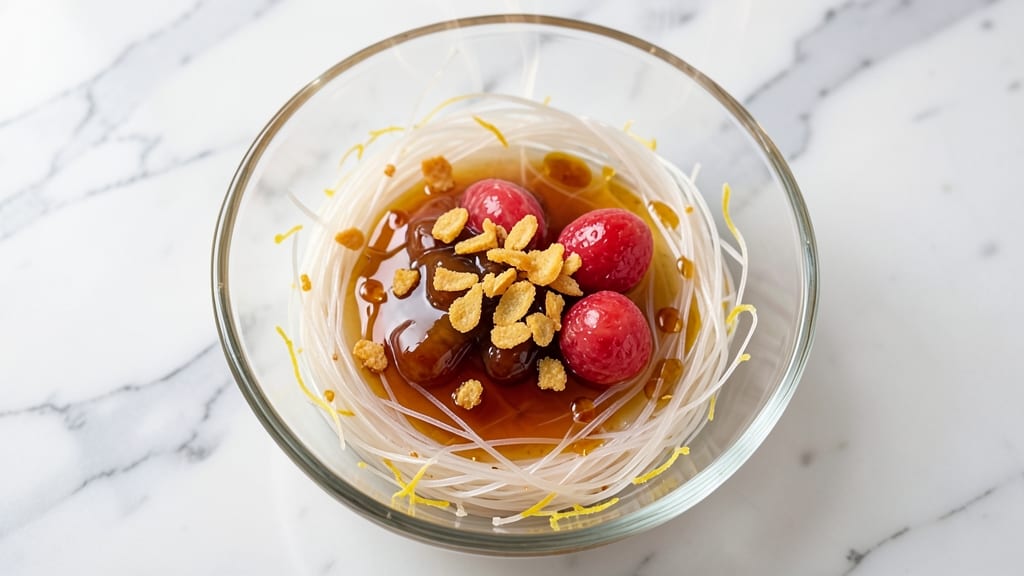
This bean thread salad recipe transforms simple mung bean starch into delicate, slippery strands that dissolve on your tongue—the perfect balance of texture and tradition. The process is surprisingly straightforward once you master the soaking and cooking technique, which creates those signature silky threads that define this dish.
What sets this version apart is the delicate sugar syrup that coats each strand, giving it that signature sweet-tangy flavor without overpowering the natural subtlety of the bean threads.
The beauty of this recipe lies in its versatility—it works as a standalone dessert, a refreshing palate cleanser between courses, or even a light vegan main dish when paired with fresh fruit or nuts.
The key to success is patience: letting the bean threads soak properly and cooking them gently ensures that signature slippery, melt-in-your-mouth texture that makes this salad so irresistible. Whether you're preparing it for a special occasion or a simple weeknight treat, the results are consistently impressive.
Once you've mastered the technique, you'll find this salad adapts beautifully to different cultural preferences—some versions include a touch of sesame oil for nutty depth, while others incorporate lychee or mango for tropical brightness.
The dish also stores well in the refrigerator, allowing you to prepare it ahead of time and serve it at its best. What you end up with is a dish that feels both elegant and effortless, proving that some of the most sophisticated flavors require the least amount of fuss.
Perfect for vegans, gluten-free diets, or anyone looking for a light yet satisfying dish, this bean thread salad is a celebration of simplicity and tradition. The process is meditative, the results are stunning, and the flavor is pure comfort in every bite.
Let's get started on creating your own silky masterpiece.
Ingredients for bean thread salad
Eight ingredients transform into ethereal strands—silky, slippery, and utterly magical.
| Ingredient | Amount | Notes |
|---|---|---|
| Mung Bean Starch (Bean Thread Noodles) 🍜 | ½ lb | High-quality, fine texture preferred |
| White Sugar 🍚 | ½ cup | Fine granulated, organic preferred |
| Water 💧 | 4 cups | Filtered or distilled for clarity |
| White Vinegar 🍶 | 2 tbsp | Distilled for tangy flavor |
| Sesame Oil 🥜 | 1 tbsp | Toasted for nutty aroma |
| Lemon Juice 🍋 | 1 tbsp | Freshly squeezed |
| Salt 🧂 | ½ tsp | Fine sea salt |
| Red Food Coloring (optional) 🎨 | 1 tsp | Natural beet powder alternative |
| Fresh Lychee (optional) 🍈 | ½ cup | Canned in syrup, drained |
| Toasted Sesame Seeds 🌾 | 1 tbsp | For garnish |
| Fresh Mint Leaves 🌿 | ¼ cup | Chopped for garnish |
The mung bean starch is your secret weapon. Asian markets carry the best quality—look for fine, powdery texture, not lumpy. Bob's Red Mill also sells it online if you can't find it locally. I always buy extra because it's worth having on hand for other dishes too. The sugar should be fine granulated—organic cane sugar gives the best flavor, but regular white works in a pinch. The water needs to be filtered or distilled for crystal-clear strands—tap water can make them cloudy. And trust me, the sesame oil matters—toasted has that incredible nutty aroma that elevates everything.
No sesame oil? Peanut oil works in a pinch, though it'll change the flavor profile slightly. Running short on lychee? Mango or pineapple chunks add tropical brightness too. The red coloring is totally optional—natural beet powder gives a similar effect. For the vinegar, apple cider vinegar works but has a milder tang than distilled. Fresh lemon juice is ideal, but bottled works if you're in a hurry. The key to perfect strands is patience—don't rush the soaking or cooking, or you'll end up with gummy threads instead of silky ones. Pro tip: Use a fine-mesh strainer when rinsing the starch to avoid clumps.
Once made, these strands keep beautifully in the fridge for 5-7 days—covered with a thin layer of water to prevent drying. I always make a double batch because they disappear so fast. For serving, chill the strands thoroughly before tossing with the syrup—this makes them extra silky. The syrup itself keeps for 2 weeks in the fridge, so you can make it ahead. Garnish with toasted sesame seeds right before serving—they add that perfect crunch contrast. And honestly? This tastes even better the next day as the flavors meld together.
Why You'll Love This Recipe
- Five-Ingredient Magic: I swear by this—just starch, sugar, vinegar, water, and a drizzle of sesame oil. No chopping, no fuss, and no last-minute grocery runs. The noodles cook in minutes while you stir, and honestly? That’s my kind of cooking.
- Sweet-Tangy Bliss: The balance here is chef’s kiss—just enough sugar to round out the sharpness of the vinegar, with sesame oil adding that nutty depth. It’s refreshing, not cloying, and the threads hold their shape like a dream. (Yes, even on a Tuesday night.)
- Lunchbox Legend: Between us, this is my go-to for packed lunches or potlucks. The noodles stay crisp for hours, and the dressing clings perfectly. Kids (and my picky husband) actually finish it—proof it’s a crowd-pleaser without trying too hard.
- Pantry Staple Power: I keep bean thread starch and vinegar on hand just for this. It’s cheap, lasts forever, and turns into something special with zero effort. Plus, leftovers? Just toss them in a jar—they taste even better the next day. Budget-friendly and foolproof.
Step-by-step instructions for bean thread salad
Here's how to create silky, slippery bean threads with minimal effort—this process is simpler than it looks!
Prepare the Starch Mixture
In a medium saucepan, combine the 0.5 lb mung bean starch (bean thread noodles) with 4 cups water and 0.5 cup white sugar. Stir gently until the starch is fully dissolved—you should see a smooth, cloudy liquid with no lumps. This mixture is the foundation of your silky threads, so make sure it's completely uniform.
Place the saucepan over medium-high heat and bring to a gentle boil. Once boiling, reduce the heat to low and let it simmer for 10-15 minutes, stirring occasionally. You're looking for a thick, glossy consistency that coats the back of a spoon. This stage is crucial—if it boils too vigorously, the threads will turn gummy instead of silky.
Add Vinegar and Cool the Mixture
Remove the saucepan from heat and stir in the 2 tbsp white vinegar and 1 tbsp lemon juice. These acidic ingredients help set the starch and add brightness to the final salad. If you're using the 1 tsp red food coloring, add it now and stir until fully incorporated. The mixture will thicken slightly as it cools.
Let the mixture cool to room temperature—this takes about 30 minutes. I like to transfer it to a heatproof bowl and place it in an ice bath to speed up the process. The goal is to reach a warm-but-not-hot temperature before the next step. If you're adding 0.5 cup fresh lychee, chop them into small pieces and set them aside for later.
Shape the Bean Threads
Once the mixture is cool, transfer it to a wide, shallow dish or baking sheet. Using a fork or your fingers, gently spread it into an even layer about ¼-inch thick. Let it sit uncovered for 20-30 minutes until it forms a semi-solid, translucent sheet. You'll see the surface develop a slight sheen—this is your cue that it's ready for the next step.
Here's where the magic happens: dip your fingers into 1 tbsp sesame oil and gently press them into the surface of the starch sheet. Then, using a sharp knife or your fingers, carefully peel away thin strips of the starch. These strips will naturally form long, silky threads as you pull them. Work quickly but gently—too much force will break the threads.
Assemble the Salad
Transfer the bean threads to a large bowl. Add the 1 tbsp toasted sesame seeds and 0.25 cup chopped fresh mint leaves, then gently toss everything together. If you added lychee, now's the time to fold them in. The salad should look vibrant and inviting, with the threads glistening slightly from the sesame oil.
Let the salad sit for 10-15 minutes before serving. This brief resting period allows the flavors to meld and the threads to soften slightly. Serve chilled or at room temperature—either way, the contrast of the silky threads with the bright, fresh mint and lychee makes this dish unforgettable.
Pro Tips For Making Bean Thread Salad
- Boil Water to Roar: That boiling water needs to be violent—big bubbles, steam rolling off the pot. I learned this the hard way when my bean threads turned into a mushy, gluey mess because I used lukewarm water. Once it’s screaming, pour in the starch slowly in a thin stream while stirring constantly.
- Rinse Starch First: Skip this, and your salad will taste like chalk. Wet the mung bean starch with a splash of water, rub it between your fingers to break up clumps, then rinse it under cold water until the water runs clear. This removes excess starch and keeps your threads silky, not gummy.
- Vinegar Last, Not Soon: Add vinegar too early, and your salad turns sour before you even taste it. Wait until the threads are fully cooled and drained, then toss them with vinegar just before serving. This keeps the acid sharp and the texture crisp—no dull, soggy aftermath.
- Sesame Oil in Drops: Pour that sesame oil in like you’re counting raindrops—no more than ½ teaspoon, or your salad will taste like a bottle of perfume. Add it after everything else, right when you’re plating, so the aroma hits you first bite. (Yes, even if you’re impatient like me.)
Common mistakes when making this recipe
Overcooking the Starch
One of the biggest mistakes is letting the starch mixture boil too vigorously. When you see bubbles forming rapidly, the threads will turn gummy and sticky instead of silky. I’ve ruined batches by keeping the heat too high—always reduce to low heat once it reaches a gentle simmer.
The goal is a thick, glossy consistency that coats the back of a spoon, not a bubbling pot of glue. 🌡️
Skipping the Cooling Step
Rushing the cooling process is another common error. The starch mixture needs to reach room temperature before shaping—if it’s too hot, the threads will tear or stick together. I used to try to speed this up by placing it in the fridge, but that causes condensation and ruins the texture.
Instead, let it cool naturally for 30 minutes or use an ice bath for faster results without sacrificing quality.
Using the Wrong Water
Tap water with high mineral content can make your bean threads cloudy or gritty. I learned this the hard way when my first batch turned out murky instead of translucent.
Stick to filtered or distilled water—it’s worth the small investment for that signature silky clarity. If you’re in a pinch, bottled spring water works too.
Forcing the Threads Too Early
Patience is key when peeling the starch sheet into threads. If you pull too hard or too soon, the strands will break and clump. Wait until the surface develops a slight sheen (about 20-30 minutes) before attempting to shape them.
Dip your fingers in sesame oil first—this helps them slide smoothly and prevents sticking. A sharp knife works best for clean cuts.
Ignoring the Resting Time
After tossing everything together, many people serve the salad immediately. But letting it rest for 10-15 minutes allows the flavors to meld and the threads to soften just enough for the perfect texture.
I’ve found that skipping this step results in a dish that’s too firm and unyielding. Trust the process—your patience will pay off with every bite.
Overmixing the Syrup
The sugar syrup should coat the threads lightly, not drown them. Overmixing can make the salad too sweet or sticky. Stir just until the threads are evenly glistening—about 2-3 gentle tosses is all you need.
If the syrup feels too thick, add 1 tsp water to loosen it. The goal is a delicate balance of sweetness and slipperiness, not a sugary mess. ✨
Nutrition facts
Frequently asked questions
Can I make bean thread salad without sesame oil?
Yes! While sesame oil adds that signature nutty aroma, you can substitute 1 tbsp neutral oil like peanut or vegetable oil for a similar effect. For a completely different flavor profile, try 1 tsp vanilla extract mixed into the syrup instead—it adds a subtle sweetness that pairs beautifully with the bean threads.
How do I store leftover bean thread salad?
Store the salad in an airtight container with a thin layer of water covering the threads to prevent drying. It keeps well in the fridge for 5-7 days. The texture actually improves after a day or two as the flavors meld together—just give it a gentle toss before serving to revive the silky quality.
What's the difference between Chinese and Thai versions?
The Chinese version typically uses a lighter sugar syrup and focuses on the natural subtlety of the bean threads, often garnished with mint and sesame seeds. Thai versions tend to be sweeter, with added pandan leaves or coconut milk for fragrance, and sometimes include red food coloring for a vibrant look. Both are equally delicious—it just depends on your flavor preference!
Can I use this recipe for a vegan dessert?
This bean thread salad is 100% vegan as written, making it perfect for dessert tables or potlucks. For extra decadence, serve it chilled with fresh mango slices or a drizzle of agave syrup on top. The silky texture makes it feel luxurious while keeping it completely plant-based.
Why did my bean threads turn out gummy instead of silky?
This usually happens when the starch mixture boils too vigorously or isn't cooled properly before shaping. Always reduce heat to low once boiling and let it cool to room temperature before attempting to form threads. If it's still too hot, place the bowl in an ice bath for 10 minutes to speed up cooling without condensation.