
Soups & Stews
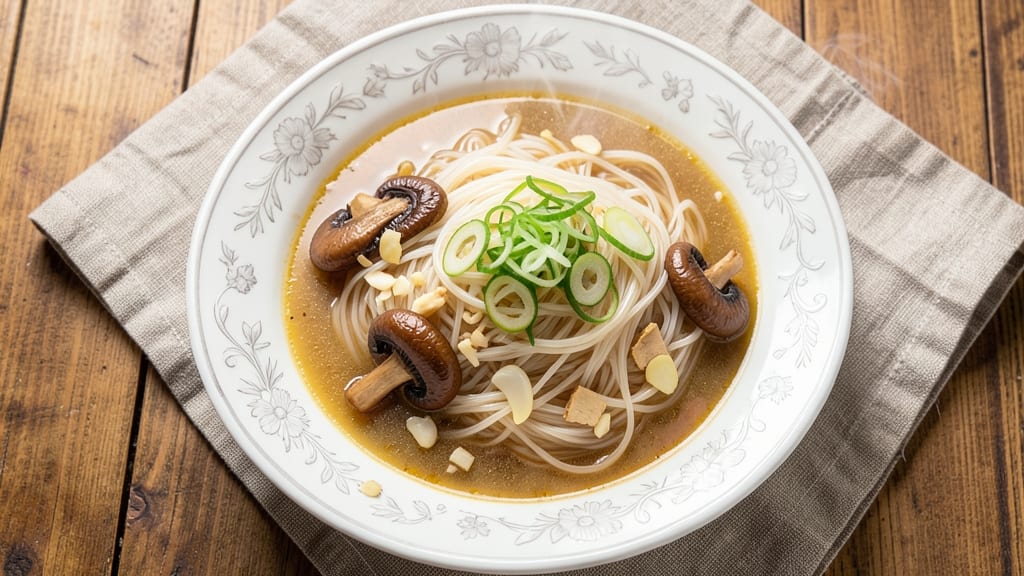
This bean thread noodles soup recipe delivers the perfect balance of silky texture and earthy depth—ideal for a comforting, vegan-friendly meal. 🌿 The secret lies in properly preparing the delicate noodles and simmering the broth with aromatic mushrooms and herbs, creating a harmonious blend of flavors that's both satisfying and nourishing.
Bean thread noodles, also known as vermicelli, are boiled just until tender, ensuring they maintain their signature silky consistency. Meanwhile, the broth simmers with shiitake mushrooms, ginger, and garlic, infusing the liquid with rich, umami notes that complement the noodles beautifully.
This dish is not only easy to prepare but also deeply flavorful, making it a standout addition to any meal.
The result is a soup that's both light and hearty, with each spoonful offering a satisfying mix of textures and tastes. The earthy mushrooms provide depth, while the fresh herbs add brightness, creating a dish that's as comforting as it is delicious.
Perfect for a quick lunch or a cozy dinner, this soup is sure to become a favorite.
Pair it with a simple side of steamed greens or a light salad to round out the meal. The simplicity of the ingredients ensures that the natural flavors shine through, making this a truly satisfying and wholesome dish. Let's get started!
Ingredients for bean thread noodles soup
Silky noodles meet earthy mushrooms and bright herbs for a vegan soup that's both comforting and deeply flavorful.
| Ingredient | Amount | Notes |
|---|---|---|
| Bean Thread Noodles (Vermicelli) 🍜 | 8 oz | Vegan, rice-based preferred |
| Dried Shiitake Mushrooms 🍄 | 6 whole | Rehydrated, stems removed |
| Fresh Garlic Cloves 🧄 | 4 cloves | Minced for aromatic base |
| Fresh Ginger Root 🌿 | 1 ½ tbsp | Finely grated, fresh preferred |
| Vegetable Broth 💧 | 4 cups | Low-sodium preferred |
| Green Onions 🧅 | 3 whole | Thinly sliced, for garnish |
| Fresh Cilantro Leaves 🌿 | ¼ cup | Chopped, for brightness |
| Sesame Oil 🫒 | 1 tbsp | Toasted, for aroma |
| Soy Sauce 🍶 | 2 tbsp | Tamari for gluten-free |
| Lime Juice 🍋 | 1 tbsp | Freshly squeezed |
| Sea Salt 🧂 | 1 tsp | Adjust to taste |
| White Pepper 🌶️ | ½ tsp | Freshly ground |
| Tofu (Firm) 🧀 | 6 oz | Cubed, optional protein |
The shiitake mushrooms are the heart of this soup—dried shiitake has the most concentrated umami flavor, but fresh works too. Grab them from the Asian market if possible; they often have better quality than the grocery store. For the bean thread noodles, rice-based is traditional, but mung bean noodles work well too. The key is to buy them fresh, not dried—look for packages labeled 'fresh' or 'wet' in the refrigerated section. If you can't find fresh, dried vermicelli works in a pinch, just soak it longer.
No shiitake? Cremini or oyster mushrooms add depth too. Fresh ginger is non-negotiable here—dried loses its zing. For extra protein, tofu or edamame can be added, but keep it optional. The vegetable broth should be low-sodium; if yours isn't, dilute it with water. Sesame oil is all about aroma—toast it in a dry pan for 30 seconds before adding to the soup to deepen its flavor. And if you're short on cilantro, basil or Thai basil works beautifully.
This soup tastes even better the next day—flavors meld perfectly after resting. Store leftovers in an airtight container for 3-4 days in the fridge. For freezing, portion into single-serving containers with a splash of broth to prevent drying. Reheat gently on the stove with a little extra water. The noodles will soften further, so they'll still be tender. Garnish with extra green onions and cilantro right before serving to keep everything vibrant.
Why You'll Love This Recipe
- No-Fuss Prep: I swear by this one—just soak the noodles while the broth simmers. The dried shiitakes rehydrate in the same water, so you’re not juggling pots. Honestly, it’s the kind of soup where you can set it and forget it until the aroma pulls you back.
- Umami Bomb: That first sip? The shiitakes and garlic sing together like a flavor duet. The ginger adds just enough warmth to cut through the broth’s richness, while the noodles soak up every drop—silky, not mushy, if you time it right.
- Leftover Goldmine: This soup tastes better the next day, no joke. I double the batch on Sundays because it’s my go-to for lunches—just reheat and add a splash of water. My roommate’s favorite, and he’s a picky eater.
- Budget-Friendly Staple: Dried shiitakes and vermicelli last forever, and a big pot feeds four for under $8. Between us, this is the recipe I turn to when I need a filling, satisfying meal without breaking the bank. (Yes, even on a Tuesday night.)
Step-by-step instructions for silky bean thread noodle soup
Here's how to craft a delicate, umami-rich bowl that balances earthy mushrooms with silky noodles.
🍳 Step 1: Rehydrate and Prepare the Shiitake Mushrooms
Place the 6 whole dried shiitake mushrooms in a heatproof bowl and cover with hot water. Let them soak for 20 minutes until plump and flexible. Drain, then carefully remove stems and slice the caps into ¼-inch thick pieces. I use a sharp chef's knife for this—hold the mushroom flat against the cutting board to prevent slipping.
The mushrooms should yield about 1½ cups of rehydrated slices. If they feel rubbery, soak them 5 minutes longer—they should be tender but still hold their shape. Set aside, as we'll use them later for depth of flavor. Real talk: this is where the soup's signature umami comes from, so don't skip the rehydration step.
🍳 Step 2: Build the Aromatic Base
Heat a large pot over medium heat and add 1 tablespoon sesame oil. Once shimmering, add the 4 cloves minced garlic cloves and 1.5 tablespoons finely grated ginger root. Cook for 1-2 minutes until fragrant but not browned—this prevents bitterness. Add the 6 oz cubed tofu and cook for 3 minutes until lightly golden in spots.
Here's the thing—don't walk away. Garlic burns in seconds, and you want that sweet, aromatic foundation. The tofu will develop a subtle crispiness that contrasts beautifully with the silky noodles. If your tofu releases a lot of water, let it evaporate before moving forward.
🥘 Step 3: Develop the Broth and Season
Pour in the 4 cups vegetable broth and bring to a gentle simmer. Add the rehydrated shiitake mushrooms, 2 tablespoons soy sauce, 1 teaspoon sea salt, and ½ teaspoon white pepper. Simmer uncovered for 10 minutes to let flavors meld. The broth should reduce slightly, intensifying the umami.
Taste and adjust seasoning—you might need a touch more soy sauce for depth or a squeeze of lime later. This is your flavor checkpoint: the broth should taste rich but balanced, with mushroom depth but not overpowering saltiness. If it's too thin, simmer 2-3 minutes longer to concentrate the flavors.
🍳 Step 4: Cook and Finish the Noodles
While the broth simmers, prepare the 8 oz bean thread noodles by rinsing them under cold water to remove excess starch. In a separate pot, bring 4 cups fresh water to a boil and cook the noodles for 2-3 minutes until just tender. They should still have a slight bite—overcooking makes them mushy. Drain and set aside.
Add the cooked noodles to the broth along with 1 tablespoon lime juice. Stir gently and simmer for 1 minute to let the noodles absorb the flavorful liquid. The noodles should be fully coated but still distinct in the bowl. If the soup looks too thick, add ¼ cup hot water to loosen it to your preferred consistency.
🥘 Step 5: Assemble and Garnish
Ladle the soup into bowls and garnish with 3 whole thinly sliced green onions and ¼ cup chopped fresh cilantro leaves. The green onions add a fresh contrast to the earthy mushrooms, while the cilantro brightens the whole dish. I like to arrange them artistically—just a few slices per bowl creates visual appeal without overpowering.
Serve immediately while steaming hot. Each spoonful should deliver that perfect balance: silky noodles, tender mushrooms, and a light, aromatic broth. The tofu adds protein texture, while the lime and cilantro cut through the richness. This is the moment that matters—present it beautifully and enjoy the harmony of flavors.
Pro Tips For Making Bean Thread Noodles Soup
- SOAK NOODLES SEPARATELY: I learned this the hard way—dumping bean thread noodles into boiling broth makes them clump like overworked dough. Instead, rinse them cold, then soak in warm (not hot) water for 3-4 minutes until just pliable. Drain and add to the soup last, or they’ll turn to mush before everything else is ready.
- SLICE MUSHROOMS THIN: Dried shiitake mushrooms need to rehydrate fast and evenly, or you’ll end up with chewy chunks. Cut them into ¼-inch slices before soaking—this speeds up absorption and keeps their texture consistent. If they’re stubborn, microwave them in a bowl of hot water for 2 minutes before slicing.
- SIMMER GINGER-GARLIC LOW: High heat burns garlic before it releases flavor, and ginger turns bitter. After frying your aromatics in oil, drop the heat to medium-low and let them sizzle gently for 2 minutes. This coaxes out their sweetness without scorching—your broth will thank you.
- SALT THE BROTH LAST: Adding salt early dilutes the broth’s depth as water pulls out of the noodles. Wait until the mushrooms, garlic, and ginger have simmered for 5 minutes, then season with soy sauce or salt. This keeps the noodles firm and the flavors balanced—no sad, watery soup here.
Essential equipment for this recipe
Wok or Stockpot
A wide-bottomed wok (preferably carbon steel or stainless steel) is ideal for this recipe because it allows you to stir-fry the aromatics quickly and evenly.
If you don’t have a wok, a large, heavy-bottomed stockpot works just as well—just ensure it’s at least 12 inches wide to give the noodles room to move without sticking. I love my Made In wok for its even heat distribution and durability. 🔥
Fine-Mesh Strainer
Use a fine-mesh strainer (like the OXO Good Grips brand) to drain the bean thread noodles after cooking. The small holes prevent the delicate noodles from slipping through while ensuring excess water drains completely.
This step is critical—overly wet noodles will turn your soup into a mushy mess. Trust me, a good strainer makes all the difference.
Chef’s Knife
A sharp chef’s knife (I recommend Shun Premier or Wüsthof) is essential for slicing the shiitake mushrooms and mincing garlic and ginger. A dull knife will crush the mushrooms and make them rubbery, while a sharp one ensures clean, even slices.
Keep your knife honed—it’s the secret to professional results at home.
Measuring Spoons
Precision matters with small ingredients like sesame oil and white pepper. Use stainless steel measuring spoons (like OXO’s set) to ensure accurate measurements. A little too much sesame oil can overpower the dish, while too little won’t deliver that signature aroma.
I keep mine in a magnetic strip on my stove for easy access.
Heatproof Bowl
For rehydrating the dried shiitake mushrooms, use a heatproof bowl (like Pyrex glassware) that fits comfortably in your sink. This prevents cracking when you pour hot water over them.
A wide, shallow bowl ensures even soaking—narrow containers can leave mushrooms unevenly hydrated. Pro tip: Use room-temperature water for faster rehydration.
Lime Zester or Juicer
Fresh lime juice brightens the soup, but squeezing it by hand can be messy. A handheld lime juicer (like Norpro’s) or even a zester ensures you get clean, seed-free juice without the hassle.
If you’re using a juicer, roll the lime on the counter first to release more juice—it makes a noticeable difference in flavor. 💫
Nutrition facts
Frequently asked questions
Can I use dried bean thread noodles instead of fresh?
Yes, but you'll need to soak them first! For 8 oz dried noodles, soak in warm water for 10-15 minutes until pliable, then rinse well before cooking. They'll need 3-4 minutes less boiling time than fresh noodles since they've already absorbed some water. The texture will be slightly chewier but still delicious.
What if I don't have shiitake mushrooms?
No problem! Use cremini or oyster mushrooms for similar earthy flavor. Sauté them for 5 minutes before adding to the broth to develop their umami. For extra depth, add 1 tsp mushroom powder or ½ cup finely chopped porcini mushrooms (rehydrated) to the broth.
How do I prevent the noodles from turning mushy?
Cook them just until tender—about 2-3 minutes in boiling water. They should still have a slight bite. Drain immediately and rinse with cold water to stop cooking. Never overcrowd the pot (use 4 cups water for 8 oz noodles) and stir occasionally to prevent sticking.
Can I make this soup ahead of time?
Prepare the broth and aromatics up to 2 days ahead and store in the fridge. Reheat gently on the stove, then cook the noodles fresh and add them to the hot broth just before serving. The flavors actually improve overnight as the mushrooms release more umami. For freezing, portion the broth (without noodles) and freeze for up to 3 months.
What's the secret to the perfect silky texture?
Three things: proper cooking time (2-3 minutes max), rinsing with cold water after draining, and adding noodles to hot broth at the very end. The cold water shock stops the cooking process instantly, while the hot broth finishes them perfectly. Never boil the noodles in the soup—this makes them soggy!