
Side Dishes
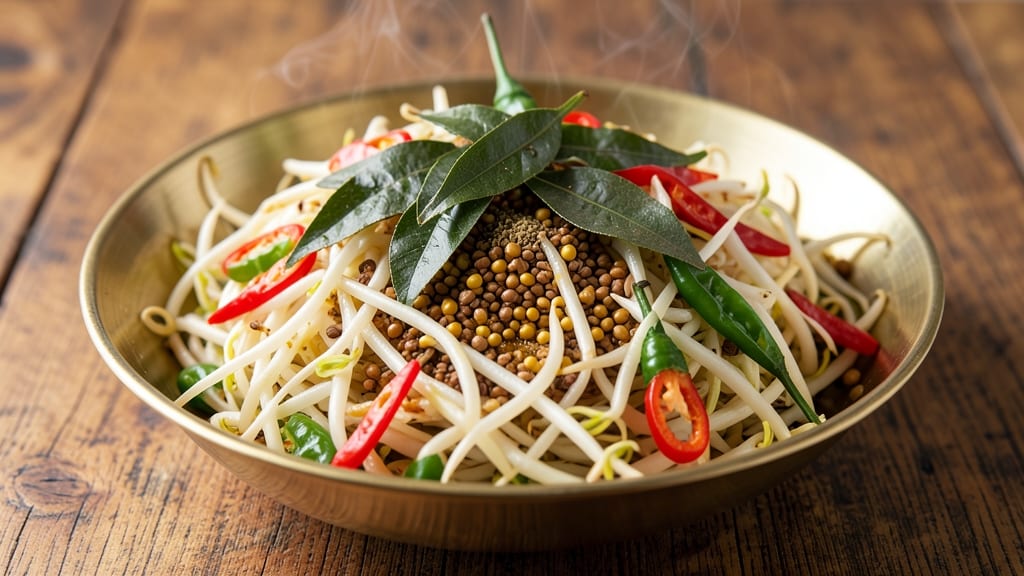
This bean sprouts Indian recipe transforms humble sprouts into a vibrant, crunchy side dish that packs bold flavors in every bite. The secret lies in tempering whole spices—cumin, mustard seeds, and curry leaves—directly in hot oil, creating an aromatic base that clings to the sprouts like a fragrant embrace.
I developed this recipe after discovering how easily sprouts absorb spices, turning them from bland to irresistibly savory in under 15 minutes.
The magic happens in the tempering technique, where mustard seeds pop and release their sharp aroma before softening into warm, earthy notes. Adding a touch of lemon juice at the end brightens the dish, cutting through the richness while keeping the sprouts crisp-tender.
This method preserves the natural crunch while infusing them with restaurant-quality depth—no fancy equipment required, just a sturdy pan and attention to timing.
What you’ll end up with is a dish that’s perfectly balanced—crisp on the outside, tender inside, and bursting with the classic Indian spice blend that makes it feel like a taste of home.
The aroma alone will draw everyone to the table, and the texture contrast between the crunchy sprouts and the smooth spiced oil creates a satisfying bite every time. Serve it alongside roti or steamed rice for a complete meal.
This recipe isn’t just about the sprouts—it’s about the technique that elevates simple ingredients into something extraordinary. The spices are the stars here, and when used correctly, they transform an everyday side into a dish worth celebrating. Let’s get cooking!
Ingredients for bean sprouts indian
Transform simple sprouts into a vibrant Indian side with bold spices and crisp texture.
| Ingredient | Amount | Notes |
|---|---|---|
| Mung Bean Sprouts 🌱 | 4 cups | Freshly grown, rinsed well |
| Yellow Mustard Seeds 🌶️ | 1 tbsp | Whole seeds for popping |
| Cumin Seeds 🌿 | 1 tbsp | Toasted for deeper flavor |
| Curry Leaves 🌿 | 8 whole | Fresh, dried if unavailable |
| Green Chilies 🌶️ | 2 whole | Slit lengthwise for mild heat |
| Asafoetida (Hing) 🧂 | ⅛ tsp | Optional but authentic |
| Turmeric Powder 🧂 | ¼ tsp | Freshly ground preferred |
| Garam Masala Powder 🌶️ | ½ tsp | Store-bought blend works |
| Extra-Virgin Olive Oil 🫒 | ½ cup | High smoke point preferred |
| Lemon Juice 🍋 | 1 tbsp | Freshly squeezed |
| Salt 🧂 | ½ tsp | Kosher or sea salt |
| Fresh Coriander Leaves 🌿 | ¼ cup | Chopped for garnish |
The mustard seeds and cumin are non-negotiable—they create that signature aroma when popped in hot oil. Whole spices from the bulk section at Indian grocery stores or Penzeys deliver the best flavor. Look for seeds that smell fresh and vibrant, not stale. Fresh curry leaves are ideal, but if you can't find them, dried leaves work at half the amount. The green chilies should be bright green, not wilted. For the turmeric and garam masala, store them in airtight containers away from light to preserve their potency.
No mustard seeds? Poppy seeds or nigella seeds can mimic the popping texture, though the flavor won't be identical. Substitute dried mustard powder at half the amount, but it won't achieve the same aromatic punch. Asafoetida (hing) is optional but adds that unmistakable umami depth—skip it if you're avoiding strong flavors. For the lemon juice, fresh is best, but bottled works in a pinch. The olive oil should have a high smoke point; avocado oil is another great choice if you're concerned about burning. If you're short on time, pre-toasted cumin seeds save a step, but toasting them fresh in the pan adds an extra layer of flavor.
Fresh sprouts should be used within 2-3 days for maximum crunch. Store them in an airtight container in the fridge, but rinse them again just before cooking to remove any moisture. The spiced oil can be made ahead and stored for up to 1 week in the fridge—just reheat gently before using. This dish reheats beautifully, making it perfect for meal prep. Portion into containers with a sprinkle of fresh coriander on top for a pop of color. The flavors actually deepen overnight, so leftovers taste even better the next day.
Why You'll Love This Recipe
- Pantry Magic: I swear by this one—no fresh herbs, no fancy prep, just dried spices and sprouts that take 10 minutes to rinse. Honestly, the mustard and cumin seeds pop in the pan while I chop a single onion, and suddenly, dinner’s ready.
- Crunchy-Tangy Fix: That first bite? The sprouts stay crisp, the green chilies add just enough heat, and the curry leaves bring this earthy, aromatic punch. It’s the kind of flavor that makes you reach for seconds without even thinking—no heavy cream, no butter, just pure, satisfying spice.
- Lunchbox Hero: Between us, this is my go-to for packed lunches or quick office meals. Toss it with rice or wrap it in a tortilla, and it keeps well for days. My coworker still texts me asking for the recipe every time I bring it in—(yes, even on a Tuesday).
- Budget Victory: Mung sprouts are dirt cheap, and a little goes a long way. I stretch this into three meals for my family, and the spices cost pennies. Not the prettiest, but the taste makes up for it—and my wallet thanks me every time.
Step-by-Step instructions for spiced cumin and mustard seed bean sprouts
This vibrant Indian-inspired dish delivers bold flavors with minimal prep—just five key steps.
Toast the Whole Spices for Maximum Flavor
Heat the 0.5 cup extra-virgin olive oil in a large skillet over medium heat until shimmering but not smoking. Add the 1 tablespoon cumin seeds and 1 tablespoon yellow mustard seeds—they should sizzle immediately and pop like tiny fireworks.
Watch closely as the cumin turns golden brown and the mustard seeds darken slightly—this takes about 30-45 seconds. Immediately add the 8 whole curry leaves and 2 slit green chilies, stirring for another 10 seconds until the leaves darken and the chilies soften. This quick toasting unlocks their aromatic potential without burning them.
Add Aromatics and Spices for Depth
Reduce heat to medium-low and sprinkle in the 0.125 teaspoon asafoetida (hing), 0.25 teaspoon turmeric powder, and 0.5 teaspoon garam masala powder. Stir vigorously for 15 seconds to bloom the spices—you'll notice the hing release its pungent aroma instantly.
Here's the thing—don't let the spices burn. Keep the heat low enough that you can hold your hand comfortably over the pan. The hing should dissolve completely, leaving no visible specks. This step builds the flavor foundation for your sprouts.
Sauté the Sprouts Until Tender-Crisp
Add the 4 cups mung bean sprouts and 0.5 teaspoon salt to the skillet, tossing gently to coat evenly in the spice oil. Cook for 5-6 minutes over medium heat, stirring occasionally, until the sprouts turn bright green and develop a slight char in spots.
You're aiming for tender-crisp texture—when the sprouts are bright green and slightly wilted but still hold their shape when squeezed gently. If they start to brown too quickly, reduce heat to medium-low. Overcooking turns them mushy, so watch carefully during the last 2 minutes.
Finish with Acid and Fresh Herbs
Remove the skillet from heat and stir in the 1 tablespoon lemon juice and 0.25 cup chopped fresh coriander leaves. Toss everything together for 30 seconds—the acid brightens the flavors while the coriander adds freshness. The lemon juice also helps balance any heat from the chilies.
Taste immediately and adjust seasoning if needed. You might want to add a pinch more salt or a squeeze of extra lemon juice. The dish should be vibrant, slightly tangy, and packed with spice complexity. Real talk: this is where the magic happens—the simple act of finishing with fresh herbs transforms the dish.
Serve Immediately for Best Texture
Transfer the spiced sprouts to a serving platter and serve while still warm. The texture should be tender-crisp with a satisfying crunch. This dish works perfectly as a side with roti, naan, or even as a light main with yogurt for dipping.
Don't let it sit too long—bean sprouts lose their texture quickly once off the heat. If making ahead, prepare through Step 3, then finish with lemon and coriander just before serving. The flavors will continue developing as they cool slightly, making each bite even more vibrant.
Pro Tips For Making Bean Sprouts Indian
- CRANK THE HEAT HIGH: The moment you hit the pan with mustard and cumin seeds, turn it to maximum. I learned this the hard way—low heat means those seeds will sputter and burn before popping properly. You want them to sizzle aggressively for 10-15 seconds until they turn golden and release their aroma. (Yes, even if you're impatient like me.)
- WASH SPROUTS TWICE: Give those mung bean sprouts a thorough rinse before and after cutting them. The first wash removes dirt from the market, and the second wash ensures no grit gets into your final dish. I used to skip this, and the texture always felt off—like eating sand with every bite.
- CHOP CHILIES UNIFORM: Slice green chilies into thin, even pieces—about ¼-inch thick. Uneven slices mean some parts will burn while others stay raw. My grandmother swore by this, and she was right: consistent texture makes the dish taste balanced, not just spicy in spots.
- ADD CURRY LEAVES LAST: Toss in the curry leaves only when the sprouts are nearly done cooking. They burn faster than you’d think, and their bitterness takes over if you add them too early. Drop them in with the green chilies for the final 30 seconds—this keeps their flavor bright and their edges crisp.
Make-ahead tips for this bean sprouts indian
Prep Ahead Spice Oil
Save time by making the spiced oil base a day ahead. Heat 0.5 cup olive oil in a small saucepan over low heat and toast 1 tbsp cumin seeds and 1 tbsp mustard seeds for 1 minute until golden.
Remove from heat and stir in 0.125 tsp asafoetida, 0.25 tsp turmeric, and 0.5 tsp garam masala. Let cool, then store in an airtight container in the fridge for up to 7 days. Reheat gently before using to preserve flavors. 💡
Sprout Prep Shortcut
Grow sprouts in bulk and store them in a resealable plastic bag with a paper towel to absorb moisture. Keep them in the fridge for up to 3 days—rinse just before cooking.
For even faster prep, buy pre-sprouted bean sprouts from the produce section, but rinse thoroughly to remove any preservatives. 🌱
Make-Ahead Serving Strategy
Prepare the sprouts through Step 3 (sautéed but before lemon), then store in an airtight container. Reheat gently in a dry skillet over medium heat for 2-3 minutes before finishing with lemon and coriander.
This keeps the texture crisp-tender and prevents sogginess. Portion into individual containers with a sprinkle of coriander for easy grab-and-go meals. ✨
Freezer-Friendly Adaptation
For long-term storage, blanch the cooked sprouts for 30 seconds in boiling water, then transfer to an ice bath. Drain well and freeze in a single layer on a tray before transferring to a freezer bag for up to 2 months.
To serve, thaw in the fridge overnight, then reheat in a skillet with a splash of water until warmed through. Add fresh lemon and coriander just before eating. ❄️
Batch Cooking Tips
Double the recipe and store components separately for easy assembly. Keep the spiced oil in one container and the sprouts in another. When ready to serve, simply toss them together with lemon and coriander.
This method works perfectly for meal prep—just reheat the oil if needed before combining. Use a large nonstick skillet for batch cooking to maintain even heat distribution. 🔥
Flavor Boost for Leftovers
Revive day-old sprouts by reheating in a skillet with 1 tsp fresh lemon juice and a pinch of salt. Add a splash of water if they seem dry. For extra flavor, sprinkle with 0.25 tsp chaat masala or a dash of amchur (dry mango powder) to brighten the dish.
The spices help mask any loss of freshness, making leftovers taste almost as good as fresh. 💛
Nutrition facts
Frequently asked questions
Can I use other types of bean sprouts besides mung?
While mung bean sprouts are traditional, you can substitute with chickpea (garbanzo) sprouts or lentil sprouts for a heartier texture. Just note that chickpea sprouts may need 1-2 extra minutes of cooking time to reach tender-crisp perfection. Avoid alfalfa sprouts—they have a different flavor profile and softer texture that won't hold up well to the spice treatment.
How do I prevent the sprouts from turning mushy?
Keep the heat at medium or medium-low and stir frequently to ensure even cooking. The sprouts are done when they're bright green and just slightly wilted—overcooking by even 30 seconds can turn them mushy. For extra insurance, add 1/4 cup water to the pan during the last minute to create steam, which helps maintain texture while finishing the dish.
What's the best way to make this dish spicier?
Double the green chilies to 4 whole and add 0.25 tsp cayenne pepper with the garam masala. For heat lovers, toast an extra 0.5 tsp mustard seeds until they turn dark brown—this intensifies their pungency. Serve with a side of yogurt or mint chutney to balance the heat and cool your palate.
Can I make this dish ahead of time?
Yes, but with a key adjustment: Prepare through Step 3 (sautéed sprouts), then store in an airtight container. When ready to serve, reheat in a dry skillet for 2 minutes before adding fresh lemon juice and coriander. The lemon and herbs should always be added fresh to preserve their bright flavors and prevent sogginess.
What are good sides to serve with this dish?
This spiced sprouts dish pairs perfectly with whole wheat roti, steamed basmati rice, or garlic naan. For a complete meal, add a protein like paneer tikka or dal tadka. The crisp texture of the sprouts contrasts beautifully with soft, pillowy breads, while the spices complement the mild flavors of rice.