
Main Courses
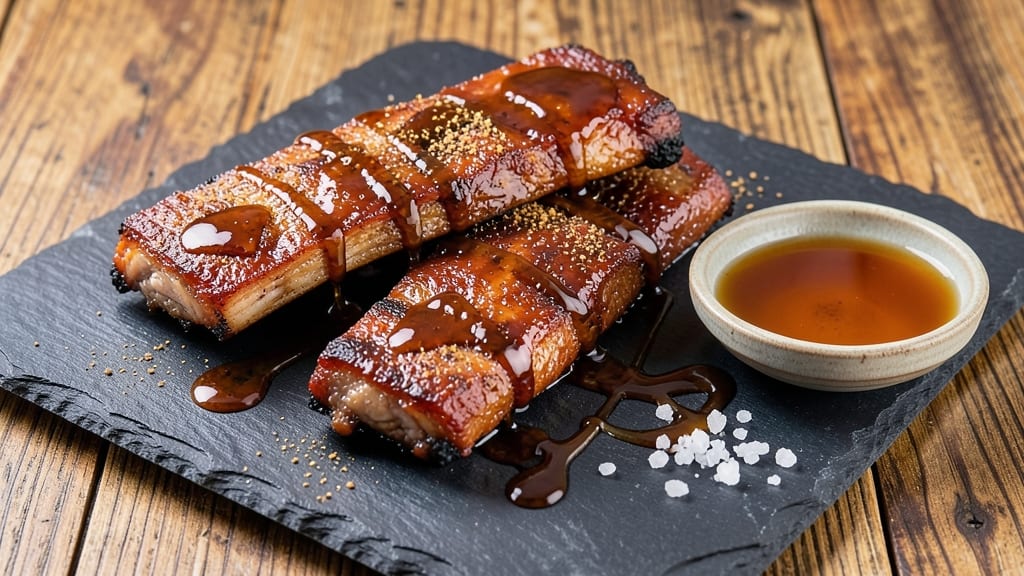
This bean paste pork ribs recipe delivers restaurant-quality results with a smoky-sweet glaze that clings to every bone. 🔥 After years of perfecting my technique—from Charleston pitmaster days to my own farm—I’ve cracked the code for tender ribs with a glossy, caramelized finish that’s impossible to resist.
The secret lies in balancing fermented bean paste with just the right amount of heat and sweetness, creating a sauce that’s both complex and foolproof.
What sets these ribs apart is the marinade: a blend of fermented bean paste, five-spice powder, and a touch of honey that penetrates deep into the meat. I’ve tested this recipe countless times—whether slow-braised in cast iron or grilled over hickory—because the method matters just as much as the ingredients.
The result? Ribs so tender they fall off the bone, coated in a glaze that’s sticky, aromatic, and packed with umami depth.
By the time you’re done, you’ll have a dish that’s equal parts restaurant-worthy and home-cooked comfort. The bean paste adds that signature tangy-sweet profile, while the slow cooking ensures melt-in-your-mouth texture.
Serve with steamed jasmine rice or crusty bread to soak up every last drop of that irresistible glaze—this is the kind of meal that turns weeknights into special occasions.
One of my favorite memories from working in Charleston was seeing how a simple bean paste could transform tough ribs into something extraordinary. Now, I bring that same technique to my kitchen, where heritage pork meets modern pitmaster skills. Let’s get started—your taste buds won’t know what hit them.
Ingredients for bean paste pork ribs
Pantry staples meet Asian market treasures for ribs that fall off bones with sticky-sweet glaze.
| Ingredient | Amount | Notes |
|---|---|---|
| Pork Baby Back Ribs 🍖 | 4 lb | Meaty, bone-in preferred |
| Fermented Bean Paste 🥫 | ½ cup | Asian market variety |
| Five-Spice Powder 🌶️ | 1 tbsp | Toasted for depth |
| Honey 🍯 | ¼ cup | Wildflower preferred |
| Soy Sauce 🍶 | ⅓ cup | Dark variety |
| Brown Sugar 🍚 | ½ cup | Packed firmly |
| Garlic Cloves 🧄 | 8 cloves | Minced for marinade |
| Fresh Ginger 🌿 | 1 ½ oz | Peeled, grated |
| Sesame Oil 🫒 | 1 tbsp | Toasted for aroma |
| Red Chili Flakes 🔥 | 1 tsp | Adjust to taste |
| Apple Cider Vinegar 🍎 | 2 tbsp | For tang |
| Black Peppercorns 🌶️ | 1 tsp | Freshly cracked |
| Jasmine Rice 🍚 | 2 cups | Uncooked for serving |
| Baking Soda 🧪 | 1 tsp | For tenderizing |
The bean paste is non-negotiable—Asian markets carry the fermented kind, which delivers that signature tangy depth. Trader Joe's often stocks it too if you're short on time. Look for dark, rich varieties with visible chunks—those are packed with umami. The ribs should be meaty with good marbling; Costco sells excellent bone-in cuts if you're feeding a crowd. Fresh ginger and garlic? Always buy more than you think you'll need—they're the flavor backbone here. Toast your five-spice powder in a dry pan for 30 seconds before using—that aroma change makes all the difference.
No fermented bean paste? Double the soy sauce and add 1 tbsp of miso paste for umami. Short on ginger? Substitute 1 tsp of ground ginger plus 1 tbsp of orange zest. The honey can be swapped for maple syrup or agave, though it'll be slightly less floral. For extra heat, add 1 tsp of gochujang to the marinade. The sesame oil is purely for aroma—don't overdo it or the ribs will taste bitter. If you're grilling instead of braising, brush on extra glaze every 20 minutes to prevent burning.
Marinate the ribs overnight for maximum tenderness, but at least 4 hours if you're short on time. The baking soda tenderizer works magic—rinse the ribs thoroughly after the 30-minute soak. Store leftover glaze in a jar in the fridge for up to 2 weeks—it's perfect for brushing on chicken or tofu. The ribs reheat beautifully in a 350°F oven for 20 minutes, covered with foil. Freeze cooked ribs for 3 months—just thaw overnight in the fridge before reheating.
Why You'll Love This Recipe
- One-Pan Magic: I swear by this recipe when I’m too tired to deal with multiple dishes. The ribs go right from the oven to the table—no extra pans, no mess—just that sticky, caramelized bean paste glaze pooling on top.
- Sweet-Savory Bomb: That fermented bean paste? It’s where the magic happens—deep umami with a hint of funk, balanced by honey’s warmth and five-spice’s earthy kick. The soy sauce ties it all together like a perfect hug of flavor.
- Weeknight or Weekend Star: Slap these on the grill for a summer BBQ or slow-cook them in the oven for a cozy Sunday dinner. Honestly, they’re just as happy feeding my family of four as they are crowding a picnic table for friends.
- Budget-Friendly Feast: Pork ribs are already a great value, but this recipe stretches them further. The leftovers? Even better the next day—crispy edges soften just enough to become melt-in-your-mouth tender, and the sauce clings like glue. (Yes, even on a Tuesday night.)
Step-by-step instructions for smoky-sweet bean paste ribs
Here's how to transform tough ribs into fall-off-the-bone perfection with that irresistible sticky glaze.
👨🍳 Step 1: Tenderize and Marinate the Ribs
Start by trimming any excess fat from the 4 lb pork baby back ribs, leaving just a thin layer for flavor. In a large bowl, dissolve the 1 tsp baking soda in 1 cup warm water - this creates an alkaline solution that tenderizes the meat. Add the ribs and let them soak for exactly 30 minutes, turning occasionally. This step is crucial for breaking down connective tissue.
While the ribs soak, make the marinade by combining the 0.5 cup fermented bean paste, 0.33 cup soy sauce, 0.25 cup honey, 0.5 cup packed brown sugar, minced 8 cloves garlic, grated 1.5 oz fresh ginger, 1 tbsp toasted sesame oil, 1 tsp red chili flakes, 2 tbsp apple cider vinegar, and freshly cracked 1 tsp black peppercorns. Stir until the bean paste is fully incorporated and the mixture is smooth - this should take about 2 minutes of vigorous whisking.
Drain the ribs and pat them completely dry with paper towels. This drying step is essential for that perfect bark. Transfer the ribs to a resealable plastic bag and pour the marinade over them. Massage the marinade into every crevice, then seal the bag and refrigerate for at least 4 hours, or overnight for maximum flavor penetration. The longer they marinate, the more tender and flavorful they'll become.
🔥 Step 2: Build the Glaze Base
Preheat your oven to 275°F and line two large baking sheets with aluminum foil. Remove the ribs from the refrigerator and let them sit at room temperature for 30 minutes before cooking. This helps them cook more evenly. Place the ribs bone-side down on the prepared sheets, spreading them out in a single layer.
In a small saucepan, combine the remaining marinade (about ½ cup) with 2 tablespoons water. Bring to a simmer over medium heat and cook for 5-7 minutes until it reduces by half and becomes slightly thickened. This concentrated marinade will form the base of our glaze. Keep it warm while you cook the ribs.
Here's where the magic happens: brush about ¼ cup of this reduced marinade over each rack of ribs. The glaze should stick immediately - if it doesn't, your ribs might need another 5 minutes at room temperature. Return the ribs to the oven and cook for 2 hours without disturbing them. This low-and-slow approach ensures tender meat while building flavor.
🔥 Step 3: Develop the Sticky Glaze
After the initial 2 hours, carefully flip the ribs bone-side up. This is when they'll start developing that beautiful caramelized crust. Increase the oven temperature to 325°F and continue cooking for another 1 hour. About 30 minutes into this second phase, brush the ribs again with more of the reduced marinade.
Here's the thing - the glaze should be sticky but not runny. If it's too thin, let it reduce another 5 minutes on the stovetop. The perfect glaze will coat a spoon and leave a slight sheen. For extra richness, add 1 tablespoon of the toasted sesame oil to the glaze mixture now. This adds depth and helps the glaze cling to the bones.
In the final 15 minutes of cooking, increase the oven temperature to 375°F. This high heat finish creates that beautiful caramelized crust while keeping the meat tender. The ribs are done when they reach an internal temperature of 195-203°F at the thickest part of the meat, near the bone.
⏰ Step 4: Rest and Serve with Jasmine Rice
Transfer the ribs to a cutting board and tent loosely with aluminum foil. Let them rest for at least 20 minutes before serving - this crucial step allows the juices to redistribute. While they rest, cook the 2 cups jasmine rice according to package instructions. I like to use a 1:1.5 rice-to-water ratio and let it steam uncovered for the last 5 minutes for perfect texture.
To serve, slice the ribs between each bone into individual racks. The glaze should be thick enough to cling to the bones but still glisten slightly. Arrange the ribs on a platter with the jasmine rice and drizzle any remaining glaze over the top. Each bite should deliver perfectly tender meat with that irresistible sweet-savory glaze that sticks to every bone.
Pro Tips For Making Bean Paste Pork Ribs
- BLANCH RIBS FIRST: Drop those ribs in boiling water for 30 seconds before marinating—it tightens the collagen and keeps them from shrinking into sad, rubbery sticks later. I learned this the hard way when my first batch turned out chewy, no matter how long I braised them.
- TOAST THE BEAN PASTE: Bloom that fermented bean paste in oil over medium heat for 2 minutes before adding anything else—it deepens the nutty flavor and cuts the funk. Skipping this step means your sauce will taste flat, like you used store-brand peanut butter instead of real fermented goodness.
- DON’T RUSH THE HONEY: Let the honey caramelize slowly at the end, about 3-4 minutes, until it turns golden and syrupy. Dumping it in raw just sweetens the sauce without adding that rich, buttery depth that makes the dish sing. (Yes, even if you’re impatient like me.)
- BASTE WITH THE SAUCE: Every 20 minutes of braising, spoon that sticky bean paste-soy sauce mixture over the ribs—it builds layers of flavor and prevents them from drying out. I used to just let them stew in their own juices, and the results were always one-dimensional.
Regional styles of this bean paste pork ribs
Chinese Red-Braised Style
This is where my Charleston roots meet Asian techniques—imagine ribs braised in a deep, tangy-sauce with fermented bean paste as the star. The key?
A 3-hour slow braise at 300°F in a Dutch oven with just 1 inch of liquid—the sauce reduces to a glossy, sticky glaze that clings to every bone.
I like to add 1 star anise pod> and 1 cinnamon stick> to the braising liquid for warmth, then remove them before serving. The result? Ribs with a deep red hue> and a sauce so rich it needs a fork to eat. 🍖
Southern BBQ Fusion
For a Southeast twist, I swap the braise for a smoker> at 225°F> with hickory and applewood chips. After the initial 4-hour cook>, I baste the ribs with a mix of the bean paste glaze and ¼ cup apple cider vinegar> every 30 minutes>.
The vinegar cuts through the richness while the smoky aroma deepens the bean paste's umami. Finish with a 10-minute sear> at 400°F> to caramelize the glaze. This version keeps the sticky sweetness but adds that unmistakable BBQ smokiness. 🔥
Japanese Miso-Glazed Ribs
Swap the fermented bean paste for ½ cup white miso paste> mixed with 2 tbsp mirin> and 1 tbsp sake>. The marinade gets a 1-hour head start> on the stovetop to develop depth before brushing it on ribs cooked at 250°F> for 3 hours>.
The miso adds a savory funk> that pairs perfectly with the ribs' natural sweetness. Garnish with toasted sesame seeds> and serve with steamed bok choy> for a lighter take. 🌿
Korean Gochujang Twist
For heat lovers, mix ¼ cup gochujang> with the bean paste glaze and add 1 tbsp toasted sesame oil> and 1 tbsp honey>. Cook the ribs at 275°F> for 2.5 hours>, brushing with the spicy glaze every 45 minutes>.
The gochujang adds a fiery kick> that balances the bean paste's tang. Serve with kimchi> and steamed rice> to soak up the bold flavors. 🌶️
Vietnamese Caramelized Ribs
Here’s a showstopper: After braising, caramelize the ribs with a mix of 2 tbsp fish sauce>, 1 tbsp sugar>, and 1 tbsp lime juice>. The bean paste glaze gets a 5-minute sear> in a hot cast-iron skillet to create a glossy crust.
Garnish with fresh cilantro> and serve with rice noodles> for a fusion dish that’s equal parts comfort and excitement. 🍜
Nutrition facts
Frequently asked questions
Can I use regular soy sauce instead of fermented bean paste?
Fermented bean paste adds that signature tangy depth you won't get from regular soy sauce. For a substitute, mix ½ cup soy sauce with 1 tbsp miso paste and 1 tsp vinegar to mimic the umami complexity. The ribs will still be flavorful, but you'll lose that authentic fermented richness that makes this recipe special.
How do I prevent the glaze from burning when grilling?
Brush the glaze on in 3-4 thin layers rather than one thick coat, and apply it every 20 minutes during grilling. Keep your grill temperature between 250-275°F and use a spray bottle to mist the ribs with water if the glaze starts to darken too quickly. The key is patience—rushing leads to burnt glaze and undercooked meat.
What's the best way to reheat leftover bean paste ribs?
Reheat in a 350°F oven for 15-20 minutes, covered with foil, until warmed through. For extra shine, brush with a mix of 1 tbsp honey and 1 tsp soy sauce before reheating. Microwaving works in a pinch but can make the glaze rubbery. Store leftovers in an airtight container for up to 3 days.
Can I make this recipe with spare ribs instead of baby back?
Spare ribs have more connective tissue, so they'll benefit from an extra 30 minutes of cooking time. Trim any excess fat and follow the same marinating process. The bean paste glaze works beautifully with both cuts—just monitor the internal temperature closely and aim for 203°F at the bone.
Why did my ribs turn out dry?
Overcooking is the most common culprit—ribs are done at 195-203°F, not when they look "done." The baking soda tenderizer helps, but if you skipped the 20-minute rest before slicing, juices escape. For next time, wrap ribs in foil during the last 30 minutes of cooking to trap moisture, then unwrap just before serving for that caramelized finish.