
Side Dishes
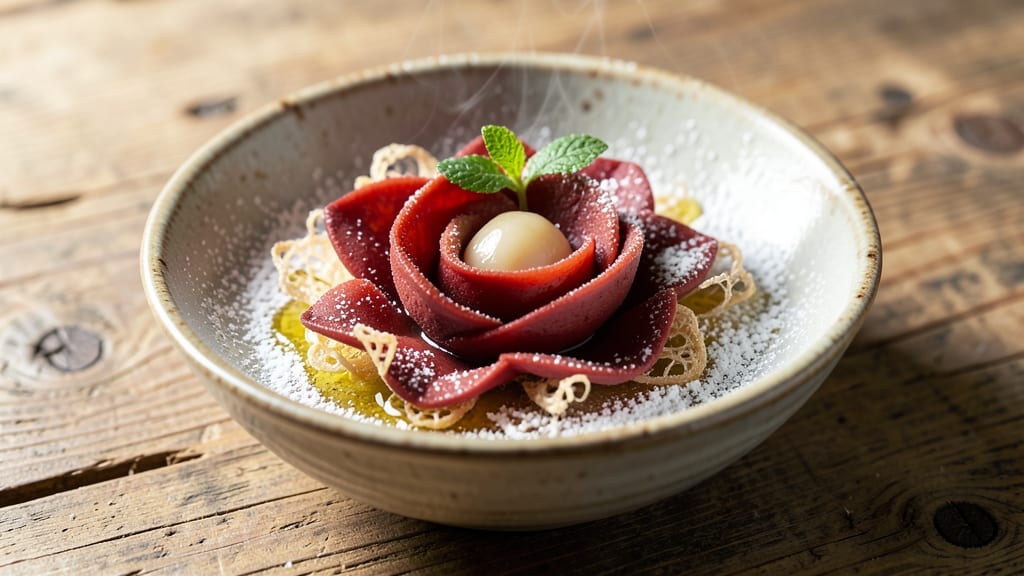
This bean paste flower recipe transforms humble red bean paste into delicate, crispy-edged edible blooms that look as stunning as they taste. 🌸 The secret lies in steaming the paste just right—firm enough to hold shape but tender enough to melt in your mouth, with a delicate crispness at the edges that's impossible to resist.
Traditional Chinese desserts rely on this technique to create visually striking yet simple treats, but I've adapted it for modern kitchens with gluten-free options and creative flower variations. The process is surprisingly straightforward once you master the shaping technique, and the results are worth every minute of careful work.
What you'll end up with are golden-brown bean paste flowers with crispy petals that give way to silky-smooth filling inside. These delicate treats are perfect for special occasions or as an elegant vegan dessert that impresses without being overly complicated.
The aroma alone from the steaming process will have everyone gathering around.
These flowers pair beautifully with green tea for an authentic experience, or serve them as a standalone dessert with a dusting of powdered sugar. The crispy edges contrast perfectly with the soft filling, creating a texture that's both satisfying and refined. Let's create these edible masterpieces together.
Ingredients for bean paste flower
Eight ingredients transform simple red bean paste into delicate, golden-brown edible flowers.
| Ingredient | Amount | Notes |
|---|---|---|
| Red Bean Paste 🌱 | 1 lb | Smooth, not chunky |
| Tapioca Starch 🌾 | ¼ cup | For crispy texture |
| Water 💧 | ½ cup | Room temperature |
| Vegetable Oil 🫒 | 2 tbsp | For shaping |
| Powdered Sugar 🍚 | 2 tbsp | For dusting (optional) |
| Kuzu (Kantoh) Powder 🌿 | 1 tsp | For crispy edges |
| Green Tea Leaves 🍵 | ¼ cup | Loose-leaf preferred |
| Sesame Seeds 🌰 | 1 tbsp | Toasted, for garnish |
| Cornstarch 🌾 | 2 tbsp | For dusting work surface |
| Agave Nectar 🍯 | 1 tsp | For brushing (optional) |
| White Rice Flour 🍚 | ½ cup | For gluten-free binding |
The red bean paste is the star—look for smooth, not chunky, at Asian markets or the international aisle. H Mart or 99 Ranch Market carry great options. If you can't find smooth paste, blend canned red beans with a bit of sugar until silky. The kuzu powder is key for that signature crispy edge—find it in the baking section or online. Toast your sesame seeds in a dry pan for 2 minutes until fragrant; they're worth the extra effort for that nutty aroma. For the green tea, loose-leaf is ideal, but bags work in a pinch—just use twice the amount.
No kuzu powder? Substitute 1 tsp cornstarch mixed with 1 tsp tapioca starch—it won't be exactly the same but still gives crispy edges. Running out of sesame seeds? Toasted poppy seeds or crushed pistachios add a different but lovely crunch. The agave nectar is optional but adds a subtle sweetness—maple syrup works too. If you're gluten-free, the white rice flour is your friend; regular flour will work but isn't as delicate. For the steaming process, if your bamboo steamer isn't ready, a metal colander over boiling water works perfectly—just line it with parchment paper first.
Keep your bean paste refrigerated in an airtight container for up to 2 weeks. The crispy flowers stay fresh for 3-4 days at room temperature if stored in a sealed container with parchment between layers. For longer storage, freeze shaped flowers on a tray before transferring to a bag—thaw at room temp for 10 minutes before serving. The aroma from the steaming process? That's your cue to gather everyone around—it's magical. Dust with powdered sugar right before serving, or serve with a side of matcha whipped cream for a modern twist.
Why You'll Love This Recipe
- Five-Ingredient Magic: I swear, this recipe is my go-to when I’m tired of complicated doughs. Just mix the tapioca starch with water until it’s smooth—no rolling, no fuss—and the red bean paste does all the heavy lifting.
- Sweet Crunch Perfection: That crispy exterior with the creamy, sweet bean paste inside? It’s like biting into a cloud. The powdered sugar dusting adds this subtle crunch that makes it feel special without extra effort.
- Lunchbox Hero: Between us, these are my kids’ favorite snacks for school. They hold up all morning, and the oil gives them that satisfying bite—no soggy treats here. Pack a few, and you’ve solved snack time.
- Pantry Staple Power: Honestly, I keep red bean paste and tapioca starch on hand just for this. It’s cheap, lasts forever, and turns into something delicious in minutes. Leftovers? They stay fresh for days, so I make a big batch.
Step-by-step instructions for bean paste flowers
Here's how to shape and cook these delicate swirls with perfect crispy edges.
👨🍳 Step 1: Prepare the Bean Paste Dough
In a mixing bowl, combine the 1 lb red bean paste with the 0.5 cup water and 1 tsp agave nectar. Mix thoroughly until smooth and fully incorporated. The texture should be pliable but not sticky—like soft modeling clay. If it's too dry, add 1 teaspoon water at a time until workable.
Next, sprinkle the 0.5 cup white rice flour and 0.25 cup tapioca starch over the bean paste mixture. Gently fold these dry ingredients into the paste using a spatula or your hands. The goal is to create a smooth, cohesive dough that won't crack when shaped. If it feels too sticky, add 1 tablespoon cornstarch at a time until it holds together when pressed.
🥘 Step 2: Shape the Flowers
Lightly dust your work surface with 2 tablespoons cornstarch to prevent sticking. Divide the dough into 4 equal portions (about 4 ounces each). Roll each portion into a 12-inch rope about ½-inch thick. I like to use my palms and gently press as I roll to maintain even thickness.
To form the flowers, take one rope and carefully twist it into a loose spiral, leaving about 2 inches untwisted at one end. Gently pull the untwisted end outward to create the flower's petals. Repeat with the remaining dough, spacing them evenly on your prepared surface. Cover loosely with plastic wrap and let rest for 15 minutes—this prevents cracking when you steam them.
🔥 Step 3: Steam Until Silky Soft
Set up a steamer with 2 inches of water in the bottom. Bring to a rolling boil over medium-high heat, then reduce to medium heat to maintain steady steam. Arrange the bean paste flowers in a single layer in the steamer basket, leaving 1 inch between each one so they don't touch.
Cover and steam for 12-15 minutes until the bean paste is completely tender and the edges are just beginning to pull away slightly from the center. You'll know they're ready when a toothpick inserted into the center comes out clean. Be careful not to over-steam—they'll continue cooking slightly as they cool.
🍳 Step 4: Create Crispy Edges
While the flowers are still warm, transfer them to a wire rack. In a small bowl, mix the 1 tsp kuzu (kantoh) powder with 2 tablespoons vegetable oil to form a paste. Using a pastry brush, gently paint this mixture along the edges of each flower, focusing on the outer petals. This creates that signature crispy texture while keeping the center silky.
Let the flowers cool completely on the rack, then dust lightly with 2 tablespoons powdered sugar if desired. For extra flavor, place 0.25 cup green tea leaves in a small bowl and gently press the cooled flowers against them to infuse the edges with aroma. Finally, sprinkle with 1 tablespoon toasted sesame seeds for texture and nutty flavor.
Pro Tips For Making Bean Paste Flower
- STEAM NOT BOIL: Use a bamboo steamer or heatproof bowl with a tight lid—bean paste flowers need gentle steam, not a water bath. I learned this the hard way when mine turned gummy; high heat makes the tapioca starch glue together instead of puffing.
- SIFT THE STARCH: Mix tapioca starch with powdered sugar first, then sift the dry blend over the bean paste. This prevents clumps that sink to the bottom and ruin the texture—no one wants dense, uneven flowers.
- CHILL THE DOUGH: Let the bean paste mixture rest in the fridge for 30 minutes before shaping. Cold dough holds its shape better when steaming, so your flowers won’t collapse into sad blobs (yes, even if you’re impatient like me).
- OIL THE PAPER: Lightly brush the parchment paper with vegetable oil before placing the dough on it. The flowers won’t stick, and you’ll save yourself from peeling off half-formed disasters—trust me, it’s worth the extra 10 seconds.
Regional styles of this dish
Chinese Tea House Style
In traditional Chinese tea houses, these flowers are served as part of a dim sum spread alongside steamed buns and dumplings.
The key difference is the green tea infusion—after steaming, the flowers are lightly brushed with jasmine tea-infused syrup (mix 2 tbsp honey with 1 tbsp steeped jasmine tea) and dusted with matcha powder instead of powdered sugar.
I've seen them arranged on a lily pad-shaped plate with a side of sweet osmanthus tea for dipping. The aroma from the tea-infused flowers is what makes this version truly special. 🍵
Japanese Wagashi Adaptation
Japanese wagashi chefs take this concept further by incorporating kinako (roasted soybean flour) into the dough for a nutty depth. Replace the white rice flour with ¼ cup kinako and ¼ cup cornstarch, then shape the flowers into lotus blossoms instead of simple spirals.
After steaming, brush the edges with a mix of 1 tsp kuzu powder and 1 tsp water, then dust with kinako and shredded yuzu peel. Serve with genmaicha tea for an authentic matcha-free pairing.
The texture contrast between the crispy edges and silky center is what makes this version stand out. 🌸
Taiwanese Street Food Twist
For a more casual version, Taiwanese street vendors often serve these as crispy bean paste "chips" rather than full flowers. After shaping the dough into ropes, cut them into 1-inch pieces and steam for just 8-10 minutes (they'll finish cooking on the fryer).
Fry the steamed pieces in hot oil (350°F) for 30 seconds per side until golden and crispy. Toss immediately with 1 tsp five-spice powder and 1 tbsp rock sugar.
These are perfect for snacking on the go—just like the famous Taiwanese "bean jelly" street stalls but with a crunchier texture. 🌟
Modern Fusion Variations
Want to impress at dinner parties? Try a lavender-infused version by adding 1 tsp dried culinary lavender to the dough. For a tropical twist, substitute ½ cup of the red bean paste with mango puree (blend 1 ripe mango with 1 tbsp lime juice).
Shape into flowers as usual, then brush the edges with a mix of 1 tsp kuzu powder and 1 tsp coconut oil before dusting with toasted coconut flakes. Serve with hibiscus iced tea for a refreshing contrast.
The floral or fruity notes add a sophisticated touch while keeping the technique simple. ✨
Gluten-Free Adaptations
For a 100% gluten-free version, skip the white rice flour and use only 1 cup tapioca starch instead. The dough will be slightly more delicate, so handle it gently when shaping.
After steaming, brush the edges with a mix of 1 tsp kuzu powder and 1 tbsp melted ghee (for extra richness). Dust with powdered arrowroot instead of powdered sugar. This version holds up beautifully and still delivers that perfect crispy-silky contrast.
It's a game-changer for guests with gluten sensitivities. 💪
Seasonal Holiday Versions
For Lunar New Year, shape the flowers into golden ingots (symbolizing wealth) by rolling the dough into thick rectangles and cutting into 1-inch squares. Steam as usual, then brush with a mix of 1 tsp kuzu powder and 1 tsp sesame oil.
Dust with edible gold leaf for a festive touch. For Mid-Autumn Festival, use lotus seed paste instead of red bean paste and shape into moon-shaped discs. Brush the edges with yuzu glaze (mix 1 tbsp yuzu juice with 1 tsp honey) and sprinkle with crushed pistachios.
These seasonal versions add cultural depth while keeping the technique accessible. 🎉
Nutrition facts
Frequently asked questions
Can I use sweet potato paste instead of red bean paste?
Yes, you can substitute sweet potato paste for a nutty, earthy flavor! Use the same amount as red bean paste, but add 1 extra tablespoon of water since sweet potato paste tends to be drier. The texture will be slightly different—more moist—but the shaping and steaming process remains identical. For best results, blend cooked sweet potato with a bit of sugar until smooth.
Why did my bean paste flowers crack during steaming?
Cracking usually happens when the dough is too dry or the steam isn't even. First, ensure your dough is pliable but not sticky—add 1 teaspoon water at a time if needed. Second, make sure your steamer has enough water (about 2 inches) and maintain steady heat. If cracks appear, cover the flowers with a damp paper towel during steaming to prevent drying out.
How do I store leftover bean paste flowers?
Store them at room temperature in an airtight container with parchment paper between layers to maintain crispiness. They'll stay fresh for 3-4 days. For longer storage, freeze shaped flowers on a tray, then transfer to a bag. Thaw at room temperature for 10 minutes before serving—they'll soften slightly but still hold their shape beautifully.
Can I make these flowers without a bamboo steamer?
Use a metal colander lined with parchment paper over a pot of boiling water. Arrange the flowers in a single layer, ensuring they don't touch. Steam for 12-15 minutes until tender, checking with a toothpick. For extra crispiness, place a damp towel over the colander to trap steam—this mimics the bamboo steamer's effect perfectly.
What's the secret to getting crispy edges every time?
The kuzu powder is your secret weapon! Mix it with oil to create a paste, then brush it only on the edges while the flowers are still warm. The key is timing—apply it immediately after steaming while the surface is slightly tacky but not wet. For extra crispiness, let the flowers cool completely before brushing, then reheat in a 350°F oven for 2-3 minutes to set the edges.