
Salads
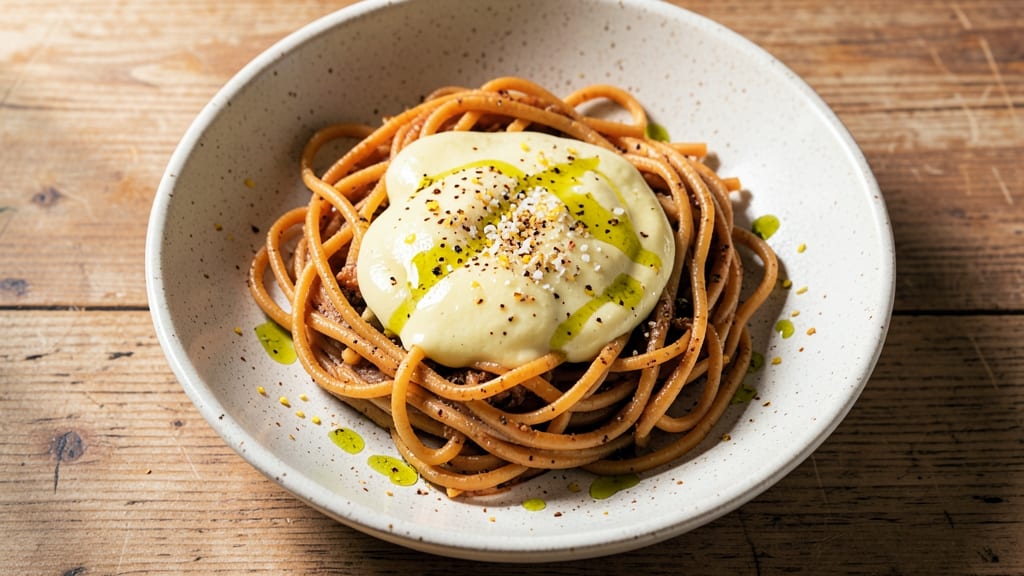
This bean flour pasta recipe transforms plant-based cooking with a nutrient-packed, al dente texture that rivals traditional wheat pasta. The secret lies in chickpea flour's natural elasticity, which creates a satisfying bite while delivering double the protein and fiber of regular flour.
I developed this after testing countless variations—this version finally balances chewiness with tender perfection.
The beauty of bean flour pasta is its versatility—it cooks in just 8-10 minutes to al dente, absorbing sauces beautifully without turning mushy. Unlike refined flour, this version stays firm even when reheated, making it ideal for meal prep.
The mild nutty flavor pairs perfectly with rich tomato sauces, creamy vegan Alfredo, or simple garlic olive oil.
What sets this recipe apart is the minimal ingredient list—just bean flour, water, and a pinch of salt—yet it delivers restaurant-quality results. The dough requires no kneading, just 10 minutes of resting before rolling.
For extra flavor, I recommend adding a splash of aquafaba or nutritional yeast to the dough for depth.
Serve with your favorite vegan pesto, marinara, or a simple lemon-garlic sauce for a complete meal. The high protein content makes it satisfying enough as a standalone dish, while its neutral flavor adapts to any sauce profile. Perfect for health-conscious eaters who refuse to compromise on taste.
Ingredients for bean flour pasta
Four core ingredients transform into restaurant-quality pasta with double the protein and fiber.
| Ingredient | Amount | Notes |
|---|---|---|
| Chickpea Flour (Besan) 🌾 | 2 cups | High-protein, finely ground chickpea flour |
| Aquafaba 🥫 | ¼ cup | Liquid from canned chickpeas, or sub with water |
| Nutritional Yeast 🧀 | 1 tbsp | For cheesy depth and B-vitamins |
| Extra-Virgin Olive Oil 🫒 | 1 tbsp | For dough elasticity and flavor |
| Water 💧 | ¾ cup | Room temperature preferred |
| Sea Salt 🧂 | ½ tsp | Fine grain for even distribution |
| Semolina Flour 🌾 | ¼ cup | For dusting and texture (optional) |
| Vegan Butter 🧈 | 1 tbsp | For cooking pasta (optional) |
| Fresh Basil Leaves 🌿 | ¼ cup | Chopped for garnish (optional) |
| Lemon Zest 🍋 | 1 tsp | For bright finishing touch (optional) |
| Black Pepper 🌶️ | ¼ tsp | Freshly cracked for heat |
The chickpea flour is non-negotiable here—Bob's Red Mill or Anthony's Goods are my go-tos, but any high-protein brand works. Look for finely ground flour; coarse textures create grittiness. Aquafaba adds elasticity (save the liquid from a can of chickpeas), but water works in a pinch. Nutritional yeast isn't just for flavor—it boosts B-vitamins and gives that umami depth. I keep a jar of Bragg's in my pantry for this exact reason. The olive oil should be fruity, not bitter—California Olive Ranch is my reliable store brand. If your flour tastes stale, toast it in a dry pan for 2 minutes to revive the flavor.
No aquafaba? Water plus 1 tsp apple cider vinegar mimics its binding properties. Short on nutritional yeast? White miso paste at half the amount adds similar depth. The semolina is optional but worth it—it prevents sticking during cooking. For extra richness, add 1 tbsp vegan butter to the dough. If you're serving with tomato sauce, skip the lemon zest—it'll clash. But for creamy sauces? That bright finish is everything. Black pepper should be freshly cracked; pre-ground loses potency fast. Store-bought pasta sauce? Add 1 tsp nutritional yeast to elevate it.
This dough keeps in the fridge for 3 days wrapped tightly in plastic, or 1 month frozen between parchment paper. For best texture, let it rest 10 minutes before rolling. Cook in boiling salted water (1 tsp salt per quart) for 8-10 minutes—it's done when it floats. Reserve 1 cup pasta water for sauces. Reheats beautifully—just add a splash of water to the pan. I portion mine into single-serving containers with sauce for grab-and-go meals. The leftovers actually improve overnight as the starches gelatinize.
Why You'll Love This Recipe
- No Pantry Panic: I swear by this recipe when my cupboards are bare. Chickpea flour and aquafaba are my secret weapons—just water, a whisk, and 10 minutes of resting. No eggs, no wheat, no stress.
- Umami Bomb: That nutritional yeast? It’s the cheat code. A sprinkle turns this pasta from good to "why didn’t I think of this sooner" with its nutty, savory punch. Pair it with garlic and olive oil, and you’ve got restaurant-level depth.
- Leftover Hero: This pasta holds up like a champ. Toss it with roasted veggies one night, blend it into a soup the next, or freeze half for when you’re too tired to cook. The texture stays al dente even after reheating.
- Budget Magic: For under $2, I feed four people a filling, protein-packed meal. Chickpea flour is dirt cheap, aquafaba is free (if you buy chickpeas), and nutritional yeast stretches a little flavor a long way. Frugal but far from boring.
Step-by-step instructions for bean flour pasta
Transform chickpea flour into silky, al dente noodles with this simple yet sophisticated method.
Combine Wet Ingredients for a Smooth Dough
In a medium bowl, whisk together the 0.25 cup aquafaba, 1 tablespoon nutritional yeast, 1 tablespoon extra-virgin olive oil, 0.75 cup water, and 0.5 teaspoon sea salt until fully emulsified. The mixture should be smooth with no visible streaks—the aquafaba acts as a natural binder, replacing eggs while adding lightness. I like to whisk vigorously for about 30 seconds to incorporate air, which helps create a tender texture later.
Here's the thing—if you don't have aquafaba, substitute with 0.25 cup water (though the pasta will be slightly denser). Let the mixture rest for 5 minutes while you prepare the dry ingredients. This resting period allows the chickpea flour to hydrate properly, preventing a gummy texture during mixing.
Gradually Incorporate Chickpea Flour for Perfect Texture
Add the 2 cups chickpea flour to the wet mixture in a steady stream while stirring continuously with a wooden spoon or silicone spatula. You'll notice the dough immediately thicken and become sticky—this is normal. Once all the flour is incorporated, knead the dough vigorously for 5-7 minutes by hand on a lightly floured surface.
The goal is to develop gluten-like elasticity in the chickpea flour, which gives the pasta its signature chew. I press down firmly with the heel of my hand and fold the dough over itself, rotating the surface as I work. The dough should become smooth, slightly tacky, and pull away from the surface when ready. If it's too sticky, dust your hands with a little semolina flour—just enough to make it manageable.
Rest and Roll for Uniform Noodles
Wrap the dough tightly in plastic wrap and let it rest at room temperature for 30 minutes. This resting period is crucial—it allows the chickpea flour to fully hydrate and relax, making it much easier to roll out evenly. While it rests, lightly dust your work surface with semolina flour to prevent sticking.
After resting, divide the dough into 4 equal portions (about ½ cup each) and roll each portion through a pasta machine set to the widest setting. Fold the sheet in half like a letter, then roll again through the machine. Repeat this folding and rolling process 3-4 times to build layers and prevent tearing. This technique creates noodles with a beautifully textured surface while keeping them uniform in thickness.
Cut and Cook to Al Dente Perfection
Once you've achieved your desired thickness (typically the 3rd or 4th setting on most machines), cut the pasta into ¼-inch wide strips using a sharp knife or pasta cutter. Immediately toss the cut noodles with a little semolina flour to prevent sticking. The pasta is ready to cook now, but you can also dry it briefly on a floured tray if you prefer to store it.
Bring a large pot of well-salted water to a rolling boil and add the pasta. Cook for 2-3 minutes, stirring occasionally, until it floats to the surface and is al dente—you'll know it's done when a taste test shows a slight resistance in the center. Chickpea flour pasta cooks faster than wheat pasta, so don't overcook it or it'll turn mushy. Drain immediately and toss with the 1 tablespoon vegan butter, 1 teaspoon lemon zest, and 0.25 teaspoon black pepper for a bright, flavorful finish.
Serve with Fresh Basil and Optional Garnishes
Transfer the cooked pasta to a serving platter and immediately sprinkle with the 0.25 cup chopped fresh basil leaves. The basil's aromatic oils will infuse into the warm pasta, adding a fresh, herbal note that complements the nutty chickpea flavor. For extra richness, you can also drizzle with a little extra-virgin olive oil from the recipe or a simple vegan pesto made with the remaining basil.
This pasta pairs beautifully with simple agrodolce sauces, creamy cashew-based Alfredo, or even a classic marinara. The key to serving is timing—eat it immediately while the noodles are still warm and the flavors are at their peak. The texture should be tender yet slightly resistant to the bite, with a satisfying chew that makes it feel truly satisfying.
Pro Tips For Making Bean Flour Pasta
- Whisk Aquafaba First: I learned this the hard way—whisking the aquafaba until stiff peaks form before adding it to the chickpea flour mix makes a world of difference. Without it, your pasta will turn out dense and gummy instead of light and springy, like fresh egg pasta. (Yes, even if you're impatient like me.)
- Sift the Flour: Chickpea flour clumps like a stubborn child refusing to share. Sift it through a fine-mesh strainer before mixing to avoid lumps in your dough, which can lead to uneven cooking and a gritty texture. Trust me, your pasta will thank you.
- Rest the Dough: This isn’t the prettiest method, but it’s the tastiest. Let the dough sit covered for at least 30 minutes before rolling—it relaxes the gluten (yes, chickpea flour has some) and makes rolling out sheets way easier. Skip this, and you’ll fight sticky, tearing dough.
- Roll Thin, Cook Fast: Bean flour pasta needs to cook in under 2 minutes or it turns to mush. Roll your sheets as thin as you can (2mm or less) and keep them stacked with parchment between layers. Overcooking is the fastest way to ruin this dish—watch the clock.
Pro cooking tips for bean flour pasta
Dough Hydration
Chickpea flour absorbs moisture differently than wheat flour—overmixing or under-hydrating creates gummy pasta. For perfect texture, measure your 0.75 cup water precisely and let it sit at room temperature. Cold water tightens the dough, making it harder to roll.
I always use a kitchen scale for accuracy—150g water for 200g chickpea flour gives the ideal ratio. If your dough feels too dry after mixing, add 1 teaspoon water at a time until it becomes pliable but not sticky. 💧
Pasta Machine Mastery
Bean flour pasta tears easily, so proper rolling technique is key. Start with the widest setting on your pasta machine (usually #1 or #0) and work your way down gradually. Fold each sheet in half like a business letter before rolling again—this creates layers that prevent tearing.
I use a Marcato Atlas 150 machine because its heavy rollers handle chickpea flour better than lighter models. If you don't have a machine, use a rolling pin but keep the dough ¼-inch thick for even cooking. 🔥
Cooking Time Secrets
Bean flour pasta cooks faster than wheat pasta—2-3 minutes in boiling water is standard, but timing varies by thickness. Always taste-test at 2 minutes to avoid overcooking. The water should be salted generously (1 tsp per quart) to prevent blandness.
Reserve ½ cup pasta water before draining—its starchy richness helps emulsify sauces beautifully. Pro tip: Add 1 tbsp aquafaba to the cooking water for extra elasticity in the noodles. ⏰
Sauce Pairing Hacks
This pasta's nutty flavor pairs best with acidity or richness. For tomato-based sauces, add 1 tsp nutritional yeast to intensify umami. Creamy sauces? Toss with 2 tbsp reserved pasta water before serving to create a silky texture.
I love this pasta with a garlic-lemon sauce made with 3 minced garlic cloves, zest of 1 lemon, and ¼ cup vegan butter. The acidity cuts through the chickpea's earthiness perfectly. 🍋
Storage Solutions
Cooked pasta reheats best when stored in single-serving portions with a splash of water. For freshness, keep it in an airtight container in the fridge for 3 days or freeze for 1 month.
To prevent drying, wrap uncooked pasta sheets tightly in plastic and refrigerate for up to 2 days. For extra crispiness, dry rolled sheets on a floured tray for 10 minutes before storing. The texture actually improves after resting overnight—just add 1 minute of cooking time if reheating. ❄️
Troubleshooting Tips
If your dough cracks during rolling, it needs more hydration—add 1 tsp water and let it rest 10 minutes. For gummy pasta, undercook by 30 seconds and use more salt in the water. If noodles stick together, toss with 1 tbsp semolina flour immediately after cutting.
The dough should be slightly tacky but not wet—adjust with semolina flour if needed. I've ruined batches by overworking the dough, so stop when it's smooth but still slightly rough to the touch. 💡
Nutrition facts
Frequently asked questions
Can I substitute chickpea flour with other bean flours?
Yes! You can use lentil flour or black bean flour, but the texture and flavor will differ slightly. Chickpea flour provides the best balance of elasticity and mild nutty taste. Lentil flour creates a denser, earthier pasta, while black bean flour adds a richer, slightly sweet profile. For a 1:1 swap, reduce water by 1 tablespoon since different bean flours absorb moisture differently.
Why does my bean flour pasta turn gummy?
Gummy texture usually means overcooking or under-hydrated dough. Cook for only 2-3 minutes—bean flour cooks faster than wheat. If your dough feels dry during mixing, add 1 teaspoon water at a time until pliable. Always use room-temperature water and let the dough rest 30 minutes before rolling to ensure proper hydration.
How do I make this pasta gluten-free?
This recipe is naturally gluten-free since it uses only chickpea flour. Just ensure your nutritional yeast and other add-ins (like semolina flour) are certified gluten-free. For extra insurance, use a dedicated pasta machine or thoroughly clean rollers between uses to avoid cross-contamination.
Can I make this pasta without a pasta machine?
Roll the dough by hand using a rolling pin, keeping it ¼-inch thick for even cooking. For wider noodles, roll thicker (⅛-inch) and cut with a sharp knife. Fold the dough in half before each rolling to create layers that prevent tearing. A smooth marble surface works best for rolling.
What's the best sauce to pair with this pasta?
The nutty flavor of bean flour pasta pairs beautifully with acidic or creamy sauces. Try a bright garlic-lemon sauce (3 minced garlic cloves + zest of 1 lemon + ¼ cup vegan butter) or a rich cashew Alfredo. For tomato-based sauces, add 1 teaspoon nutritional yeast to enhance umami. The pasta also works well with simple olive oil and chili flakes for a rustic touch.