
Main Courses
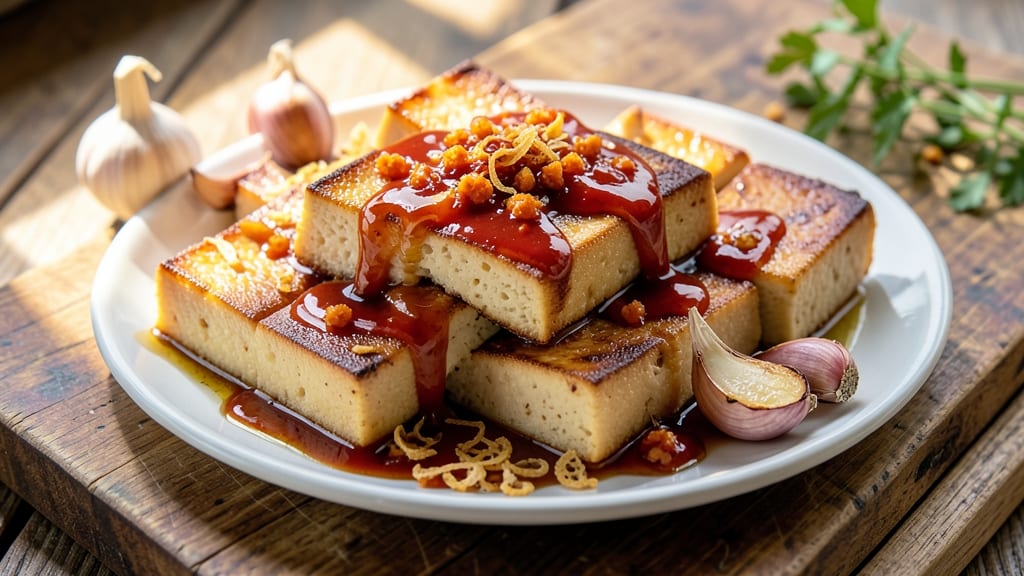
This Singapore bean curd recipe delivers the perfect balance of crispy wok-seared edges and silky centers that define authentic tau huay—a beloved street food staple. The secret lies in proper preparation and high-heat stir-frying, techniques perfected in Singapore's hawker centers.
Unlike softer versions, this method transforms bean curd into golden, crunchy bites with a tender interior that melts in your mouth.
The dish starts with thick, rectangular bean curd blocks that absorb minimal oil while developing that signature caramelized crust. Traditional recipes often include fermented bean curd for depth, but this version uses fresh blocks for a cleaner taste while maintaining authentic texture.
Stir-frying with garlic and chili paste adds the signature Singaporean heat and aroma that makes this dish irresistible.
What sets this recipe apart is the foolproof technique for achieving crispy edges without drying out the centers—a common challenge when cooking bean curd.
The result is a dish that's both satisfying and versatile: serve it as a side with rice and soy sauce, or as a main with vegetables and protein. The aroma alone will transport you to Singapore's bustling food stalls.
Perfect for home cooks looking to recreate Singaporean flavors, this recipe delivers restaurant-quality results with simple ingredients and straightforward techniques. Whether you're making it for a weeknight dinner or a cultural food experience, the crispy-silky contrast will become your new favorite texture combination.
Ingredients for bean curd recipe singapore
Authentic Singaporean flavors start with these carefully selected ingredients for perfect crispy-silky bean curd.
| Ingredient | Amount | Notes |
|---|---|---|
| Fresh Bean Curd Blocks 🧀 | 1 lb | Thick rectangular blocks, store-bought or homemade |
| Vegetable Oil 🫒 | ½ cup | High smoke point for stir-frying |
| Garlic Cloves 🧄 | 8 cloves | Minced finely for aromatic base |
| Sambal Oelek Chili Paste 🌶️ | 2 tbsp | Adjust for heat preference |
| Light Soy Sauce 🥄 | 3 tbsp | For umami depth |
| Dark Soy Sauce 🥄 | 1 tbsp | For color contrast |
| Sesame Oil 🥜 | 1 tbsp | Toasted for nutty aroma |
| White Rice Vinegar 🍶 | 1 tbsp | Balances rich flavors |
| Granulated Sugar 🍚 | 1 tsp | Enhances caramelization |
| Ground White Pepper 🌶️ | ½ tsp | Freshly ground for subtle heat |
| Cornstarch 🌾 | 1 tbsp | For crispy coating |
| Water 💧 | 2 tbsp | For cornstarch slurry |
| Fresh Cilantro 🌿 | ¼ cup | Chopped for garnish |
| Lime Wedges 🍋 | 2 whole | For serving |
The bean curd blocks are the foundation—look for thick, rectangular varieties at Asian markets like H Mart or 99 Ranch. Fresh blocks absorb less oil and develop better caramelization than pre-packaged versions. If using store-bought, check for minimal additives; brands like Taiwanese Tofu or Singapore-style tau huay blocks work best. For the garlic, freshly minced releases more aroma than pre-minced, and elephant garlic adds a sweeter depth. The sambal oelek should be vibrant red—if it's dull, it's lost its heat.
No sambal oelek? Fresh red chili paste or chili flakes work in a pinch, but adjust to taste. The soy sauces are non-negotiable—light for umami, dark for color. Substitute tamari for gluten-free, but traditional soy sauces provide that authentic hawker-center flavor. For the sesame oil, toasted is crucial—untosted lacks depth. The cornstarch slurry is your secret weapon: mix it well to avoid clumps, which can prevent even crisping. If you're short on time, arrowroot powder works similarly. Lime wedges should be freshly cut—bottled juice lacks the bright acidity.
Store the bean curd blocks in airtight containers with a damp paper towel to maintain freshness for up to 5 days. The cornstarch slurry can be prepped 1 hour ahead and kept refrigerated. Once cooked, the crispy bean curd reheats beautifully—30 seconds in a dry skillet restores the crunch. For meal prep, portion into single-serving containers with lime wedges on top to prevent sogginess. The dish keeps for 3 days refrigerated, though texture degrades after day 2.
Why You'll Love This Recipe
- No Chopping Needed: I swear by this recipe when I’m too tired to dice anything. Those pre-cut bean curd blocks? Just slice them into sticks—no knife skills required—and fry them until golden. The garlic and sambal do all the flavor work while you sip your coffee.
- Crispy-Creamy Magic: That first bite—crunchy outside, soft inside—is what makes this dish. The soy sauce caramelizes just enough to balance the fiery sambal, while the garlic turns sweet when fried. Honestly, it’s the kind of texture combo that makes you pause mid-bite.
- Leftover Goldmine: This recipe actually tastes better the next day. Cold or reheated, those crispy edges soften into something even more satisfying. Pack it for lunch or serve it at a potluck—it’s the one dish everyone will ask for seconds on.
- Pantry Staple Power: Five ingredients, zero specialty items. You’re probably missing nothing—just oil, garlic, and a chili paste you already have. Between us, this is my go-to when I’ve got hungry guests and no time to shop. Reliable, cheap, and always delivers.
Step-by-step instructions for wok-seared Singapore bean curd
A perfect balance of crispy edges and silky centers requires precision timing and technique.
Prepare the Bean Curd Blocks for Maximum Crispiness
Cut the 1 lb fresh bean curd blocks into ½-inch thick slices using a sharp chef's knife. I find the cleanest cuts come from working on a cutting board with the bean curd placed flat side down—this prevents the slices from warping. Arrange the slices on a wire rack set over a baking sheet and let them air-dry for 30 minutes at room temperature. This drying step is crucial as it creates a better crust during searing.
While the bean curd dries, create a cornstarch slurry by whisking together 1 tbsp cornstarch and 2 tbsp water in a small bowl until completely smooth. This will be our secret weapon for achieving that signature crispy exterior. The slurry should have the consistency of thin pancake batter—no lumps allowed.
Build the Flavor Base in the Wok
Heat 0.5 cup vegetable oil in a wok or large skillet over medium-high heat until shimmering but not smoking. Add the 8 cloves minced garlic and stir constantly for 30 seconds until fragrant but not browned—garlic burns quickly at high heat. Immediately add 2 tbsp sambal oelek chili paste and stir for another 20 seconds to distribute the heat evenly.
Pour in 3 tbsp light soy sauce and 1 tbsp dark soy sauce, stirring vigorously to deglaze the pan. The dark soy sauce will give your bean curd that signature caramelized color. Let the mixture simmer for 1 minute until slightly reduced. This flavor base forms the aromatic foundation for your dish—don't rush this step.
Sear the Bean Curd to Golden Perfection
Working in batches if needed, carefully place the dried bean curd slices into the wok. The oil should sizzle immediately—if it doesn't, your pan isn't hot enough. Let each slice cook undisturbed for 2-3 minutes until the edges develop a deep golden brown crust and the centers remain tender. I press down gently on the slices during the first minute to prevent curling and ensure even contact with the oil.
Flip each piece and cook for another 1-2 minutes on the second side until both sides are evenly browned. The bean curd should release easily from the pan when ready—if it sticks, your oil temperature isn't high enough. Transfer the cooked slices to a paper towel-lined plate to drain excess oil.
Finish with the Signature Sauce
Return the wok to medium heat and add 1 tbsp sesame oil, 1 tbsp white rice vinegar, 1 tsp granulated sugar, and 0.5 tsp ground white pepper. Stir for 30 seconds to combine, then pour the cornstarch slurry into the pan. Cook for 1-2 minutes until the sauce thickens to a glossy consistency that lightly coats the back of a spoon.
Return the seared bean curd to the wok and toss gently to coat evenly with the sauce. The sauce should cling to the crispy exterior while keeping the centers silky. Taste and adjust seasoning—you might need a touch more light soy sauce for umami balance or a squeeze of lime later for brightness.
Serve Immediately with Fresh Garnishes
Transfer the bean curd to a warm serving platter and sprinkle generously with 0.25 cup chopped fresh cilantro. The bright green color contrasts beautifully with the caramelized bean curd. Serve each portion with 2 whole lime wedges on the side—these add a crucial acidity that cuts through the richness and enhances all the flavors.
For the best experience, serve immediately while the bean curd is still crispy. The contrast between the crispy exterior and tender interior should be immediately apparent with each bite. If you find the bean curd loses crispiness after sitting, simply reheat in a dry skillet for 1-2 minutes per side to restore the texture.
Pro Tips For Making Bean Curd Recipe Singapore
- PREP THE CURD RIGHT: Soak your fresh bean curd blocks in cold water for 10 minutes before slicing—this prevents them from crumbling into a mushy mess when you fry. I learned this the hard way after watching my first batch disintegrate like wet cardboard. Use a sharp knife and slice thinly against the grain for even cooking.
- LOW AND SLOW FRY: Start with medium-low heat and about 2 tablespoons of oil—too hot, and the outside burns before the inside cooks. After 3-4 minutes per side, flip once to check: the edges should be golden but the center still slightly firm. My grandmother swore by this, and she was right: patience here means no rubbery curd.
- GARLIC MATTERS: Mince your garlic super fine (almost paste-like) and let it sit in the oil for 30 seconds before adding anything else. This builds flavor without burning—overcooked garlic turns bitter, and that’s the last thing you want in a delicate dish like this. Skip the crowding; give each clove space to sizzle.
- SOY SAUCE LAST: Add your light soy sauce just before serving—not during frying. The heat reduces it too fast, making the dish taste flat and one-dimensional. A splash of sambal oelek earlier? Sure. Soy at the end? Non-negotiable for that bright, umami punch. Trust me, your taste buds will notice.
Regional styles of bean curd recipe singapore
Hawker Center Style
In Singapore's bustling hawker centers, bean curd is often stir-fried with bold flavors and served as a quick, satisfying side. The key difference here is the addition of 1 tbsp fermented bean curd (tau kua) to the sauce, which adds a funky umami depth.
I like to use 1-inch cubes of tau kua simmered in the soy sauce base for 5 minutes before adding the bean curd. The texture becomes slightly chewy, and the flavor profile mirrors what you'd find at stalls like Tiong Bahru Market. 🌶️
Peranakan Fusion
The Peranakan community blends Chinese and Malay influences, and their version of bean curd incorporates coconut milk and lemongrass. For this adaptation, reduce the soy sauce to 2 tbsp light soy sauce and add ½ cup coconut milk along with 2 stalks minced lemongrass to the flavor base.
The coconut milk softens the crispiness slightly, creating a more velvety texture while adding tropical notes. Garnish with kaffir lime leaves for an aromatic finish that's distinctly Peranakan.
Spicy Sambal Twist
For those who love heat, this variation cranks up the spice factor by adding 1 tbsp shrimp paste (belacan) to the garlic-sambal base. The belacan deepens the savory notes while amplifying the chili's intensity.
I also increase the sambal oelek to 3 tbsp and add 1 tsp shrimp paste to the sauce at the end. This version is popular at Chinatown eateries where sambal is king. Serve with extra lime to balance the fiery flavors.
Vegetarian Protein Boost
To turn this into a complete vegetarian protein dish, stir-fry ½ lb shiitake mushrooms and ½ lb firm tofu alongside the bean curd. Press the tofu for 20 minutes before cubing to remove excess water, then pan-fry until golden.
Add the mushrooms and tofu to the wok with the bean curd during the final 2 minutes of cooking. This version works beautifully as a main course with steamed jasmine rice and a side of pickled vegetables. 💪
Street Food Garnishes
Authentic street food versions often include unexpected toppings that elevate the dish. Try adding crushed peanuts for crunch and quick-pickled red onions for brightness.
For the pickled onions, thinly slice ½ red onion and soak in ¼ cup rice vinegar, 1 tsp sugar, and a pinch of salt for 15 minutes. The combination of textures and flavors makes this dish feel like a true Singaporean street food experience.
These garnishes can be prepped ahead and stored in the fridge for up to 3 days.
Nutrition facts
Frequently asked questions
What's the difference between fresh and fermented bean curd in this recipe?
Fresh bean curd blocks create a cleaner, milder flavor perfect for beginners, while fermented tau kua adds funky umami depth. For this recipe, we use fresh blocks to maintain crispiness and simplicity, but you can add 1 tbsp fermented bean curd to the sauce for an authentic hawker center taste. The fermentation process gives tau kua its signature pungent aroma and slightly chewy texture.
How do I fix bean curd that turns soggy instead of crispy?
Sogginess happens when the centers overcook or absorb too much oil. To prevent this, ensure your oil is at medium-high heat and press down gently on slices during the first 2 minutes of cooking. Also, pat dried slices with paper towels before searing to remove excess moisture. For reheating, use a dry skillet for just 1-2 minutes per side to restore crispiness.
Can I make this recipe without a wok?
Use a large skillet or non-stick pan with high sides to contain the oil. For best results, choose a pan with a flat bottom and heat it until smoking hot before adding the bean curd. The key is maintaining high heat—if your pan isn't hot enough, the bean curd will steam instead of sear. A cast-iron skillet works perfectly for this technique.
What are the best vegetables to pair with this bean curd?
Traditional pairings include baby bok choy, Chinese broccoli, or long beans stir-fried alongside. For extra nutrition, add shiitake mushrooms or bell peppers. The vegetables should be cooked just until tender-crisp (2-3 minutes) to maintain their freshness. Serve with steamed jasmine rice for a complete meal.
How long can I store leftovers and how do I reheat?
Store leftovers in an airtight container for up to 3 days in the fridge. To reheat, place slices in a dry skillet over medium heat for 1-2 minutes per side until crispy again. Avoid microwaving—it destroys the texture. For extra crispiness, sprinkle with 1 tsp cornstarch before reheating to restore that golden crust.