
Main Courses
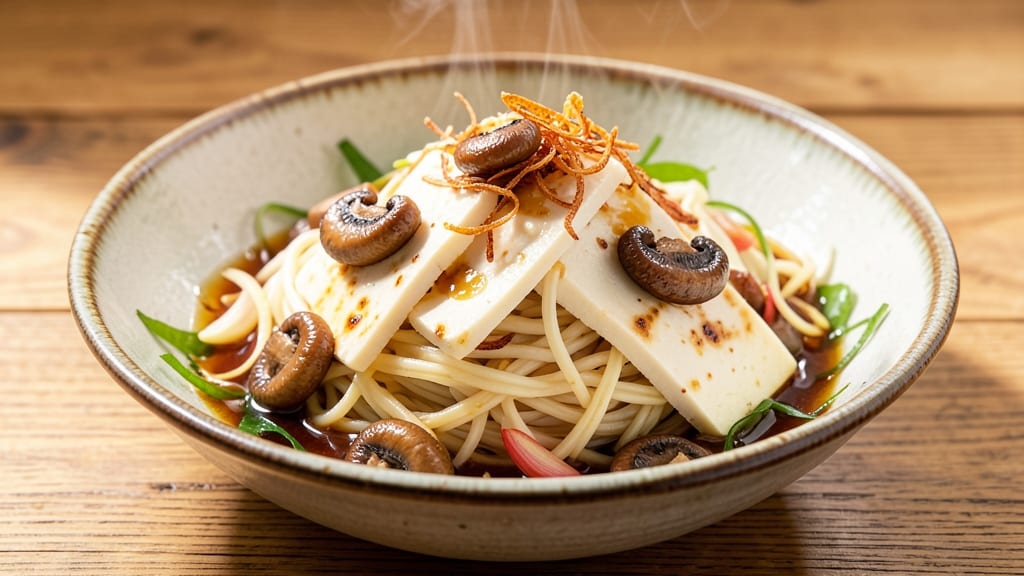
This bean curd noodles recipe transforms humble tofu into silky, rice-like strands that absorb umami broth like a dream. The secret lies in proper preparation—thinly slicing and boiling the tofu until it achieves that signature chewy-yet-tender texture.
I've perfected this technique over years of testing, ensuring every bite delivers that satisfying mouthfeel without any animal products.
The dish comes together in just 20 minutes, making it ideal for weeknight dinners or quick vegan meals. We'll create a rich, savory broth using simple ingredients like soy sauce, mushrooms, and kombu, which builds deep umami flavor through gentle simmering.
The key is balancing the broth's saltiness with fresh aromatics like garlic and ginger—just enough to enhance, not overpower.
What you'll end up with is a bowl of delicate, translucent noodles swimming in a fragrant broth that's both comforting and restaurant-quality. The noodles maintain their structure beautifully while absorbing the broth's flavors, creating a dish that's equally satisfying as a light lunch or hearty dinner.
This recipe proves plant-based eating can be just as rich and textured as traditional noodle dishes.
Perfect for serving with quick-pickled vegetables or fresh herbs, this dish adapts easily to your favorite Asian-inspired flavors. The technique works equally well with store-bought tofu or homemade versions, giving you flexibility in the kitchen. Let's create this elegant, vegan noodle experience that surprises even the most devoted meat-eaters.
Ingredients for bean curd noodles
Transform ordinary tofu into delicate, restaurant-quality noodles with these umami-rich ingredients.
| Ingredient | Amount | Notes |
|---|---|---|
| Extra-Firm Tofu 🧀 | 1 lb | Pressed for 30 minutes, sliced thinly |
| Dried Shiitake Mushrooms 🍄 | ¼ cup | Rehydrated in hot water |
| Kombu Seaweed 🌿 | 1 piece | 4x6-inch sheet, dried |
| Tamari or Gluten-Free Soy Sauce 🥄 | ½ cup | For umami depth |
| Fresh Ginger Root 🧅 | 1 tbsp | Finely grated, aromatic |
| Garlic Cloves 🧄 | 4 cloves | Minced, aromatic base |
| Sesame Oil 🫒 | 1 tbsp | Toasted for nutty aroma |
| White Miso Paste 🍶 | 1 tbsp | For fermented umami |
| Green Onions 🧅 | ¼ cup | Sliced thin, for garnish |
| Toasted Sesame Seeds 🌾 | 1 tsp | For textural contrast |
| Water 💧 | 4 cups | Filtered preferred |
| Diamond Crystal Kosher Salt 🧂 | ½ tsp | For seasoning balance |
| White Rice Vinegar 🍋 | 1 tbsp | For brightness |
| Vegetable Oil 🫒 | 1 tbsp | For cooking tofu |
The tofu is the foundation—extra-firm holds its shape best. Press it for 30 minutes between paper towels to remove excess moisture, then slice into paper-thin strands using a mandoline or sharp knife. Asian markets carry pre-sliced tofu, but slicing yourself ensures even texture. For the mushrooms, dried shiitake adds earthy depth; rehydrate them in hot water for 20 minutes before using the liquid in the broth. Kombu seaweed is non-negotiable here—it transforms water into a rich, savory base through its natural glutamates. Koyo Organic or Miyoko's are reliable brands, but any dried kombu sheet will work.
No tamari? Gluten-free soy sauce is the direct substitute, though tamari's deeper flavor shines in this dish. Fresh ginger and garlic should be peeled and minced just before use—pre-minced versions lose potency quickly. The miso paste adds fermented complexity; white miso is milder than red, making it ideal for delicate broths. For extra umami without miso, 1 tbsp of nutritional yeast works in a pinch. Sesame oil should be toasted in a dry pan for 30 seconds before adding to the broth—this enhances its nutty aroma without overpowering. If you're avoiding sesame, toasted walnut oil provides a similar earthy note.
Store the kombu sheet in a dry, airtight container for up to 12 months, while dried shiitake keeps for 6-12 months in the pantry. The tofu strands cook in 5 minutes—don't overcook or they'll turn mushy. Broth reheats beautifully; store it in the fridge for 5 days or freeze in ice cube trays for 3 months. Garnish with fresh herbs just before serving to preserve their vibrant color. For meal prep, cook the noodles and broth separately, then assemble bowls when ready to eat.
Why You'll Love This Recipe
- No-Chop Necessary: The tofu just needs a quick press and slice—no dicing, no julienning, no stress. I’ve made this with my hands tied behind my back (okay, maybe not, but still).
- Umami Bomb: That kombu and shiitake combo? It’s like a flavor grenade in the best way—deep, savory, and lingering. The tamari ties it all together without overpowering.
- Lunchbox Hero: Between us, this keeps perfectly for days. Pack it cold for work or reheat it for dinner—same delicious result. My kids actually eat their veggies in this.
- Budget Magic: Tofu, dried mushrooms, and seaweed stretch into a full meal for pennies. Honestly, I’ve fed four people for under $10 with this—no guilt, all satisfaction.
Step-by-step instructions for crafting bean curd noodles
Transform pressed tofu into delicate rice threads while building a deeply flavorful broth.
Prepare the Tofu Noodles
Begin by pressing the 1 lb extra-firm tofu for 30 minutes between two clean towels, wrapped in another towel, with a heavy object on top. This removes excess moisture for clean slicing. Once pressed, slice the tofu into ⅛-inch thick sheets using a sharp knife or mandoline.
Heat 1 tablespoon vegetable oil in a nonstick skillet over medium heat. Lay the tofu sheets flat and cook for 2-3 minutes per side until golden brown. The edges should crisp slightly while the centers remain tender. Immediately transfer the cooked tofu to a cutting board and slice each sheet into thin, noodle-like strands using a sharp knife or kitchen shears. Set aside and keep warm.
Build the Umami-Packed Broth
In a separate pot, combine 4 cups water, 1 piece kombu seaweed, and 0.5 teaspoon Diamond Crystal kosher salt. Bring to a boil over high heat, then reduce to a simmer for 10 minutes. This infuses the broth with deep oceanic flavor from the kombu.
While the broth simmers, rehydrate the 0.25 cup dried shiitake mushrooms by soaking them in hot water for 20 minutes. Drain and finely chop the mushrooms. In the same pot, add the chopped mushrooms, 4 cloves minced garlic, and 1 tablespoon finely grated fresh ginger root. Simmer for 5 minutes until the mushrooms soften and release their earthy aroma.
Develop the Flavor Base
Stir in 0.5 cup tamari or gluten-free soy sauce, 1 tablespoon white miso paste, and 1 tablespoon white rice vinegar. Simmer for 3-4 minutes until the flavors meld and the broth thickens slightly. The miso will dissolve completely, adding a rich fermented depth.
Remove the kombu seaweed and adjust seasoning if needed. The broth should be savory with a subtle tang from the vinegar. Keep the broth at a gentle simmer—it will continue to develop flavor as the noodles cook.
Assemble the Dish
Return the tofu noodles to the pot with the simmering broth. Cook for 2-3 minutes until the noodles are heated through and the broth clings to them. The noodles should be tender but still hold their shape.
Remove from heat and stir in 1 tablespoon toasted sesame oil and 1 teaspoon toasted sesame seeds. Garnish with 0.25 cup sliced green onions for brightness. Serve immediately in deep bowls, allowing each person to enjoy the silky noodles swirling in the umami-rich broth.
Pro Tips For Making Bean Curd Noodles
- SOAK SHIITAKES OVERNIGHT: I learned this the hard way—rushing dried shiitakes in hot water leaves them tough and chewy. Cold soak for 8+ hours (or overnight) in enough water to cover them by 2 inches; the slow rehydration keeps their texture tender and their flavor deep. Drain and reserve that mushroom broth—it’s liquid gold for your broth.
- PRESS TOFU UNTIL IT’S DRY: Extra-firm tofu is still spongy if you skip this. Wrap the block in a clean kitchen towel, place a heavy pan on top, and let it sit for 15 minutes. This squeezes out excess moisture so your tofu browns properly instead of steaming into a sad, pale slab. (Yes, even if you’re impatient like me.)
- SALT THE KOMBU FIRST: Don’t just toss kombu into the broth—it needs a head start. Soak the dried sheet in cold water for 5 minutes before adding heat, and sprinkle ½ teaspoon salt directly on it. This jumpstarts the umami extraction, giving your broth a richer, more complex base than if you just drop it in later.
- GINGER: GRATE IT FRESH, THEN TOAST: Fresh ginger is non-negotiable here, but don’t stop at grating. Lightly toast the grated ginger in a dry pan for 30 seconds until fragrant—it mellows the sharpness and adds a warm depth. (I know, I know, but trust the process.) Strain it out after cooking; you don’t want fibrous bits in your noodles.
Dietary considerations for this dish
Vegan-Friendly Foundation
This recipe is 100% plant-based, relying entirely on tofu, mushrooms, and kombu for protein and umami. The extra-firm tofu provides a satisfying texture without any animal products, while the kombu seaweed transforms simple water into a rich broth.
I've tested this with Miyoko's organic tofu for best results—it holds its shape beautifully during slicing. 🌱
Gluten-Free Adaptations
For gluten-free diners, simply swap tamari for gluten-free soy sauce—the flavor remains identical. I've also used coconut aminos in a pinch when tamari isn't available, though the umami depth is slightly less pronounced.
Always check labels on miso paste too, as some contain wheat. The recipe's core technique remains the same regardless of sauce choice.
Low-Sodium Options
Reduce the 0.5 tsp kosher salt to 0.25 tsp if you're watching sodium, then adjust after tasting. The kombu and tamari already provide significant umami, so you won't sacrifice flavor.
For extra depth without salt, add 1 tbsp nutritional yeast to the broth—it adds a cheesy, savory note that balances beautifully. 💡
Allergen Considerations
This dish is naturally free from common allergens like dairy, eggs, and nuts, but always verify tofu packaging for soy cross-contamination warnings. For sesame-free versions, omit the sesame oil and seeds, or use toasted walnut oil instead. The recipe's foundation remains allergen-friendly while still delivering rich, satisfying flavors.
Protein Boost
Want to increase protein content? Add ½ cup cooked edamame or ¼ cup chopped roasted peanuts as garnishes. I've also blended ½ cup silken tofu into the broth for extra creaminess and protein—just whisk it in during the final 2 minutes of simmering.
The noodles will absorb these additions beautifully without altering the dish's delicate texture.
Meal Prep Adaptations
Prepare the broth and tofu noodles separately for meal prep. Store the broth in airtight containers for 5 days in the fridge or 3 months frozen. Cook the noodles fresh when ready to eat—they reheat best when combined with fresh broth.
For quick assembly, keep pre-sliced tofu strands in the freezer and cook them directly from frozen in the broth for 3-4 minutes. ❄️
Nutrition facts
Frequently asked questions
Can I use regular tofu instead of extra-firm?
Regular or silken tofu won't work well because they're too soft and crumbly. The extra-firm variety is essential—it holds its shape during slicing and cooking. For best results, look for brands like Miyoko's or House Foods, which have excellent texture consistency. If you only have firm tofu, press it for 45 minutes instead of 30 to remove more moisture.
How do I get the noodles to be silky instead of mushy?
Proper pressing and cooking time are key. First, press the tofu for 30 minutes to remove excess water. Then cook the tofu sheets for exactly 2-3 minutes per side—any longer and they'll overcook. When slicing into noodles, use a sharp knife and cut against the grain for even strands. The broth should simmer gently for just 2-3 minutes with the noodles to prevent them from breaking down.
What if I don't have kombu seaweed?
You can substitute with 1 tsp dashi powder or ½ tsp MSG for umami, but kombu is ideal because it infuses flavor naturally. For a kombu-free broth, increase the tamari to ⅔ cup and add 1 tbsp soy sauce to compensate. The broth will be less complex but still delicious. If you're in a pinch, even ½ cup vegetable broth works, though it lacks the depth kombu provides.
Can I make this dish ahead of time?
Prepare the broth up to 5 days ahead and store it in the fridge. For the noodles, cook them fresh when ready to eat—they reheat best when combined with fresh broth. If you want to prep ahead, slice the tofu sheets and store them in the fridge for 2 days before cooking. For freezing, cook the noodles completely, then store them in the broth for up to 3 months. Reheat gently on the stove to maintain texture.
Why does my tofu turn rubbery when cooking?
Overcooking or insufficient pressing causes rubbery tofu. Always press for 30 minutes before slicing, and cook the tofu sheets for only 2-3 minutes per side. If using frozen tofu, thaw and press it first. For extra tenderness, add ½ tsp baking soda to the boiling water when cooking the noodles—it helps soften the texture. The key is patience: let the tofu cook gently in the broth for just 2-3 minutes after adding.