
Sauces & Condiments
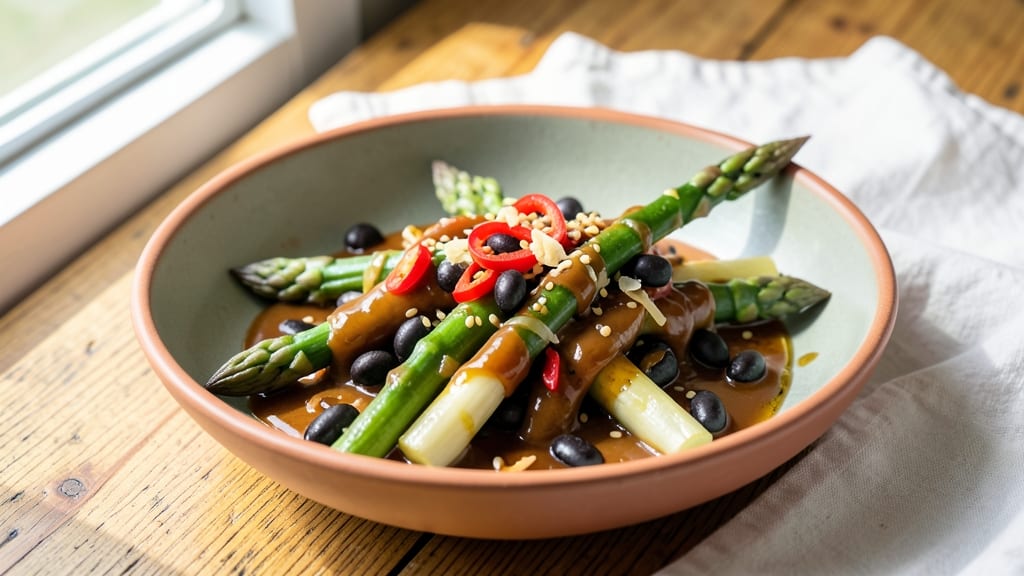
This asparagus with black bean sauce recipe transforms simple ingredients into a restaurant-worthy vegetarian dish that balances crisp-tender asparagus with a velvety black bean sauce.
The secret lies in high-heat wok searing that locks in freshness while developing caramelized edges, paired with a sauce that's rich yet light enough to let the asparagus shine.
What sets this recipe apart is the sauce—smooth yet textured from blended black beans, garlic, and ginger, with just enough umami from soy sauce and sesame oil. The asparagus cooks in minutes, retaining its vibrant green color and satisfying crunch, while the sauce clings perfectly to each spear.
This dish delivers restaurant-quality results with minimal prep and cleanup.
The perfect balance of textures and flavors makes this an ideal weeknight dinner or elegant vegetarian main course. Serve over jasmine rice or quinoa to create a complete meal, or pair with a simple arugula salad for a refreshing contrast.
The sauce can be made ahead, allowing you to focus on the quick cooking process.
Every component comes together effortlessly—no advanced techniques required. The asparagus sears in under 5 minutes while the sauce simmers in a separate pan, making this a complete dish that's both impressive and approachable.
Ready in just 20 minutes, it's perfect for those nights when you want something special without spending hours in the kitchen.
Ingredients for asparagus with black bean sauce
Restaurant-quality asparagus and black bean sauce relies on fresh produce and pantry essentials for perfect balance.
| Ingredient | Amount | Notes |
|---|---|---|
| Fresh Asparagus Spears 🌱 | 1 ½ lb | Medium-thick spears, trimmed ends |
| Black Beans 🫘 | 1 ½ cups | Canned, drained and rinsed |
| Garlic Cloves 🧄 | 6 cloves | Fresh, peeled and minced |
| Fresh Ginger 🌿 | 2 tbsp | Finely grated, organic preferred |
| Sesame Oil 🫒 | 1 ½ tbsp | Toasted, for aroma |
| Low-Sodium Soy Sauce 🍶 | 2 tbsp | Kikkoman preferred |
| Rice Vinegar 🍶 | 1 ½ tbsp | Seasoned variety enhances flavor |
| Sesame Seeds 🌱 | 1 tbsp | Toasted, for garnish |
| Vegetable Oil 🫒 | 2 tbsp | High smoke point for wok searing |
| Jasmine Rice 🍚 | 1 ½ cups | Uncooked, for serving |
| Red Chili Flakes 🌶️ | ½ tsp | Adjust to taste |
| Honey 🍯 | 1 tbsp | For sauce balance |
| Lime Juice 🍋 | 1 tbsp | Freshly squeezed |
| Salt 🧂 | 1 tsp | Diamond Crystal preferred |
| Black Pepper 🌶️ | ½ tsp | Freshly cracked |
The asparagus must be fresh and firm—look for vibrant green spears with tightly closed tips at Whole Foods or your local farmers' market. Trader Joe's often carries pre-trimmed asparagus, saving prep time. For the black beans, low-sodium canned varieties from Muir Glen ensure minimal sodium while maintaining texture. Fresh garlic and ginger should be organic when possible, as conventional varieties often contain traces of pesticides that can linger even after washing. The jasmine rice should be long-grain for optimal texture when served alongside the dish.
No fresh ginger? Substitute with 1 tbsp powdered ginger—though fresh provides superior depth. Sesame oil can be omitted if unavailable, but the dish will lack its signature aroma; toasted peanut oil offers a similar nutty profile. For those avoiding honey, maple syrup works in equal measure. The soy sauce can be swapped for tamari for gluten-free compatibility, though flavor will differ slightly. Red chili flakes can be replaced with 1/4 tsp cayenne pepper for a smoother heat profile, while lime zest adds brightness if fresh juice isn't available.
Store asparagus standing in water in the fridge for up to 5 days, though it's best used within 3 days for peak texture. The sauce components keep separately for 4 days—combine just before serving to maintain freshness. Jasmine rice freezes well when cooked, while black beans can be refrigerated for 5 days or frozen for 3 months. For meal prep, assemble the dish day-of to preserve the asparagus's crisp-tender quality, though the sauce can be made 2 days ahead and reheated gently.
Why You'll Love This Recipe
- One-Pan Magic: Honestly, I swear by this—just toss the asparagus and beans in a hot pan with minced garlic and ginger, then let the sauce bubble together. No chopping boards, no extra bowls, just one pan and 15 minutes of your life.
- Umami Bomb: That black bean sauce—savory, slightly sweet, with a hit of sesame oil—transforms plain asparagus into something ridiculously good. The garlic and ginger sing when they hit the heat, and the beans add this deep, earthy richness that sticks with you.
- Lunchbox Hero: Between us, this is my go-to for meal prep. The asparagus holds its snap even after a day in the fridge, and the sauce clings perfectly to every spear. Pack it cold or reheat it—either way, it’s a lunch that actually excites me to open my bag.
- Budget Flex: Fresh asparagus can feel fancy, but black beans and pantry staples like garlic and ginger make this dish solid without breaking the bank. Plus, the leftovers? They’re even better the next day—drizzle with extra sesame oil and call it a wrap.
Step-by-step instructions for wok-seared asparagus with black bean sauce
Master this fusion of textures and flavors with precise technique and balanced seasoning.
Prepare the Asparagus and Cook the Jasmine Rice
Start by trimming the tough ends from the 1.5 lb fresh asparagus spears—you'll know you've cut correctly when you can bend each spear and hear it snap cleanly. Peel the lower inch of each spear if the skin feels fibrous. Set aside while you prepare the rice.
Rinse the 1.5 cups jasmine rice under cold water until the water runs clear, then combine with 3 cups water and ½ tsp salt in a pot. Bring to a boil over high heat, then reduce to a simmer, cover, and cook for 15 minutes. Remove from heat and let steam, covered, for another 10 minutes. This yields perfectly fluffy rice to complement the dish.
Sear the Asparagus for Maximum Crunch
Heat a wok or large skillet over high heat until a drop of water sizzles and evaporates instantly. Add 2 tbsp vegetable oil and swirl to coat the pan. Working in batches to avoid crowding, add the asparagus in a single layer. Sear for 2-3 minutes until the edges turn bright green and crispy—this high-heat step is critical for texture.
Transfer the seared asparagus to a plate and set aside. The residual heat will carry over slightly, so don't overcook. If the pan starts to smoke excessively, reduce heat slightly but maintain a sizzling surface. This crispy foundation balances the silky sauce perfectly.
Build the Black Bean Sauce with Layered Flavors
In the same wok, reduce heat to medium and add 2 tbsp vegetable oil if needed. Add the 6 cloves minced garlic and 2 tbsp finely grated fresh ginger, cooking for 30 seconds until fragrant—this prevents raw garlic flavor. Add the 1.5 cups black beans and stir for 1 minute to warm through.
Pour in 2 tbsp low-sodium soy sauce, 1.5 tbsp rice vinegar, and 1 tbsp honey, stirring constantly. The sauce should begin to thicken slightly as it simmers. Add 1 tbsp lime juice and 0.5 tsp red chili flakes, then remove from heat. The acidity from the lime brightens the earthy bean flavors while the chili adds subtle heat.
Combine and Garnish for Perfect Presentation
Return the seared asparagus to the wok and toss gently to coat evenly in the sauce. The asparagus should absorb just enough sauce to create a glossy finish without becoming soggy. Taste and adjust seasoning with salt or black pepper as needed—this sauce should balance sweet, salty, tangy, and umami notes.
Divide the jasmine rice among serving plates, top with the asparagus mixture, and sprinkle generously with 1 tbsp toasted sesame seeds. The contrast of crispy asparagus, creamy rice, and silky sauce creates a harmonious bite. Serve immediately while the asparagus maintains its perfect crunch.
Pro Tips For Making Asparagus With Black Bean Sauce
- Blister, Don’t Boil: Asparagus needs high heat to crisp up—drop it into a screaming-hot pan or wok (yes, even if it’s just a minute or two) before adding the sauce. I learned this the hard way when my spears turned soggy mid-cook; now I crank the burner to max and walk away for 30 seconds while it crisps.
- Peel Ginger Like a Pro: Skip the knife and use a spoon’s back to scrape off just the thin purple skin—no pith, no waste. Fresh ginger’s potency fades fast, so if yours is fibrous, give it a quick soak in hot water for 10 minutes before grating. (Your sauce will thank you.)
- Toast Beans First: Dry-toast your black beans in the same pan for 2–3 minutes before adding liquid—it deepens their nutty flavor and thickens the sauce naturally. I used to skip this, and the sauce always tasted thin and one-dimensional.
- Finish with Cold Oil: Drizzle sesame oil at the very end, off the heat, to preserve its aroma. A splash of ice water right before tossing also helps crisp the asparagus again—sounds weird, but it works. (Your future self will notice the difference.)
Storing and reheating this recipe
Asparagus Storage Tips
Store fresh asparagus standing upright in a glass with just 1 inch of water in the fridge. This mimics how it grows, keeping the stalks crisp. I wrap the spears loosely in a damp paper towel before placing them in a resealable plastic bag to retain moisture.
Use within 3-5 days for peak texture—older asparagus turns limp and fibrous. 🌱
Sauce Prep Ahead
The black bean sauce can be made 2 days ahead and stored in an airtight container in the fridge. The flavors meld beautifully overnight, but add a splash of lime juice and 1 tsp sesame oil before serving to revive freshness.
I like to toast the sesame seeds separately and store them in a small jar—they stay crisp for garnishing. 🫒
Reheating Asparagus
If reheating the asparagus, use a steamer basket over boiling water for just 1-2 minutes. Microwaving is risky—it turns the spears rubbery. For the sauce, warm it gently in a saucepan over low heat, stirring constantly until heated through. Never boil the sauce, or it will separate. 🔥
Freezer-Friendly Sauce
Portion the sauce into ice cube trays for easy single-serving reheats. Once frozen, transfer cubes to a freezer bag. Thaw overnight in the fridge, then reheat gently. The texture remains smooth, though the sauce may thicken slightly—add 1 tsp water per serving if needed. 💫
Rice Storage
Cooked jasmine rice can be refrigerated for 4 days or frozen for 3 months. For best texture, reheat in a microwave-safe bowl with 1 tbsp water, covered, on medium-high power for 1-2 minutes. Fluff with a fork to restore its lightness before serving. ❄️
Day-of Assembly
For optimal results, assemble the dish fresh—sear the asparagus and warm the sauce just before serving. The high-heat searing creates crispy edges that soften when reheated. If you must prep ahead, store components separately and combine in the wok over high heat for 1-2 minutes to revive textures. 💡
Nutrition facts
Frequently asked questions
Can I substitute canned asparagus for fresh?
Fresh asparagus is ideal for this recipe because it delivers that perfect crisp-tender texture when seared. Canned asparagus won't achieve the same caramelized edges, but if you must use it, drain well and pat dry completely before cooking. For best results, use frozen asparagus that's been thawed and dried thoroughly—just add 1 extra minute to the searing time.
How do I make this dish spicier?
For extra heat, add 1 tsp gochujang (Korean chili paste) or 1/2 tsp cayenne pepper to the sauce while simmering. You can also stir in 1 tbsp sriracha at the end for a sweeter spice kick. For a smoky depth, sprinkle 1/2 tsp smoked paprika over the asparagus before searing.
What's the best way to reheat leftovers?
Reheat the asparagus and sauce separately to preserve texture. Warm the sauce in a small saucepan over low heat for 2-3 minutes, stirring constantly. For the asparagus, use a steamer basket over boiling water for just 1 minute—microwaving makes them rubbery. Toss them together gently and garnish with fresh sesame seeds.
Can I make this gluten-free?
Yes! Replace the soy sauce with tamari (gluten-free soy sauce) and ensure your rice vinegar is also gluten-free. Check that your sesame oil and red chili flakes don't contain wheat additives. The black beans naturally provide gluten-free protein, making this dish safe for most gluten-sensitive diets.
Why did my sauce turn too thick?
This happens when the sauce simmers too long or reduces too much. The fix is simple: stir in 1-2 tbsp water or rice vinegar while warming to restore balance. For future batches, remove the sauce from heat as soon as it thickens slightly—it will continue to set as it cools.