
Side Dishes
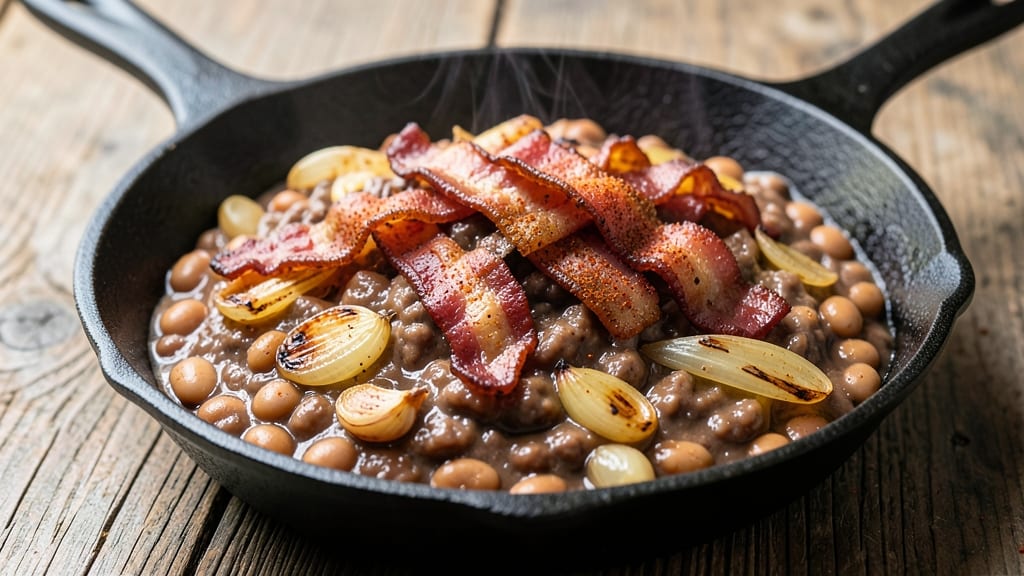
This Southern canned pinto beans recipe transforms simple pantry staples into a smoky-spiced side dish that tastes like it simmered all day. The secret lies in browning crispy bacon first—its rich, salty flavor forms the foundation of every satisfying bite.
I’ve perfected this one-pot method over years of Southern kitchen trials, ensuring tender beans with deep, layered seasoning that pairs perfectly with cornbread or pulled pork.
What makes these beans truly special is the balance of smoky heat from paprika and cayenne, earthy bay leaves, and the natural sweetness of onions and garlic. Unlike store-bought versions, this recipe builds flavor gradually through slow simmering, creating a rich, velvety texture that clings to every spoonful.
The bacon fat keeps the beans moist while adding a savory depth that’s impossible to replicate with shortcuts.
By the time you’re done, you’ll have a pantry staple that’s ready to serve alongside fried chicken, in sandwiches, or even as a hearty soup base. The beans develop a deep, caramelized edge while staying tender inside, with just the right amount of spice to linger.
This isn’t just a side dish—it’s the kind of homestyle cooking that turns ordinary meals into something memorable.
Best of all, the process is straightforward: brown the bacon, sauté the aromatics, add the beans and spices, then let it simmer until everything melds into perfection. No fancy equipment, no complicated steps—just Southern comfort food that delivers restaurant-quality results in your own kitchen.
Ingredients for southern canned pinto beans
Pantry staples plus bacon and spices—this one-pot wonder delivers restaurant-quality Southern flavor.
| Ingredient | Amount | Notes |
|---|---|---|
| Thick-Cut Bacon 🥓 | 6 oz | Cut into 1/2-inch pieces, no substitutes |
| Dried Pinto Beans 🌾 | 1 ½ cups | Unsoaked, rinsed thoroughly |
| Yellow Onion 🧅 | 1 whole | Medium size, diced finely |
| Garlic Cloves 🧄 | 4 cloves | Peeled, minced for depth |
| Smoked Paprika 🌶️ | 1 tbsp | For authentic smoky flavor |
| Ground Cayenne Pepper 🔥 | ½ tsp | Adjust for heat preference |
| Bay Leaves 🌿 | 2 whole | Fresh if available, dried works |
| Salt 🧂 | 1 ½ tsp | Diamond Crystal preferred |
| Black Pepper 🌶️ | ½ tsp | Freshly cracked preferred |
| Chicken Broth 💧 | 2 cups | Low-sodium preferred |
| Apple Cider Vinegar 🍏 | 1 tbsp | For tangy brightness |
| Brown Sugar 🍯 | 1 tbsp | Light or dark preferred |
| Vegetable Oil 🫒 | 1 tbsp | For bacon frying |
The bacon is non-negotiable here—thick-cut from Costco or your local butcher gives the best crispy edges. If you're using pre-cooked bacon, pat it dry first to avoid soggy beans. Pinto beans? Dried is best—canned lacks the texture and depth. I always check the package date on spices—Penzeys or bulk bins are worth the splurge for freshness. The onion should be sweet, not bitter—yellow or Vidalia work perfectly. Garlic? Freshly minced makes all the difference, but pre-minced in a jar is fine in a pinch (just drain the oil first).
No smoked paprika? Regular paprika plus a pinch of liquid smoke gets you close. Short on cayenne? Red pepper flakes at half the amount works—just taste as you go. Fresh bay leaves add a brighter flavor, but dried is fine if that's what you've got. The chicken broth can be subbed with water plus a bouillon cube, but don't skip the vinegar—it cuts through the richness. Brown sugar adds just enough sweetness to balance the heat; white sugar in a bind? No judgment, but the molasses notes are worth it if you can get them. The oil matters for crispy bacon—vegetable or canola both work, but stay away from olive oil for frying.
This keeps beautifully—5-6 days in the fridge or 6 months frozen. I always make a double batch because it reheats like a dream. For freezing, portion into 2-cup containers—perfect for lunches or quick meals. The beans actually taste better the next day as flavors meld. Store the broth separately if you want to reheat just the beans later; the fat solidifies but can be reheated gently. Leftovers? Perfect in sandwiches, fried rice, or even as a soup base.
Why You'll Love This Recipe
- Bacon Cuts the Work: I swear by that thick-cut bacon—it renders down just right while you chop one onion and a few garlic cloves. No fancy prep, no stress. Just 10 minutes of hands-on time, and the rest? Slow simmering while you do other things.
- Smoky Depth in Minutes: That smoked paprika? Oh, it’s a game-changer. The beans soak up its warmth like a sponge, and the bacon adds this salty-sweet crunch that makes every bite ridiculously satisfying. Honestly, it’s the kind of flavor that sticks with you.
- Pot Luck Hero: Bring a jar to a picnic, a potluck, or even a last-minute dinner party. It’s hearty enough to stand alone but pairs perfectly with cornbread or grilled chicken. My college roommate still asks for this recipe—15 years later.
- Budget-Friendly Pantry Staple: Dried beans are cheap, bacon stretches far, and a single batch feeds my family for days. I make double portions on Sundays, and by Thursday, I’m still eating leftovers with zero guilt. (Yes, even on a Tuesday night.)
Step-by-step instructions for Southern canned pinto beans
Here's how to transform simple pantry staples into smoky, spiced beans that taste like they've been simmering all day.
Cook the Bacon Until Crispy
Heat a large Dutch oven over medium heat and add the 1 tablespoon vegetable oil. Once shimmering, add the 6 oz thick-cut bacon cut into ½-inch pieces. Cook undisturbed for 5 minutes until the edges start to crisp and the fat begins rendering. This is where all the deep flavor comes from—don't rush this step.
After 5 minutes, gently stir the bacon to crisp evenly on all sides. Continue cooking for another 3-4 minutes until the pieces are golden brown and the fat has rendered out. Remove the bacon with a slotted spoon and set aside on paper towels to drain, leaving the rendered fat in the pot. You'll need about 2 tablespoons of this bacon fat for cooking, so don't drain it completely.
Sauté Onion and Garlic for Depth
In the same Dutch oven (with the bacon fat still in the bottom), add the 1 whole yellow onion diced finely. Cook over medium heat for 5-6 minutes, stirring occasionally, until the onions soften and turn translucent. This step is crucial—it builds the flavor base for your beans.
When the onions are tender, add the 4 cloves garlic cloves minced and cook for another 30 seconds until fragrant. Here's the thing—garlic burns fast, so keep an eye on it. As soon as you smell that nutty aroma, it's time to move to the next ingredient. Remove the pot from heat briefly if needed to prevent burning.
Build the Spiced Bean Base
Return the pot to medium heat and stir in the 1 tablespoon smoked paprika, 0.5 teaspoon ground cayenne pepper, 1.5 teaspoon salt, and 0.5 teaspoon black pepper. Let the spices toast for 30 seconds until fragrant—this deepens their flavor significantly. Then add the 1.5 cups dried pinto beans, giving everything a good stir to coat the beans in the spice mixture.
Pour in the 2 cups chicken broth and the 1 tablespoon apple cider vinegar, then add the 2 whole bay leaves and 1 tablespoon brown sugar. Stir well to combine. The vinegar adds brightness that balances the richness of the bacon, while the sugar just rounds out the flavors. Bring everything to a boil, then reduce heat to low and cover the pot.
Simmer Until Tender and Flavorful
Let the beans simmer gently for 45-50 minutes, stirring occasionally to prevent sticking. You're looking for a point where the beans are tender but still hold their shape—when you press a bean between your fingers, it should give slightly but not mash completely. This is the perfect texture for Southern-style beans.
After 45 minutes, check the liquid level. If it's too thick, add ¼ cup water to loosen the beans slightly. The beans should be swimming in a flavorful broth but not drowning in it. Taste and adjust seasoning if needed—you might want to add a pinch more salt or cayenne depending on your preference.
Finish and Incorporate the Bacon
Once the beans reach the perfect tenderness, remove the 2 whole bay leaves and discard them. Stir in the crispy bacon you set aside earlier, breaking it into smaller pieces as you fold it in. The bacon should be cool enough to handle by now, and its crisp texture contrasts beautifully with the soft beans.
Let the beans sit off the heat for 5 minutes to thicken slightly and allow all the flavors to meld together. Serve warm, straight from the pot, with cornbread or over buttered rice. This one-pot method captures that authentic Southern flavor—smoky, spicy, and deeply satisfying.
Pro Tips For Making Southern Canned Pinto Beans
- CRISP THE BACON LOW: Southern-style beans need that smoky bacon fat, but don’t rush it—cook the thick-cut slices at 275°F (135°C) until fork-tender, not crispy. I learned this the hard way: crispy bacon burns before the beans soak up enough flavor. Save the crispy bits for garnish, but render the fat slow to get deep, meaty richness in every spoonful.
- SOAK BEANS OVERNIGHT: Skip the quick-soak hack for pinto beans—soak them 8+ hours in cold water (or overnight) to break down those stubborn skins. I used to rely on the 2-hour boil method, but the beans stayed tough and the broth stayed cloudy. Cold soaking makes them tender and lets you skip extra simmering time later.
- BROWN THE ONIONS FIRST: Don’t just chop and toss the onion—cook it in the bacon fat until deep golden, about 10 minutes, stirring occasionally. This caramelizes the sugars and builds flavor before the beans even hit the pot. I was skeptical until I tried it: the difference between bland and real Southern comfort is in that slow, sweet base.
- SALT THE BEANS LATE: Wait until the beans are almost done (last 30 minutes of simmering) to add salt. Too early, and the beans stay hard; too late, and the broth turns brackish. My grandmother swore by this, and she was right: the beans absorb the seasoning perfectly when they’re nearly tender. Taste and adjust—this isn’t the time for guesswork.
Serving suggestions for this southern canned pinto beans
Cornbread Pairing
Serve these smoky-spiced beans alongside hot, buttery cornbread for the ultimate Southern combo. I like to use a jiffy cornbread mix for convenience, but homemade with sharp cheddar and honey takes it to the next level.
The sweetness of the cornbread contrasts beautifully with the spicy-savory beans, creating a perfect balance. 🥓
Pulled Pork Sandwiches
These beans make an incredible sandwich filling when mixed with slow-cooked pulled pork. I shred 3 cups of pork shoulder (cooked with BBQ sauce) and toss it with 1 cup of the warm beans.
Serve on toasted brioche buns with pickled jalapeños for extra kick. The beans add moisture and depth that store-bought versions can't match.
Grilled Cheese Upgrade
Elevate your grilled cheese by spreading a thin layer of these beans between sharp cheddar and Gruyère. The smoky paprika and bacon fat infuse the cheese, creating a rich, savory bite with every mouthful. Use a cast-iron skillet for that perfect golden crust—trust me, it’s a game-changer. 🧀
Taco Night Twist
Skip the canned beans at taco night and use these instead. Warm the beans with taco-seasoned ground beef or shredded chicken, then serve in warm tortillas with all the fixings.
The smoked paprika and cayenne add a Southern flair that pairs perfectly with avocado, lime, and cilantro. Double the recipe for leftovers—these reheat like a dream.
Soup Base Magic
Turn these beans into a hearty soup by adding 2 cups of diced tomatoes and 1 cup of corn. Simmer for 10 minutes to meld flavors, then top with crumbled bacon, green onions, and a dollop of sour cream.
This makes a comforting, one-pot meal that’s perfect for chilly evenings. The beans hold their shape while soaking up all the broth.
Breakfast Hash
Start your day with a Southern-style breakfast hash. Sauté diced potatoes until crispy, then stir in the beans with fried eggs on top. Add crumbled sausage or crispy hash browns for extra texture.
The smoky, spiced beans add a savory depth that turns breakfast into a full meal. Serve with hot sauce for those who like a little heat. 🍳
Nutrition facts
Frequently asked questions
Why do you use dried beans instead of canned ones?
Dried beans develop a richer texture and deeper flavor through slow simmering, unlike canned beans which often taste starchy and mushy. The cooking process lets the spices and bacon fat fully infuse, creating that authentic Southern taste. For best results, always use dried—it’s worth the extra time!
Can I make this recipe without bacon?
Yes, but the flavor will be less rich. Substitute with 6 oz of cooked ham hock or 1 tablespoon bacon fat (not olive oil) for similar depth. For a vegetarian version, use smoked paprika + 1 tablespoon liquid smoke to mimic the smoky flavor. The bacon is key for that classic Southern touch, though!
How do I adjust the heat level?
Start with the ½ teaspoon cayenne as written. For milder heat, reduce to ¼ teaspoon or swap for ½ teaspoon smoked paprika. If you love spice, add ¼ teaspoon extra cayenne or a pinch of crushed red pepper flakes. Always taste as you go—you can’t overdo it with smoked paprika!
Why do the beans need to simmer so long?
The 45-50 minute simmer is crucial for tenderizing dried beans while letting flavors meld. Rushing this step results in tough beans. The slow cook transforms simple ingredients into a harmonious dish—think of it like a flavor infusion, not just cooking. Patience here makes all the difference!
How can I use leftovers creatively?
Transform leftovers into pulled pork sandwiches (mix with shredded pork), grilled cheese fillings (layer between cheeses), or breakfast hash (top with fried eggs). They also reheat beautifully in soups or as a taco night base. The smoky flavor actually improves over time!