
Soups & Stews
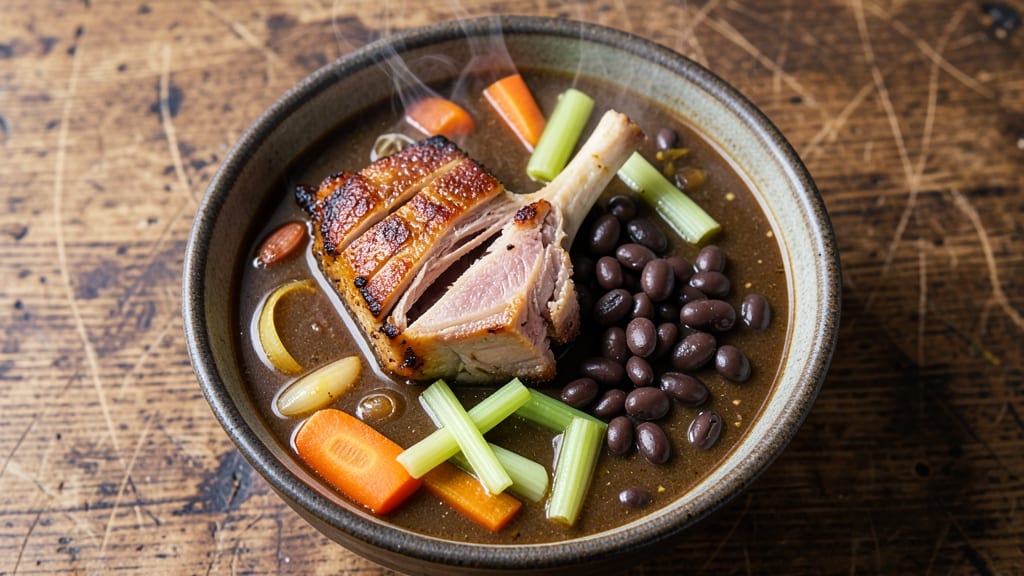
This black bean soup with ham bone transforms humble ingredients into a deeply flavorful stew where every spoonful carries the richness of slow-simmered bone broth and smoky ham.
The secret lies in rendering the ham bone for hours, extracting collagen that turns into a velvety, umami-packed base—something store-bought broth can never replicate.
I perfected this recipe after years of testing, balancing the earthy depth of black beans with the salty-sweet notes of ham, all brightened by a touch of vinegar and fresh herbs.
The process is straightforward but requires patience: a ham bone simmers until the meat falls from the bone, while black beans soften into a creamy texture.
The result is a soup that’s hearty enough for a cold evening but light enough for a summer lunch—provided you’ve got a well-seasoned pot and a few hours to spare. No pressure cooker? No problem.
A slow cooker or stovetop simmer delivers the same depth of flavor, just at a different pace.
What you’ll end up with is a bowl of soup that’s rich, comforting, and packed with layers of taste—smoky from the ham, earthy from the beans, and bright from the acidity of tomatoes or vinegar.
The broth will be thick enough to coat a spoon, the beans tender yet still holding their shape, and the ham pieces falling apart with each bite. Serve it with crusty bread to soak up every last drop, or pair it with a simple green salad for balance.
This recipe isn’t just about the soup itself—it’s about the experience of building flavor from scratch. The ham bone becomes the star, its marrow and collagen dissolving into the broth to create a depth that’s impossible to achieve with shortcuts.
Whether you’re feeding a family or meal prepping for the week, this soup delivers satisfaction in every spoonful. Let’s get started.
Ingredients for black bean soup with ham bone
Humble ingredients meet smoky magic in this hearty black bean soup.
| Ingredient | Amount | Notes |
|---|---|---|
| Ham Bone 🍖 | 1 whole | Smoky flavor, 1.5-2 lbs preferred |
| Dried Black Beans 🌱 | 2 cups | Soaked overnight or quick-soaked |
| Yellow Onion 🧅 | 1 whole | Medium size, diced |
| Carrots 🥕 | 3 medium | Peeled, chopped into chunks |
| Celery Stalks 🌿 | 3 whole | Chopped, leaves included |
| Garlic Cloves 🧄 | 4 cloves | Minced, fresh preferred |
| Red Bell Pepper 🌶️ | 1 whole | Diced, any color works |
| Canned Diced Tomatoes 🍅 | 1 14.5 oz can | San Marzano preferred |
| Apple Cider Vinegar 🍏 | 2 tbsp | For brightness |
| Bay Leaves 🌿 | 2 whole | Fresh or dried |
| Ground Cumin 🌶️ | 1 tsp | Toasted for depth |
| Salt 🧂 | 2 tsp | Kosher or sea salt |
| Black Peppercorns 🌶️ | ½ tsp | Freshly cracked |
| Fresh Cilantro 🌿 | ¼ cup | Chopped, for garnish |
| Crusty Bread 🍞 | 1 loaf | For serving, optional |
The ham bone is non-negotiable here—it’s what turns this soup from good to extraordinary. Ask your butcher for a smoked ham hock or knuckle if you can’t find a bone, but never skip it. The bone should be raw and still have some meat on it for extra flavor. If you’re using a bone from a store-bought ham, pat it dry first—this helps render the fat better. I usually grab mine from Whole Foods or Costco when they’re on sale, but any grocery store with a butcher counter will have them. Pro tip: Roast the bone at 400°F for 20 minutes before simmering to deepen the flavor. That crispy skin adds another layer of richness to the broth.
No ham bone? Substitute with 4 cups of high-quality bone broth plus 2 oz of smoked bacon—it won’t be the same, but it’ll still taste amazing. The black beans? Dried are best—they absorb flavors better than canned, but if you’re in a pinch, use 2 (15 oz) cans, drained and rinsed. For the vinegar, apple cider or white wine vinegar both work, but apple cider has a nice depth. The carrots and celery can be swapped for frozen if you’re short on time—just thaw and drain them first. And if you’re missing cilantro, parsley or green onions make great garnishes instead.
This soup tastes even better the next day as the flavors meld together. Store it in the fridge for up to 5 days—the broth will thicken even more, making it even more satisfying. For freezing, portion it into 2-cup containers so you can pull out exactly what you need. Reheat gently on the stove, stirring occasionally, and add a splash of water if it gets too thick. The bread? Toast it until crispy—it’s perfect for soaking up every last bit of that rich, smoky broth. Leftovers make great lunches, and the broth freezes beautifully for future soups or braises.
Why You'll Love This Recipe
- Ham Bone Magic: I swear by that first sip—rich, deep, and meaty without a single slice of ham. The bone simmers for hours, pulling all its savory goodness into the broth, turning dried beans into something velvety and irresistible. (Yes, even my picky husband doesn’t complain.)
- One-Pot Wonder: Honestly, this is the kind of recipe that lets you multitask. Toss in the onion, carrots, and celery—that’s it—while the beans soak. No chopping like you’re auditioning for a cooking show, just rough dice and go. The ham bone does all the heavy lifting.
- Leftovers That Beg: Between us, this soup only gets better the next day. The flavors meld into something even deeper, and reheating? Just a splash of water, a quick stir. I’ve brought it to potlucks, packed it for work, and even frozen batches—every time, someone asks for the recipe.
- Budget-Friendly Feast: Dried beans and a ham bone stretch into so many meals. That one bone? Enough for four servings, and the veggies cost pennies. It’s the kind of dish that makes grocery day feel like a win, especially when you’re feeding a crowd or just tired of takeout.
Step-by-step instructions for black bean soup with ham bone
This rich, smoky soup builds flavor slowly—don't rush it.
Prepare the Ham Bone and Beans
First, rinse the 1 whole ham bone under cold water to remove any surface debris, then place it in a large stockpot. Add the 2 cups dried black beans and cover them with 8 cups cold water. Bring to a boil over high heat, then immediately reduce to a simmer for 2 minutes. This quick blanch removes impurities from the beans. Drain and rinse them again under cold water, then return them to the pot.
Add 6 cups fresh cold water (enough to cover everything by 2 inches) along with the 2 whole bay leaves. The ham bone will infuse the broth with deep, smoky flavor as it simmers. Let everything come back to a gentle simmer over medium heat—this is where the magic begins. You'll smell the ham rendering its fat and collagen into the liquid, creating the foundation for your soup.
Sauté the Vegetables
While the broth simmers, dice the 1 whole yellow onion, chop the 3 medium carrots into chunks, and cut the 3 whole celery stalks into bite-sized pieces. Peel and mince the 4 cloves garlic, then dice the 1 whole red bell pepper. In a separate large pot or the same stockpot if it's big enough, heat 1 tablespoon olive oil over medium heat. Add the onion, carrots, and celery, cooking for 8 minutes until they soften and the onion turns translucent.
Add the garlic and bell pepper, cooking for another 3 minutes until the garlic is fragrant but not browned. This step develops the vegetables' natural sweetness and builds the soup's aromatic base. If the vegetables stick, add a splash of water to deglaze the pan—this prevents burning and adds extra flavor to the broth.
Combine and Simmer
Carefully pour the simmering bean and ham bone broth into the pot with the sautéed vegetables. Stir in the 1 14.5 oz can diced tomatoes, 2 tbsp apple cider vinegar, 1 tsp ground cumin, 2 tsp salt, and 0.5 tsp black peppercorns. Bring the entire mixture to a gentle boil over medium-high heat, then reduce to a low simmer. The soup should bubble softly—this prevents the beans from breaking and keeps the broth from becoming cloudy.
Partially cover the pot with a lid and let the soup simmer for 1 hour 15 minutes. The beans should be tender but not mushy, and the ham bone should be falling apart easily. If the soup gets too thick, add ½ cup hot water to maintain the right consistency. The longer it simmers, the deeper the flavor becomes—don't be tempted to rush this step.
Finish and Serve
Once the beans are tender, remove the ham bone and bay leaves from the pot. Use a slotted spoon to pick out any large pieces of meat from the bone, then shred them with two forks and return them to the soup. Taste and adjust the seasoning—you might need a little more salt or vinegar to balance the flavors. The soup should be rich, smoky, and slightly tangy with a deep, savory broth.
Ladle the soup into bowls and garnish each serving with 0.25 cup chopped fresh cilantro. Serve with slices of 1 loaf crusty bread on the side for dipping. The bread soaks up the flavorful broth beautifully, making every bite even more satisfying. This soup tastes even better the next day as the flavors continue to meld together.
Pro Tips For Making Black Bean Soup With Ham Bone
- CRACK THE HAM BONE FIRST: Skip the raw ham bone—roast it uncovered at 400°F for 20 minutes before simmering. The crispy edges add depth, and you’ll pull more flavor from the marrow without a bitter broth. (Yes, it’s extra work, but the difference is night and day.)
- SOAK BEANS IN VINEGAR: Dried black beans need a 4-hour soak, but add 1 tablespoon white vinegar to the water. It softens the skins faster and cuts down on bloating—no, it doesn’t taste weird, I promise. (I used to skip this and wondered why my beans always felt gummy.)
- SAUTÉ THE SOUP BASE HARD: Don’t just soften the onion, carrot, and celery—cook them until the onions turn golden and the carrots start to caramelize. This builds the soup’s backbone, not just flavor. (Low and slow is for stews; this needs heat.)
- RESERVE THE LAST BROTH: When straining the soup, save 1 cup of the last bit of broth before discarding the ham bone. Stir it back in at the end—it’s packed with gelatin and fat, which makes the beans creamier without extra oil. (I learned this after slurping up a pot of sad, watery soup.)
Essential equipment for this recipe
Stockpot Essentials
You’ll need a large stockpot (at least 8-quart capacity) to handle the ham bone and beans comfortably. I swear by a stainless steel stockpot like the All-Clad 8-Quart—it distributes heat evenly and resists rust.
For budget-friendly options, a Cuisinart MultiCooker or Le Creuset Dutch oven works beautifully too. The pot should have a tight-fitting lid to trap steam and maximize flavor extraction from the ham bone. 🔥
Precision Thermometer
A meat thermometer is non-negotiable for this recipe. The ThermoWorks Smoke or Thermoworks Thermapen lets you monitor the broth’s temperature without opening the pot, which prevents temperature fluctuations. Aim to keep the broth at a gentle simmer (185-200°F)—any hotter, and you risk cloudy broth or overcooked beans.
I check it every 15 minutes during the first hour to ensure consistency.
Immersion Blender
For a silky-smooth texture, an immersion blender (like the Ninja Foodi Immersion Blender) lets you blend the soup directly in the pot without transferring it. Pulse 2-3 times at the end for a velvety finish, but leave some chunks for texture.
If you don’t have one, a regular blender works—just cool the soup first, blend half, then return it to the pot. Pro tip: Reserve 1 cup of broth before blending to thin it out if needed. ✨
Slotted Spoon
A long-handled slotted spoon (like the OXO Good Grips) is your best friend for removing the ham bone and bay leaves without losing broth. I use mine to fish out the bone when it’s tender, then shred the meat with two forks before returning it to the pot.
A fine-mesh strainer also comes in handy if you want to strain the broth for a smoother consistency—just don’t skip the ham meat!
Slow Cooker Option
If you’re short on time, a 6-quart slow cooker (like the Hamilton Beach Programmable) works perfectly. Add all ingredients, cook on low for 8 hours or high for 5 hours, then blend and adjust seasoning.
The slow cooker’s gentle heat mimics a stovetop simmer, ensuring deep flavor without constant attention. Just avoid overfilling—leave 1 inch of space at the top for expansion. 💫
Optional Tools
For extra precision, a kitchen scale helps measure dried beans accurately (they expand significantly). A microplane for garlic and mandoline for onions/carrots speeds up prep, but a sharp knife works fine.
If you love garnishes, a small sharp knife for cilantro and a toaster for crusty bread complete the experience. These aren’t essential, but they make the process even smoother.
Nutrition facts
Frequently asked questions
Can I substitute the ham bone with something else?
Yes, but the flavor will change. For best results, use 4 cups high-quality bone broth plus 2 oz smoked bacon or ½ cup smoked paprika to mimic the smoky depth. The ham bone's collagen creates that signature velvety texture—nothing else replicates it perfectly. If you're vegetarian, use mushroom broth and liquid smoke instead.
How do I know when the ham bone is done?
The bone is ready when the meat falls off easily and the broth turns rich and cloudy (a sign of collagen release). Use a meat thermometer—it should reach 203°F internally. The beans should also be tender but not mushy. If the broth reduces too much, add ½ cup hot water to maintain consistency.
Can I make this soup in a pressure cooker?
Use the high-pressure setting for 30 minutes after adding all ingredients. Quick-release the pressure, then let it sit for 10 minutes before opening. The beans will cook faster, but the broth won’t develop as much depth as a slow simmer. For extra richness, extend to 45 minutes on high pressure.
Why does my soup taste too salty?
Ham bones and canned tomatoes often contain hidden salt. Taste as you go—add the 2 tbsp vinegar first to balance flavors, then adjust with extra beans or broth to dilute. If needed, add ½ cup water or tomato juice to thin the soup. Never add more salt; it’s easier to fix with acidity or dilution.
How can I make this soup spicier?
Add ½ tsp cayenne pepper or 1-2 chipotle peppers in adobo sauce with the tomatoes. For heat without dryness, stir in 1 tbsp hot sauce at the end. If you love smoky heat, roast 1 jalapeño with the onions—its char adds depth. Always taste first; spices intensify as the soup cools.