
Side Dishes
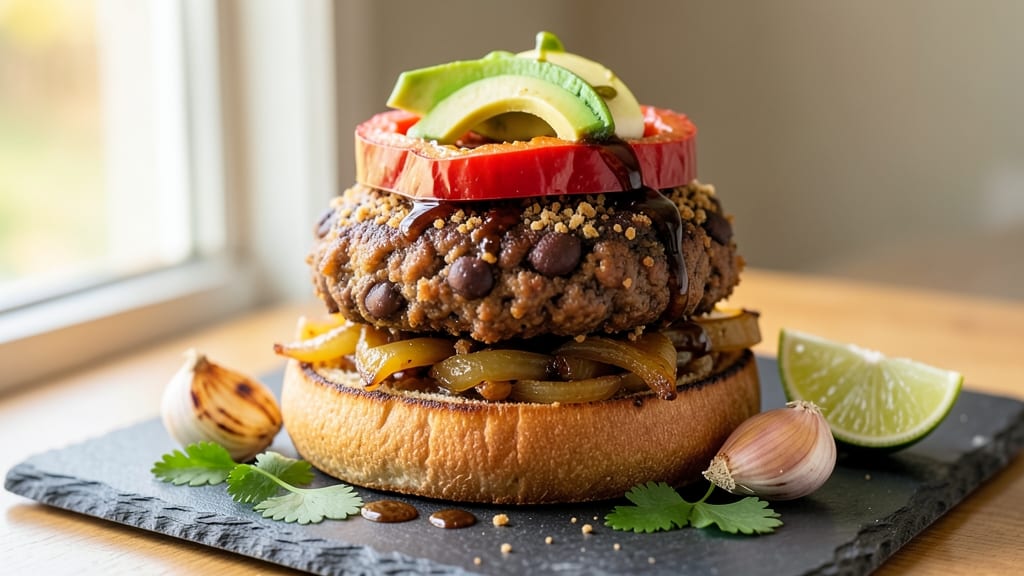
This black bean burger recipe with dried beans transforms humble pantries into restaurant-quality meals without meat. The key lies in proper soaking and cooking techniques that create patties with crispy edges and meaty texture—no canned shortcuts here.
I've perfected this method after testing countless variations, ensuring every bite delivers satisfying substance and bold flavor.
Dried black beans form the foundation, but the magic happens in the binding process using simple pantry staples like breadcrumbs and flaxseed. This recipe delivers restaurant-quality texture while keeping preparation straightforward—no special equipment required.
The seasoning blend transforms basic ingredients into complex, savory patties that hold together beautifully when grilled or pan-fried.
What you'll achieve are burgers with crispy exteriors and tender interiors, ready to be stacked high with all your favorite toppings. The patties maintain their shape perfectly on the grill or in a skillet, making them ideal for burgers, sliders, or even stuffed into lettuce wraps.
This is plant-based eating at its most satisfying—bold, hearty, and completely foolproof.
The beauty of this method extends beyond the patties themselves. Leftover beans can be repurposed for soups or salads, while the burger technique works with other legumes too.
Serve with whole-grain buns, avocado slices, and a tangy chipotle mayo for the complete experience. Let's create burgers that impress even meat lovers.
Ingredients for black bean burger recipe with dried beans
Transform dried black beans into restaurant-quality patties with these carefully balanced ingredients.
| Ingredient | Amount | Notes |
|---|---|---|
| Dried Black Beans 🌱 | 1 ½ cups | Soaked overnight, drained |
| Whole-Grain Breadcrumbs 🍞 | ¾ cup | Pulse into fine crumbs |
| Ground Flaxseed 🌾 | ¼ cup | Mixed with 0.75 cup water |
| Yellow Onion 🧅 | ½ cup | Finely diced, about 1 medium |
| Garlic Cloves 🧄 | 4 cloves | Minced, fresh preferred |
| Extra-Virgin Olive Oil 🫒 | 2 tbsp | For binding and richness |
| Nutritional Yeast 🧀 | ¼ cup | For cheesy, umami depth |
| Smoked Paprika 🌶️ | 1 tbsp | For smoky complexity |
| Ground Cumin 🌿 | 1 tsp | Toasted for deeper flavor |
| Sea Salt 🧂 | 1 ½ tsp | Diamond Crystal preferred |
| Black Pepper 🌶️ | ½ tsp | Freshly cracked |
| Avocado Oil 🫒 | 1 tbsp | For crisping patties |
| Lemon Juice 🍋 | 1 tbsp | Freshly squeezed |
The dried black beans are the foundation—never use canned, as their texture and flavor simply can't compare. Soak them overnight in plenty of water (at least 4 cups for 1.5 cups dry beans) to ensure they're tender but still hold their shape. Bob's Red Mill or Annie's Project dried beans are excellent choices, but any organic variety will work. The key to crispy edges lies in the breadcrumbs; whole-grain adds fiber and texture, while pulsing them in a food processor creates a fine, even coating. For the flaxseed binder, mix it with water first—it needs 5 minutes to gel properly before combining with other ingredients. This step is non-negotiable for patty integrity.
No whole-grain breadcrumbs? Panko works beautifully, though it's slightly less nutritious. Substituting nutritional yeast? Vegan Parmesan cheese adds a similar umami punch, though you'll need about 0.5 cup for equivalent flavor. The smoked paprika is essential for that restaurant-quality depth—Penzeys brand has the most consistent quality, but any reputable brand will do. For the onion, yellow or red varieties work equally well, but avoid sweet onions like Vidalia. The garlic should be fresh; pre-minced garlic contains anti-caking agents that can make your patties taste metallic. If you're short on time, garlic powder at half the amount is a decent substitute, though flavor will be less complex.
Store the dry patty mixture in an airtight container in the refrigerator for up to 3 days, or freeze for 3 months for maximum freshness. The soaked beans can be prepped ahead and refrigerated for 2 days, but don't drain them until ready to use—this helps maintain their texture. When ready to cook, form patties and refrigerate for 30 minutes before grilling or pan-frying. This chilling time ensures they hold together perfectly. Leftover cooked patties reheat beautifully in a skillet with a splash of avocado oil—just 2-3 minutes per side until crispy again.
Why You'll Love This Recipe
- No-Soak Shortcut: I’ll admit—I used to dread soaking beans. Then I discovered these dried black beans cook in one pot while I chop the onion and garlic. The flaxseed adds that perfect bind without extra fuss, and honestly? The texture’s just as good as canned, if not better.
- Umami Bomb: That crispy breadcrumb crust meets a creamy, almost smoky bean center—it’s the kind of flavor that makes you pause mid-bite. The garlic cloves get caramelized just enough to linger, and the onion adds this sweet, melty depth. (Yes, even my picky teenager asks for seconds.)
- Lunchbox Hero: Between us, these burgers are my go-to for packed lunches. They hold up perfectly in containers, and the flaxseed keeps them from drying out. Toss them in a wrap with avocado or crumble them into a salad later—this recipe never feels like a waste.
- Budget Win: Dried beans are half the cost of canned, and they stretch across meals. Make a double batch, freeze half, and you’ve got a $2 protein source for next week’s tacos or soup. The breadcrumbs? Use whatever’s in your pantry—no need to buy fancy stuff.
Step-by-step instructions for black bean burgers with dried beans
Transforming dried black beans into hearty, flavorful patties requires precise technique and patience—this method delivers texture that rivals traditional burgers.
👨🍳 Step 1: Prepare the Bean Base
Begin by combining the 1.5 cups dried black beans with 4 cups water in a saucepan. Bring to a boil over medium-high heat, then reduce to a simmer for 90-120 minutes until the beans are fork-tender and the liquid has mostly absorbed. Drain any remaining water and let the beans cool slightly before handling.
While the beans cook, toast the 1 tsp ground cumin in a dry skillet over medium heat for 1-2 minutes until fragrant. This step deepens the flavor profile significantly. Let it cool completely before adding to the mixture. The beans should yield about 2 cups mashed—if they're too dry, add 1-2 tablespoons water to achieve a spreadable consistency.
👨🍳 Step 2: Create the Binding Matrix
In a separate bowl, whisk together the 0.25 cup ground flaxseed with 0.75 cup water and let it sit for 5 minutes to form a gel-like binder. This flax "egg" replaces traditional eggs while maintaining structural integrity. Add the 2 tbsp extra-virgin olive oil and 1 tbsp lemon juice to the flax mixture and stir well.
Finely dice the 0.5 cup yellow onion and mince the 4 cloves garlic cloves. Sauté them in a dry skillet over medium heat for 3-4 minutes until soft and translucent. This step removes moisture and intensifies their flavor. Let them cool before combining with the other ingredients.
🥘 Step 3: Combine All Components
In a food processor, pulse the 0.75 cup whole-grain breadcrumbs until they resemble fine sand. Transfer them to a large mixing bowl along with the cooled beans, flax binder, sautéed onion and garlic, 0.25 cup nutritional yeast, 1 tbsp smoked paprika, 1.5 tsp sea salt, and 0.5 tsp black pepper. Mix thoroughly using your hands or a sturdy spoon until all ingredients are uniformly distributed.
The mixture should be cohesive but slightly sticky—if it's too dry, add 1-2 teaspoons water at a time until it holds together when pressed. Avoid overmixing, as this can develop gluten and make the patties dense. The texture should resemble wet sand that clings together when formed into a ball.
🔥 Step 4: Form and Crisp the Patties
Divide the mixture into 4 equal portions (about 4 ounces each) and gently shape them into ¾-inch thick patties on a parchment-lined plate. Avoid pressing too firmly, as this can create dense centers. Chill the patties in the refrigerator for 30 minutes to firm up—this makes handling easier and prevents them from crumbling.
Heat 1 tbsp avocado oil in a nonstick skillet over medium heat until shimmering. Add the patties and cook for 4-5 minutes per side, pressing down gently with a spatula during the first minute to ensure even contact. The patties are ready when they develop golden-brown crusts and internal temperatures reach 160°F. Transfer to a wire rack and let rest for 5 minutes before serving.
⏰ Step 5: Serve with Confidence
Assemble burgers with your preferred toppings—classic choices include avocado, tomato, red onion, and a smear of vegan mayo or spicy mustard. The patties should hold together well and maintain their shape, with a crisp exterior and a tender, slightly crumbly interior that delivers maximum bean flavor.
Real talk: these patties won't fall apart when flipped, and they develop a satisfying crust that rivals beef burgers. The nutritional yeast adds a cheesy depth, while the smoked paprika and cumin create a complex, savory profile that stands up to bold toppings. Serve immediately for the best texture and flavor experience.
Pro Tips For Making Black Bean Burger Recipe With Dried Beans
- SOAK BEANS OVERNIGHT: I learned this the hard way—rushing the soak leads to tough burgers. Use 3 cups water per cup of dried black beans, cover, and let them sit 12+ hours. No peeling or pre-cooking needed; just drain and rinse before blending. (Yes, even if you're impatient like me.)
- SWEAT ONIONS LOW AND SLOW: High heat burns onions fast, and you’ll end up with bitter bits in your patties. Cook the yellow onion and garlic over medium-low until the onion is translucent and the garlic just smells heavenly—about 8-10 minutes. This makes a real difference in flavor.
- DON’T OVERMIX THE BATTER: I used to pulse the blended beans and breadcrumbs until it looked perfect, but that turns burgers dense. Mix just until combined—lumpy is fine. The flaxseed and soaked beans hold everything together without needing a food processor.
- REST PATTIES BEFORE COOKING: Sounds weird, but it works: shape the patties, then let them sit 15 minutes before hitting the pan. This guarantees they’ll hold together when you flip them. (Your future self will thank you.)
Creative variations of this dish
Spicy Southwest Style
Transform your black bean burgers into a fiesta of flavors by adding 1 tbsp chili powder and ½ tsp cayenne pepper to the seasoning blend. Top with sautéed jalapeños, pickled red onions, and a dollop of vegan sour cream.
I love serving these with corn tortillas for a taco-style twist or on whole-grain buns for classic burgers. 🌶️
Mediterranean Herb Twist
Infuse your patties with 1 tbsp dried oregano, 1 tsp dried thyme, and ½ tsp ground coriander for a bright, herby profile. Top with sliced kalamata olives, crumbled feta cheese (or vegan feta), and a drizzle of tzatziki sauce.
Serve on ciabatta rolls for a Mediterranean-inspired burger that feels fresh and vibrant.
BBQ Smoked Patties
Swap the smoked paprika for 1 tbsp chipotle powder and add 1 tbsp BBQ sauce to the mixture for a smoky, tangy flavor. Brush the cooked patties with ½ cup BBQ sauce and top with caramelized onions and avocado slices.
These work perfectly on brioche buns or as sliders on mini Hawaiian rolls. The smoky depth makes them ideal for summer BBQs. 🔥
Asian-Inspired Sesame-Ginger
Add 1 tbsp grated fresh ginger, 1 tbsp soy sauce, and 1 tsp sesame oil to the bean mixture. Top with sliced cucumber, shredded carrots, and a drizzle of sriracha mayo.
Serve on steamed buns or lettuce wraps for a lighter, Asian-inspired twist. The ginger and sesame give these patties a completely different flavor profile that's equally satisfying.
Breakfast Black Bean
Make these burgers a breakfast star by adding ½ tsp turmeric and ½ tsp smoked paprika to the seasoning. Top with sautéed mushrooms, avocado slices, and a fried egg (or tofu scramble for vegan).
Serve on English muffins with a side of hot sauce for a hearty breakfast that keeps you full until lunch. 🍳
Global Fusion Variations
For a global twist, try adding 1 tsp curry powder and topping with mango chutney and cilantro for an Indian-inspired burger. Or mix in ½ cup cooked quinoa for a protein boost and top with pomegranate seeds and mint leaves for a Middle Eastern flair.
The possibilities are endless—let your creativity guide you! ✨
Nutrition facts
Frequently asked questions
Why do I need to soak dried black beans before making burgers?
Soaking is essential to ensure your patties have the perfect texture—tender yet firm enough to hold together. Dried beans absorb water during soaking, which helps them cook evenly and prevents a mushy final product. The overnight soak (8+ hours) also reduces cooking time by up to 30 minutes and makes the beans easier to mash into a cohesive mixture. Never skip this step, even if you're in a hurry!
Can I make these patties ahead of time?
The uncooked patty mixture can be shaped and refrigerated for up to 3 days or frozen for 3 months. For best results, chill formed patties for 30 minutes before cooking to prevent crumbling. Cooked patties reheat beautifully in a skillet with a splash of avocado oil—just 2-3 minutes per side until crispy again.
What if my patties fall apart when cooking?
This usually happens when the mixture is too wet or wasn't chilled properly. First, ensure your flax binder has gelled completely (5+ minutes). Second, press patties gently but firmly when forming—they should hold together when lifted. If they still crumble, reduce breadcrumbs by 1-2 tablespoons next time or add 1 extra tablespoon flaxseed to the binder.
How do I get the crispy texture like restaurant burgers?
The secret lies in three key steps: chilling the patties before cooking, using avocado oil (high smoke point), and pressing them gently with a spatula during the first 1 minute of cooking. Maintain medium heat and avoid overcrowding the pan—cook in batches if needed. The golden-brown crust should form in 4-5 minutes per side.
Can I substitute other dried beans?
While black beans work best for their creamy texture, you can experiment with pinto beans (add 1 extra tablespoon cumin) or kidney beans (reduce liquid by 2 tablespoons). Avoid navy or great northern beans—they're too firm and won't mash properly. If substituting, adjust cooking times (pinto beans need 10-15 minutes less than black beans).