
Sauces & Condiments
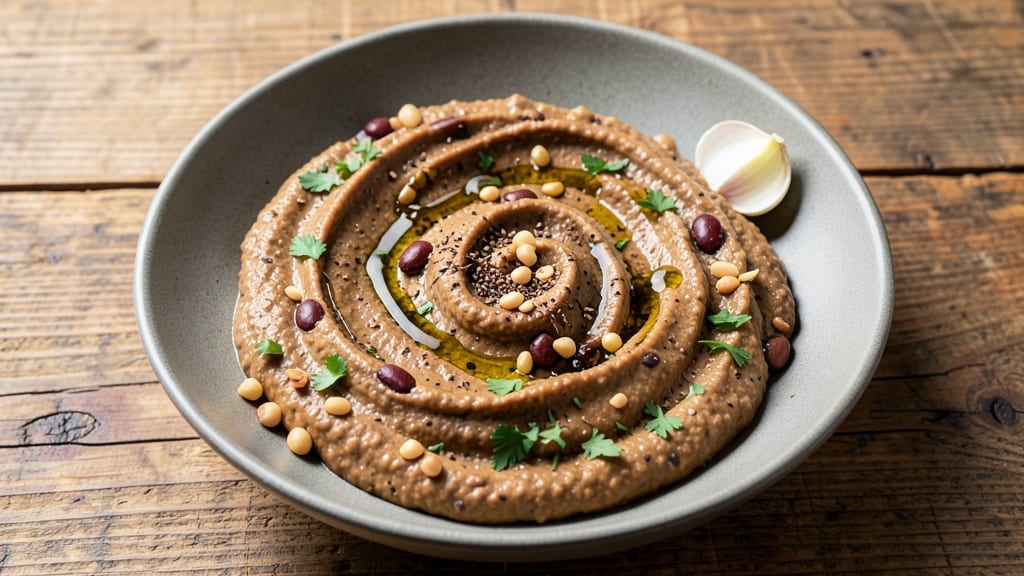
This black bean and chickpea hummus recipe transforms your snack game with nutty depth and plant-based protein that keeps you full. The secret lies in blending two legumes—chickpeas for classic creaminess and black beans for earthy richness—while tahini and lemon brighten every bite.
What makes this stand out is the texture: thicker than traditional hummus but still silky, with a satisfying bite from the beans.
The base ingredients—chickpeas, black beans, tahini, garlic, and lemon—create a flavor profile that’s both familiar and exciting. I’ve perfected this recipe to deliver a hummus that’s vegan-friendly, packed with plant protein, and versatile enough to work as a dip, spread, or even a sandwich filling.
The key is balancing the tahini for creaminess without overpowering the legumes’ natural nuttiness.
What you’ll end up with is a hummus that’s nutty, creamy, and deeply satisfying—perfect for dipping crispy veggies, spreading on toast, or pairing with pita. The black beans add a subtle earthiness that complements the tahini’s richness, while the lemon keeps it bright and fresh.
It stays fresh in the fridge for up to a week, making it ideal for meal prep.
This isn’t just another hummus recipe—it’s a protein-packed, flavor-forward upgrade that works as a snack, appetizer, or even a meal component. The best part? It’s foolproof, with no special equipment needed beyond a food processor. Let’s get blending!
Ingredients for black bean and chickpea hummus
Nutty chickpeas and earthy black beans meet tahini's richness for a protein-packed hummus with satisfying bite.
| Ingredient | Amount | Notes |
|---|---|---|
| Canned Chickpeas 🌾 | 1 ½ cups | Drained, rinsed, and patted dry |
| Canned Black Beans 🌱 | 1 cup | Drained, rinsed, and patted dry |
| Tahini 🥜 | ½ cup | High-quality sesame paste |
| Extra-Virgin Olive Oil 🫒 | ½ cup | Light and fruity variety |
| Fresh Garlic Cloves 🧄 | 4 cloves | Peeled and roughly chopped |
| Fresh Lemon Juice 🍋 | 3 tbsp | From 1 medium lemon |
| Ground Cumin 🌿 | 1 tsp | Freshly toasted preferred |
| Sea Salt 🧂 | 1 ½ tsp | Diamond Crystal preferred |
| Water 💧 | ¼ cup | Room temperature |
| Maple Syrup 🍯 | 1 tbsp | Pure grade B preferred |
The chickpeas and black beans form the heart of this hummus, so choose high-quality canned varieties—look for brands like Banza or Eden Organic for chickpeas, which hold their shape better. If using dried beans, soak overnight for optimal texture. Tahini is non-negotiable here; Al-Yaman or Soom Tahini deliver the best flavor. For the garlic, freshly peeled cloves add depth that jarred minced garlic can't match. The lemon juice should be freshly squeezed—bottled versions lack the bright acidity needed to balance the richness.
No tahini? Substitute 1/4 cup extra olive oil plus 1 tbsp ground sesame seeds, though the texture will be slightly oilier. Short on chickpeas? Swap in white beans at a 1:1 ratio, but expect a slightly different mouthfeel. The maple syrup adds subtle sweetness that rounds out the flavors—agave nectar works in a pinch. For extra creaminess, add 1-2 tbsp more olive oil after blending. If the hummus is too thick, adjust with water; if too thin, add more beans or tahini. The cumin is essential for warmth, but if unavailable, smoked paprika at half the amount provides a similar depth.
Store in an airtight container with a thin layer of olive oil on top to preserve freshness. Keeps for 5-7 days in the fridge, though the flavor deepens after the first day. For longer storage, freeze in ice cube trays for up to 3 months. Thaw overnight in the fridge before using. This hummus thickens when chilled, so stir in a splash of water or lemon juice before serving if needed. The black beans add natural protein, making this ideal for meal prep—pair with whole-grain crackers or fresh veggies for a balanced snack.
Why You'll Love This Recipe
- Five-Ingredient Magic: I swear by this one—just open cans, blend, and boom. No soaking, no peeling, no waiting for anything. The tahini and olive oil do all the heavy lifting while you’re still deciding what to eat for dinner.
- Rich, Earthy Depth: That combo of black beans and chickpeas? It’s like a cozy hug in your mouth—creamy from the tahini, sharp from the garlic, and just a little smoky from the beans. Honestly, it’s the kind of hummus that makes you pause mid-bite.
- Game for Any Meal: Spread it on toast when you’re lazy, toss it in bowls for a quick lunch, or even use it as a dip for veggies when guests drop by. I’ve had it cold, room temp, and even warmed up—works every time.
- No-Waste Pantry Hero: Between us, this recipe turns cheap staples into something special. A can of black beans, a can of chickpeas, and a jar of tahini? That’s a fraction of the cost of store-bought, and it’ll last me a week in the fridge. Leftovers? Just blend again—it’s that simple.
Step-by-step instructions for black bean and chickpea hummus
Transform simple pantry staples into a velvety, protein-rich hummus with this precise method.
Combine and Blend the Base Ingredients
Begin by placing the 1.5 cups drained chickpeas and 1 cup drained black beans into a high-powered food processor. The combination of these two legumes creates a thicker, creamier texture than traditional hummus alone. Add the 4 cloves peeled garlic and 1 tsp ground cumin to the processor bowl.
Pulse the ingredients together until they form a coarse crumb, about 15-20 seconds. This initial blending breaks down the legumes without creating a paste, which helps prevent the hummus from becoming too thick during processing. The cumin will infuse its warm, earthy notes throughout the mixture as it blends.
Incorporate Tahini and Olive Oil
With the processor running, slowly drizzle in the 0.5 cup tahini and 0.5 cup extra-virgin olive oil. Tahini's rich, nutty flavor forms the foundation of this hummus, while the olive oil adds silky smoothness. Add these ingredients gradually—about 1 tablespoon at a time—to allow the processor to fully emulsify each addition. This prevents the mixture from seizing up.
Continue processing for 2-3 minutes until the mixture becomes completely smooth and homogeneous. You'll notice the hummus transform from a rough paste into a velvety, spreadable consistency. Scrape down the sides of the bowl with a spatula every 30 seconds to ensure even blending.
Add Liquid and Seasonings
With the processor running, pour in the 0.25 cup room-temperature water, 3 tbsp fresh lemon juice, and 1 tbsp maple syrup. The water helps thin the mixture to the perfect spreading consistency, while the lemon juice brightens the flavor profile. The maple syrup adds subtle sweetness that balances the earthy tahini and legumes. Finally, add the 1.5 tsp sea salt and process for another 30-45 seconds until fully incorporated.
At this stage, the hummus should be smooth, glossy, and perfectly balanced in texture—neither too thick nor too thin. Taste and adjust seasoning if needed, adding more lemon juice for brightness or salt for depth. The hummus should have a vibrant, nutty aroma with citrus undertones.
Achieve the Perfect Consistency
If the hummus is too thick after processing, add 1 tablespoon of water at a time until it reaches a smooth, spreadable consistency. Conversely, if it's too thin, add 1 tablespoon of tahini or olive oil and blend again. The ideal texture should be thick enough to hold its shape when scooped but still spread smoothly on bread or crackers.
Transfer the hummus to a serving bowl and smooth the top with a spatula. For an elegant presentation, drizzle a thin layer of olive oil on top and sprinkle with an additional pinch of sea salt and a few cracked black peppercorns. Serve immediately or refrigerate for up to 5 days, bringing it to room temperature before serving for the best texture.
Pro Tips For Making Black Bean And Chickpea Hummus
- Drain and Rinse Properly: Your canned beans will taste bland if you skip this—drain them, then give each can a quick rinse under cold water. The starch clinging to black beans and chickpeas makes hummus gummy, and nobody wants that thick, gluey mess.
- Toast the Beans First: I learned this the hard way—raw beans make hummus taste flat. Spread drained chickpeas and black beans on a baking sheet, pat them dry, then roast at 400°F (200°C) for 15 minutes until fragrant and slightly crispy. That extra step builds depth of flavor without extra work.
- Use a Food Processor, Not a Blender: A blender chops everything into a paste, but a food processor keeps texture. Pulse the chickpea-black bean mix with tahini and olive oil until it’s chunky, then stream in lemon juice and garlic while running. Stop when it’s smooth but still has little flecks—this hummus has personality.
- Let It Rest Before Serving: This isn’t the prettiest method, but it’s the tastiest. After blending, scrape the hummus into a bowl, drizzle with olive oil, and let it sit for 10 minutes. The flavors meld, and the tahini fully emulsifies—no one will guess you skipped this step.
Best sauces and condiments for this recipe
Classic Pairings
Serve this hummus with warm pita bread or whole-grain crackers for a classic Mediterranean-style snack. The nutty richness contrasts beautifully with the crispness of fresh vegetables like bell peppers, cucumbers, or carrots.
I love arranging veggies on a platter with small bowls of hummus for easy dipping—it’s perfect for game day or a light lunch. 🥗
Spicy Kick
Add 1-2 teaspoons of harissa paste or ½ teaspoon of cayenne pepper for a smoky, spicy twist that pairs perfectly with the hummus’s creaminess. For a milder heat, try ½ teaspoon of smoked paprika with a pinch of chili flakes.
I often sprinkle this on top before serving for an extra layer of flavor that guests can adjust to their taste.
Sweet Contrasts
Balance the earthy flavors with drizzled honey or date syrup—just 1 tablespoon adds a beautiful contrast. For a savory-sweet combo, pair with roasted sweet potatoes or figs.
I’ve also topped this hummus with toasted pine nuts and a sprinkle of za’atar for a Middle Eastern-inspired touch that’s always a crowd-pleaser. 🌟
Global Twists
For a Mexican-inspired version, stir in ½ teaspoon of ground coriander and ½ teaspoon of lime zest after blending. Serve with tortilla chips or cornbread for a fusion snack.
If you’re feeling Asian-inspired, add 1 teaspoon of grated ginger and a splash of soy sauce—it pairs wonderfully with rice crackers or spring rolls.
Protein Boosters
Turn this hummus into a complete meal by mixing in ¼ cup of crumbled feta (for non-vegan) or ¼ cup of nutritional yeast for a cheesy flavor without dairy. For extra protein, fold in ½ cup of cooked quinoa or chopped roasted chickpeas.
I love using this as a spread on whole-wheat toast with a poached egg for a hearty breakfast. 💪
Dessert Hummus
Yes, you read that right! For a sweet treat, blend in ¼ cup of cocoa powder and 2 tablespoons of maple syrup with the original ingredients. Top with dark chocolate shavings and raspberries for a decadent yet healthy dessert.
This chocolate hummus is a fun way to repurpose leftovers—just adjust the sweetness to taste. 🍫
Nutrition facts
Frequently asked questions
Why does this hummus use both chickpeas and black beans?
The combination creates a perfect balance of textures and flavors. Chickpeas provide classic hummus creaminess while black beans add earthy depth and extra plant-based protein. The black beans also help thicken the mixture naturally, reducing the need for extra water. It’s a win-win for both taste and nutrition!
Can I make this hummus without tahini?
Yes, but the flavor will be different. Replace the ½ cup tahini with ¼ cup extra olive oil plus 1 tbsp ground sesame seeds. The texture will be slightly oilier, but you’ll still get that nutty richness. For best results, use a high-powered food processor to emulsify the oil properly.
How do I adjust the consistency if it's too thick or too thin?
If your hummus is too thick, add 1 tablespoon of water at a time until smooth. For a thinner texture, blend in 1 tablespoon of tahini or olive oil. The ideal consistency should hold its shape when scooped but still spread easily. Always taste as you adjust!
Is this hummus safe to eat raw?
Yes, all ingredients are safe to consume raw, including canned chickpeas and black beans (just ensure they're properly drained and rinsed). The food processor blends everything into a smooth, edible paste. No cooking is required—just blend, taste, and enjoy!
Can I freeze this hummus for later use?
Portion into ice cube trays, freeze, then transfer to a bag. Thaw overnight in the fridge before using. The texture may thicken slightly after freezing, so stir in a splash of water or lemon juice to restore smoothness. It keeps well for up to 3 months in the freezer.