
Sauces & Condiments
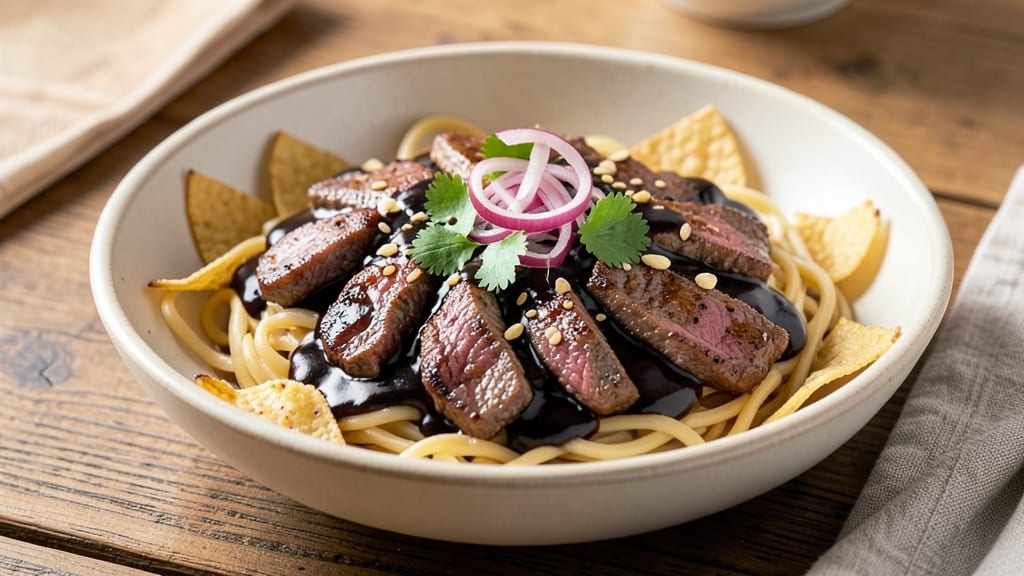
This beef black bean sauce rice noodle recipe delivers crispy tortilla crunch over silky noodles in under 30 minutes. I first encountered this dish at a Boston food truck, where the smoky-sweet sauce and contrasting textures changed how I think about weeknight dinners.
The secret lies in balancing the rich black bean sauce with just the right amount of tortilla strips for that addictive crunch factor.
What makes this recipe work is the two-stage cooking process: first simmering the beef and black bean sauce until deeply flavorful, then tossing everything with pre-cooked rice noodles and crispy tortilla pieces.
The sauce gets its depth from charred garlic and a touch of soy sauce, while the tortilla strips add a satisfying contrast that keeps every bite exciting. No fancy equipment needed—just a sturdy skillet and a few pantry staples.
By the time you're done, you'll have a dish that's restaurant-worthy yet simple enough for any night of the week. The beef stays tender, the noodles absorb the sauce perfectly, and those crispy tortilla pieces add a textural element that makes this more than just another stir-fry.
The aroma alone will have everyone gathering around the table.
This recipe scales beautifully—double the sauce for leftovers or serve it as a base for custom bowls. The technique is foolproof, and the flavors only get better as they sit. Let's get cooking!
Ingredients for beef black bean sauce rice noodle
Pantry staples and a few fresh elements create this restaurant-style dish with crispy contrast.
| Ingredient | Amount | Notes |
|---|---|---|
| Flank Steak 🥩 | 1 lb | Thinly sliced against grain |
| Black Beans 🫘 | 1 ½ cups | Canned, drained and rinsed |
| Rice Noodles 🍜 | 8 oz | Medium width, uncooked |
| Corn Tortillas 🌽 | 6 whole | Cut into 1/4-inch strips |
| Garlic Cloves 🧄 | 6 cloves | Minced, charred for depth |
| Yellow Onion 🧅 | 1 whole | Thinly sliced |
| Soy Sauce 🍶 | 2 tbsp | Light or all-purpose |
| Sesame Oil 🫒 | 1 tbsp | Toasted for aroma |
| Honey 🍯 | 1 tbsp | Substitute maple syrup if needed |
| Lime Juice 🍋 | 2 tbsp | Freshly squeezed |
| Vegetable Oil 🫒 | 2 tbsp | For frying tortilla strips |
| Ground Cumin 🌿 | ½ tsp | Toasted for warmth |
| Smoked Paprika 🌶️ | ½ tsp | For smoky depth |
| Salt 🧂 | 1 tsp | Kosher or sea salt |
| Black Pepper 🌶️ | ¼ tsp | Freshly ground |
The flank steak is your workhorse here—look for well-marbled cuts at Whole Foods or your local butcher. Thinly slicing against the grain ensures tender bites, and pre-sliced packages at Trader Joe's save time. Black beans should be low-sodium if using canned; rinse thoroughly to cut excess salt. For the tortillas, Mission brand corn tortillas hold up best to frying, but any sturdy corn variety works. The key is cutting them into even strips—about 1/4-inch wide—so they crisp uniformly.
No flank steak? Flank steak substitutes like sirloin or even pre-marinated beef strips work in a pinch, though texture will differ slightly. Swap corn tortillas for rice paper wrappers if you're feeling adventurous, but they crisp differently. The charred garlic is non-negotiable for depth—toast the whole cloves in a dry pan until fragrant, then mince. For extra smokiness, add a pinch of liquid smoke to the sauce. If you're short on time, pre-cooked rice noodles from the Asian aisle save 10 minutes, though fresh noodles absorb sauce better.
This dish reheats beautifully—store leftovers in an airtight container for 3-4 days. The tortilla strips lose crispness when reheated, so make them fresh when serving. For meal prep, keep the sauce and noodles separate until ready to serve. The sauce actually improves overnight—the flavors meld beautifully. Freeze portions of the sauce (without noodles) for up to 3 months. For extra crunch, toast sesame seeds in a dry pan and sprinkle on top before serving.
Why You'll Love This Recipe
- One-Pan Magic: I swear by this—sliced flank steak, black beans, and rice noodles all go into one skillet. No chopping, no fuss, just stir-fry until the garlic sizzles and the sauce clings. (Yes, even on a Tuesday night.)
- Umami Bomb: That black bean sauce? It’s where the magic happens—deep, smoky, and just sweet enough to balance the garlic’s punch. The flank steak stays tender but gets that perfect bite, and the corn tortillas add a crispy contrast. Honestly, I’ll take this over takeout any day.
- Lunchbox Hero: Between us, this is my go-to for packed lunches. The noodles hold up for days, the sauce keeps everything moist, and it’s hearty enough to fill a thermos. Toss in some cilantro if you’re feeling fancy, but even plain? Still spot-on.
- Budget Flex: Flank steak on sale? Black beans in bulk? This recipe stretches every ingredient without sacrificing flavor. I’ve fed four people for under $12, and no one’s ever complained about leftovers. (My daughter picks out the tortillas, but still asks for seconds.)
Step-by-step instructions for beef black bean sauce rice noodles
Here's how to assemble this vibrant dish with perfectly balanced textures and flavors.
Prepare the Crispy Tortilla Strips
Cut the 6 whole corn tortillas into ¼-inch strips using a sharp knife. Arrange them on a parchment-lined baking sheet in a single layer, ensuring they don't overlap. Brush each strip lightly with 1 tablespoon of the vegetable oil (save the remaining 1 tablespoon for later).
Bake at 375°F for 12-15 minutes, stirring halfway through, until the strips are deep golden brown and crispy. They should sound hollow when tapped together. Remove from the oven and set aside—they'll stay crispy for about 10 minutes if kept in a warm oven. This step creates the signature crunch that contrasts beautifully with the tender noodles.
Sear the Flank Steak for Maximum Flavor
Heat a large skillet over high heat with the remaining 1 tablespoon vegetable oil. Add the 1 lb flank steak (sliced thinly against the grain) in a single layer, leaving space between pieces. Sear for 2-3 minutes per side until deeply browned and just cooked through—it should reach 145°F internally. Remove from the pan and set aside to rest for 5 minutes before slicing.
While the steak rests, reduce the heat to medium in the same skillet. Add the 1 whole yellow onion (thinly sliced) and cook for 4-5 minutes until softened. Add the 6 cloves garlic cloves (minced and charred) and cook for 30 seconds until fragrant. This step builds the aromatic base for the sauce.
Create the Black Bean Sauce
In a medium bowl, combine the 1.5 cups black beans (drained and rinsed), 2 tablespoons soy sauce, 1 tablespoon sesame oil, 1 tablespoon honey, 2 tablespoons lime juice, 0.5 teaspoon ground cumin, 0.5 teaspoon smoked paprika, 1 teaspoon salt, and 0.25 teaspoon black pepper. Mash about half of the black beans with a fork to thicken the sauce slightly while leaving some texture. Stir in the cooked onion and garlic from the skillet.
Simmer the sauce mixture in the same skillet over medium-low heat for 5-7 minutes, stirring occasionally, until it thickens and coats the back of a spoon. The sauce should be smooth but still slightly chunky, with a rich, smoky-sweet flavor. This is the heart of your dish—where all the flavors meld together.
Cook the Rice Noodles to Al Dente Perfection
Bring a large pot of water to a rolling boil. Add the 8 oz rice noodles and cook according to package instructions—typically 3-5 minutes—until they're al dente (still slightly firm to the bite). Drain immediately and rinse under cold water to stop the cooking process. Toss the noodles with 1 tablespoon sesame oil to prevent sticking and keep them tender.
Divide the cooked noodles among 4 serving bowls. Top each portion with ¼ of the sliced flank steak, ¼ of the black bean sauce, and ⅙ of the crispy tortilla strips. The contrast of textures—soft noodles, tender beef, crispy tortillas, and creamy sauce—is what makes this dish so satisfying.
Serve Immediately for Maximum Crunch
Garnish each serving with an extra drizzle of lime juice and a sprinkle of smoked paprika for color and depth. Serve while the tortilla strips are still crispy, as they'll soften quickly once mixed with the sauce. The combination of smoky, sweet, tangy, and umami flavors, along with the crunchy contrast, makes every bite exciting.
For an extra layer of flavor, offer chopped cilantro or sliced jalapeños on the side. This dish is best enjoyed fresh, so don't wait too long before serving—each component was designed to work together at its peak texture and temperature.
Pro Tips For Making Beef Black Bean Sauce Rice Noodle
- Sear the Flank Steak Fast: Heat your pan until it’s screaming hot—cast iron or stainless steel—and get those strips in there for just 60 seconds max. I used to drag it out, thinking it needed more time, but you’ll end up with chewy beef. High heat builds flavor fast, and you’re not making steak here, just tender slices.
- Toast the Black Beans: Drain and rinse those canned black beans, then toss them in a dry pan over medium heat for 3-4 minutes. They’ll darken and smell like magic—this step removes the canned taste and thickens the sauce later. Skip this, and your dish will taste like it came from a jar.
- Soak Noodles in Cold Water: Dump the rice noodles in a bowl of cold water for 10 minutes before cooking—even if they’re labeled “quick-cooking.” This prevents clumping and ensures they absorb the sauce evenly. I learned this after serving a bowl of glued-together noodles to my roommate. (Not my proudest moment.)
- Char the Corn Tortillas: Tear the tortillas into strips, toss them in oil, and fry until they’re crisp and blackened on the edges. This adds texture and depth to the sauce—like a crunchy, smoky garnish. I was skeptical until I tried it; now I double the batch because they disappear.
Flavor customization for this recipe
Spicy Kick Boost
For heat lovers, add 1 tsp of chipotle powder or ½ tsp of cayenne pepper directly to the black bean sauce while simmering. I’ve tested this with Penzeys brand chipotle powder—it adds smoky heat without overpowering the dish.
For extra zing, top with sliced jalapeños and a squeeze of lime. Trust me, the contrast of crispy tortilla strips and spicy sauce is pure magic. 🌶️
Sweet & Tangy Twist
Swap the honey for 1 tbsp of mango chutney or 1 tbsp of hoisin sauce to introduce a fruity depth. The tangy-sweet combo works surprisingly well with the smoky paprika and sesame oil.
I once used Sweet Baby Ray’s BBQ sauce (just 1 tbsp) for a bold, smoky-sweet profile—it’s a game-changer for those who love bold flavors. 🍯
Creamy & Cooling
Balance the richness by stirring in 2 tbsp of coconut milk or 1 tbsp of Greek yogurt into the sauce for a creamy texture. This works especially well if you’ve added extra heat.
For a Boston-area touch, I’ve even used a splash of buttermilk (about 1 tbsp) for a tangy, creamy contrast. Garnish with toasted coconut flakes for extra crunch. 🥥
Herb-Infused Freshness
Brighten the dish by stirring 2 tbsp of chopped cilantro or 1 tbsp of Thai basil into the sauce during the last minute of simmering. For a more robust flavor, add 1 tsp of fish sauce (like Red Boat brand)—it deepens the umami without overpowering.
The herbs add a fresh, almost Mediterranean twist that pairs perfectly with the smoky-sweet base. 🌿
Extra Umami Depth
Boost the savory notes by adding 1 tbsp of miso paste (like Miso Master brand white miso) or 1 tbsp of oyster sauce to the sauce. These ingredients add a rich, salty depth that complements the beef beautifully.
I’ve also used 1 tsp of soy sauce reduction (simmer 2 tbsp soy sauce until thickened) for an extra layer of complexity. 🍜
Texture Play
For an extra crunch, toss in ½ cup of crushed tortilla chips or 2 tbsp of fried shallots at the end. If you’re feeling adventurous, add ¼ cup of pickled red onions for a tangy, crunchy contrast.
The key is to keep the textures varied—soft, crispy, and chewy all in one bite. This is where the dish truly shines! ✨
Nutrition facts
Frequently asked questions
Can I use regular white rice instead of rice noodles?
While you can substitute white rice, the dish will lose its signature texture and eating experience. Rice noodles provide a delicate, slightly chewy bite that absorbs the sauce beautifully. If you must use rice, cook it until very tender and slightly sticky, then toss with extra sauce to mimic the noodle texture. For a closer match, try jasmine rice cooked to a soft, almost mushy consistency.
How do I keep the tortilla strips crispy when serving?
Crispiness is key! Bake the tortilla strips fresh just before serving and keep them warm in a 200°F oven on a wire rack (not a plate) until ready to use. They'll stay crispy for about 10-15 minutes. For extra insurance, sprinkle them lightly with powdered sugar or cornstarch before baking—this helps maintain crunch. Never store them in airtight containers or they'll soften immediately.
What's the best way to reheat leftovers?
Reheat only the sauce and beef components separately in a skillet over medium heat until warmed through. Keep the tortilla strips separate until serving to maintain their crispiness. Toss the noodles with a little fresh sauce and a splash of water to prevent drying. The magic happens when you assemble everything fresh—leftovers won't have the same textural contrast, but the flavors still shine. Store components in airtight containers for up to 4 days.
Can I make this dish gluten-free?
Use gluten-free tamari instead of soy sauce and ensure your corn tortillas are certified gluten-free. For extra safety, check all spice blends (like smoked paprika) for hidden gluten. The rice noodles should already be gluten-free, but verify the package. The beef component remains naturally gluten-free as long as you're not using pre-marinated cuts with gluten additives. This dish translates beautifully to gluten-free diets!
Why does my sauce turn out too thick or too thin?
Sauce consistency depends on two factors: how much you mash the black beans and how long you simmer. For a thicker sauce, mash more beans and simmer longer. For a thinner, more saucy version, leave the beans mostly whole and reduce simmering time to 3-4 minutes. Start with 1 tbsp of water or broth if needed to adjust—add it gradually while stirring. The ideal texture should coat the back of a spoon but still be pourable over noodles.