
Salads
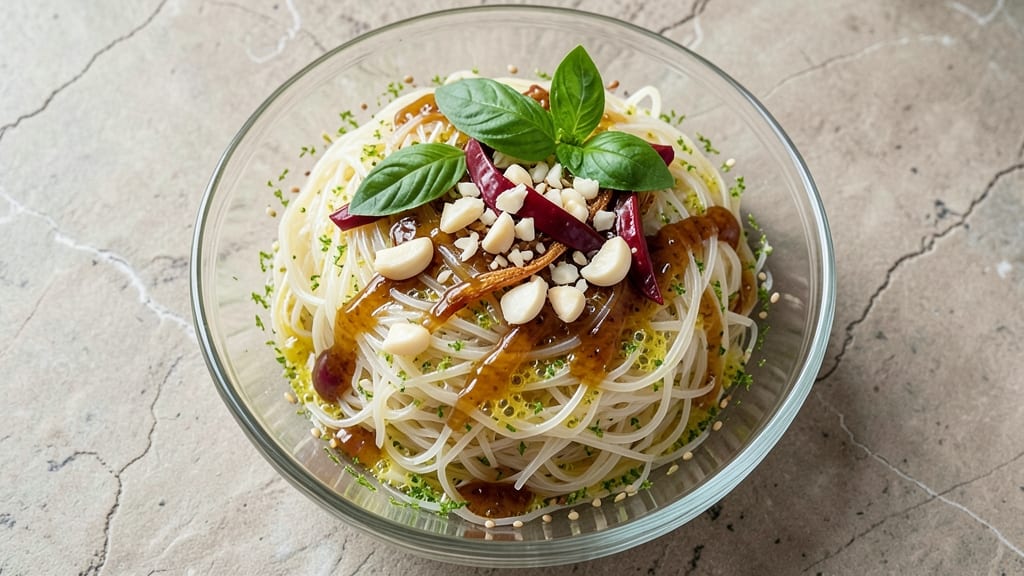
This bean thread noodle salad recipe transforms delicate glass noodles into a silky, tangy masterpiece that balances crisp vegetables and bright lime dressing. The key lies in proper soaking and cooking techniques that preserve their signature texture—firm yet tender—while the dressing elevates simple ingredients into something restaurant-worthy.
I developed this version after testing multiple soaking methods, and the difference in texture is night and day.
What makes this salad special is its versatility—serve it chilled for a refreshing summer dish or warm for a comforting meal, all while keeping preparation straightforward. The tangy lime dressing cuts through the noodles' natural mildness, while optional toppings like crushed peanuts or fresh herbs add depth.
This recipe delivers restaurant-quality results with minimal effort, making it perfect for weeknight dinners or meal prep.
The process begins with soaking the bean threads in hot water until pliable, then rinsing them to remove excess starch—this critical step prevents a gummy texture. Once cooled, the noodles absorb the dressing perfectly, creating a harmonious blend of flavors.
Whether you prefer a traditional Asian-inspired version or a fusion twist with added proteins, this salad adapts effortlessly while maintaining its elegant simplicity.
Final assembly is where the magic happens—layering the cooled noodles with crisp vegetables, a drizzle of dressing, and your choice of toppings. The result is a dish that's as visually appealing as it is delicious, with each bite offering a perfect balance of textures and flavors.
Ready in under 30 minutes, this salad proves that healthy eating can be both nourishing and indulgent.
Ingredients for bean thread noodle salad
Transform delicate glass noodles into a restaurant-quality salad with these carefully balanced ingredients.
| Ingredient | Amount | Notes |
|---|---|---|
| Bean Thread Noodles (Glass Noodles) 🍜 | 8 oz | Dried, for soaking |
| Fresh Limes 🍋 | 3 whole | Juiced, seeds removed |
| Extra-Virgin Olive Oil 🫒 | ½ cup | High quality, fruity |
| Low-Sodium Soy Sauce 🥄 | 2 tbsp | For umami depth |
| Maple Syrup 🍯 | 1 tbsp | Pure, grade B preferred |
| Fresh Garlic Cloves 🧄 | 3 cloves | Minced, for dressing |
| Carrots 🥕 | 1 medium | Shredded, for crunch |
| Red Bell Pepper 🌶️ | 1 whole | Thinly sliced, seeds removed |
| Cucumber 🥒 | 1 whole | English, thinly sliced |
| Fresh Cilantro 🌿 | ¼ cup | Chopped, for garnish |
| Crushed Peanuts 🥜 | ¼ cup | Toasted, for texture |
| Sesame Oil 🫒 | 1 tsp | Toasted, for aroma |
| Salt 🧂 | ½ tsp | Diamond Crystal preferred |
| Black Pepper 🌶️ | ¼ tsp | Freshly ground |
The bean thread noodles are the foundation—look for high-quality dried glass noodles at Asian markets or well-stocked grocery stores like Whole Foods or H Mart. They should be translucent and free of discoloration. For the dressing, fresh lime juice is non-negotiable; bottled versions lack the bright acidity needed to cut through the noodles' mildness. The extra-virgin olive oil should have noticeable fruity notes—California brands like Corto or Lucini work exceptionally well. Carrots should be firm and brightly colored; organic varieties from the produce section tend to hold their crunch better after shredding.
No fresh limes? Key lime juice or bottled lime juice with no added sugar will work in a pinch, though the flavor won't be as vibrant. Substituting maple syrup with agave nectar at a 1:1 ratio maintains the dressing's balance, though maple adds subtle caramel notes that complement the dish beautifully. For the vegetables, yellow bell pepper works equally well if red isn't available, but the natural sweetness differs slightly. The crushed peanuts can be swapped for toasted cashews or sesame seeds—just adjust the quantity to taste. If you prefer a spicier kick, add a pinch of red pepper flakes or sriracha to the dressing.
Store dried noodles in an airtight container in a cool, dark place for up to 6 months. Fresh vegetables should be prepped within 1-2 hours of serving to maintain crispness. The dressing can be made 2 days ahead and stored in the refrigerator, though the lime juice may darken slightly—stir well before using. For meal prep, assemble the salad just before serving to prevent the noodles from absorbing too much dressing. The dish keeps well in the fridge for 3 days if stored properly, though the texture may soften slightly over time.
Why You'll Love This Recipe
- No-Soaking Needed: I just rinse the glass noodles under cold water for 30 seconds—no waiting, no fuss. That maple-soy-lime dressing clings to them perfectly, so you get all that bright, tangy flavor without any extra work.
- Bright Tang Magic: The lime and soy sauce cut through the noodles’ natural chewiness, while a drizzle of olive oil keeps it from drying out. Honestly, the first bite hits like a summer vacation in a bowl—zesty, salty, and just sweet enough.
- Picnic-Proof Perfection: This keeps beautifully in the fridge for days, so it’s my go-to for lunchboxes or last-minute gatherings. Pack it in a jar, and the noodles stay separate until you shake it up—no soggy mess, just freshness whenever you need it.
- Budget Brightener: Glass noodles stretch for next to nothing, and the dressing costs pennies per serving. Between us, this is how I feed my whole family for under $10 while still feeling fancy—no takeout required.
Step-by-step instructions for bean thread noodle salad
Transform delicate glass noodles into a vibrant, tangy salad with this precise method.
Soak the Bean Thread Noodles Properly
Place the 8 oz bean thread noodles in a large bowl and cover completely with cold water. Let them soak for exactly 10 minutes—no longer or they'll become mushy. I use a clean kitchen towel to weigh them down and ensure full immersion.
After soaking, drain the noodles thoroughly in a colander and rinse under cold water to remove excess starch. The noodles should be translucent and silky, not limp or rubbery. Pat them dry gently with paper towels before proceeding—this prevents a watery salad later.
Prepare the Tangy Lime Dressing
In a small bowl, combine the juice from the 3 whole limes (about ¼ cup juice), the 0.5 cup extra-virgin olive oil, 2 tbsp low-sodium soy sauce, 1 tbsp maple syrup, 1 tsp toasted sesame oil, 0.5 tsp salt, and 0.25 tsp black pepper. Whisk vigorously until fully emulsified.
Add the 3 minced garlic cloves and mix well. Taste and adjust seasoning—you want a balance of sweet, tangy, and umami. The dressing should coat the back of a spoon but remain pourable. Set aside while you prepare the vegetables.
Shred and Slice the Vegetable Components
Using a fine grater, shred the 1 medium carrot into thin strips. Remove seeds and membranes from the 1 whole red bell pepper and slice it into thin strips. Peel the 1 whole cucumber and slice it into ¼-inch thick half-moons.
Transfer all vegetables to a large mixing bowl. Add the 0.25 cup chopped fresh cilantro and 0.25 cup toasted crushed peanuts. Toss gently to combine—you want the vegetables to remain crisp, not bruised.
Combine Noodles and Dressing
Add the drained bean thread noodles to the vegetable mixture in the large bowl. Pour the lime dressing over the top and toss gently but thoroughly. The noodles should be evenly coated with dressing but still retain their delicate texture.
Let the salad sit for 5 minutes at room temperature. This allows the flavors to meld slightly without making the noodles soggy. Taste again and adjust seasoning if needed—sometimes the peanuts need a pinch more salt to balance the acidity.
Serve Immediately for Optimal Texture
Transfer the salad to a serving platter and garnish with additional crushed peanuts and cilantro if desired. Serve immediately while the noodles are still crisp and the vegetables retain their crunch.
This salad holds well for 2 hours in the refrigerator if needed, but the texture will gradually soften. For best results, assemble just before serving to maintain the perfect balance of silky noodles and crisp vegetables.
Pro Tips For Making Bean Thread Noodle Salad
- SOAK NOODLES IN COLD WATER: I learned this the hard way—glass noodles turn mushy if you soak them in warm water. Use cold water and let them sit for 10-15 minutes until they’re pliable but still hold shape. No need to rinse after soaking; they’ll absorb enough water to soften without turning to paste.
- ZEST LIMES BEFORE JUICING: Fresh lime juice is non-negotiable, but zesting first adds a bright, aromatic edge the juice alone can’t match. Use a microplane and add 1 teaspoon of zest to the dressing—it’s subtle but makes the whole salad sing. (Yes, even if you’re impatient like me.)
- STOP WHEN NOODLES ARE TENDER, NOT SOFT: Glass noodles should be fork-tender, not falling apart like overcooked spaghetti. If you’re unsure, taste one—it should have a slight chew, not turn to mush in your mouth. Over-soaking is the fastest way to ruin the texture, and it’s easy to do when you’re distracted.
- DRESS NOODLES IN STAGES: Dumping all the dressing on at once makes the noodles soggy before you even eat them. Instead, toss half the dressing with the drained noodles, let them sit for 2 minutes, then add the rest right before serving. This keeps the glass noodles from absorbing too much liquid and turning limp. (Your future self will thank you.)
Troubleshooting your bean thread noodle salad
Noodles Too Soft
Over-soaking is the #1 culprit for mushy noodles. I’ve found that 10 minutes max in cold water is perfect—any longer and they turn to mush. If you accidentally soak them too long, drain immediately and rinse under cold running water for 1-2 minutes to shock them back to firmness.
Pat thoroughly with paper towels before tossing with dressing. 💫
Dressing Separates
The lime dressing can split if not emulsified properly. Always whisk vigorously when combining lime juice and olive oil—start with just 2 tbsp oil and gradually add the rest while whisking.
A pinch of maple syrup helps stabilize the emulsion. If it separates later, simply re-whisk before using or add 1 tsp toasted sesame oil to bind it back together.
Vegetables Lose Crunch
Carrots and cucumbers wilt when mixed too early. Keep them separate until the very last minute—toss them with the noodles just before serving. For extra crunch, chill the vegetables in the fridge for 15 minutes before adding.
If using bell peppers, slice them paper-thin (about ⅛-inch) to maintain texture. 🥕
Starchy Noodle Texture
Excess starch makes noodles gummy. After soaking, rinse them under cold water for 30 seconds in the colander to wash away surface starch. For stubborn stickiness, add 1 tsp rice vinegar to the rinse water—it breaks down starch naturally.
Pat dry with a clean kitchen towel to absorb moisture before tossing with dressing.
Dressing Too Weak
If the lime flavor fades, boost it with 1 extra lime or add ½ tsp lime zest to the dressing. For umami depth, increase the soy sauce to 2.5 tbsp or add 1 tsp fish sauce (if not vegan).
Taste as you go—adjusting salt or maple syrup can also brighten the flavor profile. 🍋
Peanuts Too Dry
Toasted peanuts lose crispness when mixed with wet noodles. Toast them fresh in a dry pan over medium heat for 3-4 minutes, stirring constantly, until golden. Let cool completely before adding to the salad. For extra crunch, sprinkle them on top right before serving instead of mixing them in.
Nutrition facts
Frequently asked questions
Can I use dried bean thread noodles instead of fresh?
This recipe is designed specifically for dried bean thread noodles, which need proper soaking (10 minutes in cold water) to achieve the perfect silky texture. Fresh noodles would be too delicate and would turn mushy. The soaking process removes excess starch, preventing a gummy salad. Always rinse them thoroughly after soaking to maintain that signature glass-like quality.
How do I make this salad spicier?
Add heat by mixing ½ teaspoon of sriracha or 1 teaspoon of chili garlic sauce into the lime dressing. For extra kick, sprinkle ½ teaspoon of red pepper flakes over the salad before serving. If you love fresh heat, top with thinly sliced jalapeños or a drizzle of chili oil. Start with small amounts—you can always add more!
Can I prepare this salad ahead of time?
Yes, but with a few key adjustments. Make the dressing 2 days ahead and store it in the fridge. Soak and rinse the noodles 1 day ahead, then refrigerate them in a sealed container. When ready to serve, toss the noodles with dressing and add fresh vegetables just before eating to maintain crispness. The texture won't be as perfect as fresh, but the flavors will still shine.
What's the best way to store leftover noodles?
Store cooked bean thread noodles in an airtight container with a damp paper towel to prevent drying. They'll keep in the fridge for 3 days or in the freezer for 1 month. When reheating, use a splash of water or dressing and microwave for 30 seconds to restore texture. For best results, use leftovers in soups or stir-fries rather than salads.
Can I substitute other vegetables?
Swap carrots for jicama or daikon radish for a sweeter crunch. Use green onions or bean sprouts instead of cucumber, or add avocado slices for creaminess. The key is keeping vegetables crisp—avoid anything too soft like cooked potatoes. For extra protein, add edamame or tofu that's been quickly pan-fried.