
Side Dishes
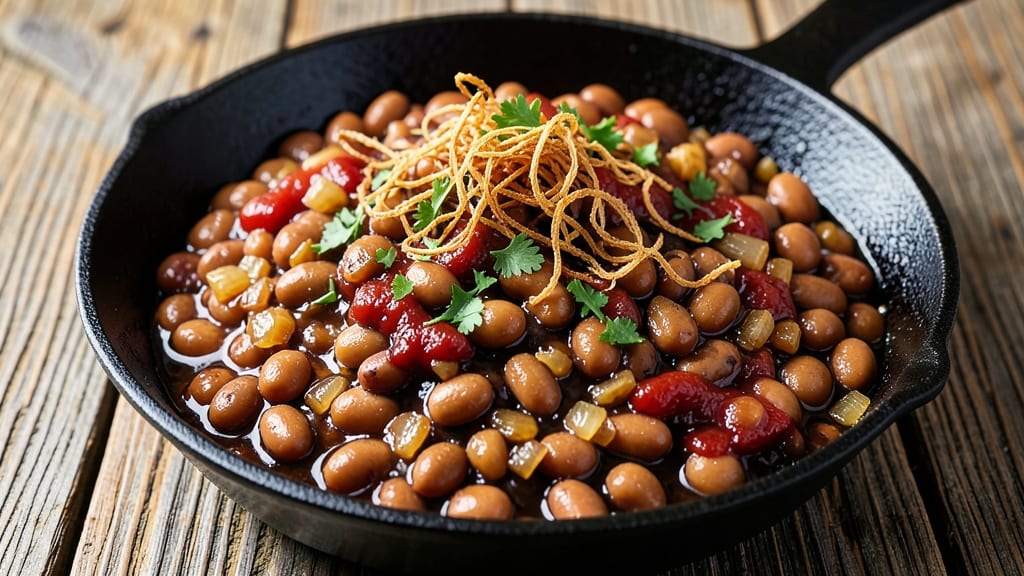
This baked bean recipe using Great Northern beans delivers the perfect balance of smoky depth and sweet caramelization—ideal for vegetarian meals with hearty, restaurant-quality texture.
The secret lies in slow simmering with molasses, brown sugar, and a touch of mustard, which transforms simple beans into a rich, thick dish with edges that crisp beautifully in the oven.
Great Northern beans hold their shape exceptionally well, creating a satisfying bite that pairs perfectly with the velvety sauce. Unlike smaller beans, they absorb flavors deeply while maintaining structure, making this recipe both foolproof and adaptable for vegans by simply omitting honey or dairy.
The spices—thyme, black pepper, and a hint of smoked paprika—build layers of warmth that complement the natural sweetness of the beans.
What makes this recipe stand out is its thick, glossy finish that clings to every bean, thanks to a reduction of tomato paste and molasses.
The result is a dish that’s hearty enough to serve as a main but versatile enough to elevate any meal—think Thanksgiving tables, potlucks, or a cozy weeknight dinner. The aroma alone will have everyone asking for seconds.
Once you try this method, you’ll never settle for canned beans again. The slow cooking process develops flavors that store-bought versions simply can’t match, and the caramelized edges add a satisfying contrast to the tender centers. Ready to transform pantry staples into a showstopping side? Let’s get started.
Ingredients for baked bean recipe using great northern beans
Great Northern beans and smoky-sweet pantry staples create a restaurant-quality side dish with caramelized edges.
| Ingredient | Amount | Notes |
|---|---|---|
| Great Northern Beans (Dried) 🌱 | 2 cups | Soaked overnight, drained |
| Onion (Yellow) 🧅 | 1 ½ cups | Diced, medium dice |
| Tomato Paste 🍅 | ½ cup | High-quality, no sugar added |
| Molasses 🍯 | ¼ cup | Unsulphured preferred |
| Brown Sugar 🍚 | ½ cup | Light or dark variety |
| Apple Cider Vinegar 🍎 | ¼ cup | For tangy balance |
| Dijon Mustard 🍯 | 2 tbsp | High-quality, smooth |
| Garlic Cloves 🧄 | 4 cloves | Minced, fresh preferred |
| Fresh Thyme 🌿 | 1 tbsp | Leaves only, chopped |
| Smoked Paprika 🌶️ | 1 tbsp | For smoky depth |
| Ground Black Pepper 🌶️ | 1 tsp | Freshly cracked |
| Vegetable Broth 💧 | 2 cups | Low-sodium preferred |
| Extra-Virgin Olive Oil 🫒 | 2 tbsp | For richness |
| Salt 🧂 | 1 ½ tsp | Diamond Crystal preferred |
| Fresh Parsley 🌿 | ¼ cup | Chopped, for garnish |
Great Northern beans are the backbone of this recipe—their large size and firm texture hold up beautifully during slow cooking, unlike smaller beans that can turn mushy. Look for organic dried beans at Whole Foods or bulk bins at natural grocery stores for the best quality. Soaking overnight reduces cooking time and improves digestibility, but if you're short on time, a quick 2-hour soak in hot water works too. The key is to use unsalted broth during cooking, as salt added too early can toughen the beans. For the molasses, unsulphured is ideal—it has a cleaner flavor and won't overpower the dish.
No molasses? Maple syrup or date syrup works in a pinch, though the flavor profile will shift slightly. The tomato paste can be substituted with crushed tomatoes at half the amount, but you'll lose that concentrated umami depth. Fresh thyme is ideal, but dried thyme at one-third the amount will work if you're in a hurry. For the vinegar, red wine vinegar adds complexity, while balsamic vinegar brings a sweeter note. The smoked paprika is non-negotiable for that authentic smoky flavor—Penzeys or Goya brands are consistently reliable. If you prefer less heat, reduce the smoked paprika to 1 teaspoon and add 1/2 teaspoon of regular paprika instead.
This dish tastes even better the next day as the flavors meld together. Store in an airtight container in the fridge for up to 5 days, or freeze portions for 3 months—the sauce thickens beautifully when reheated. For serving, a sprinkle of fresh parsley brightens the dish, and a drizzle of extra-virgin olive oil adds richness. Leftovers reheat well in a skillet with a splash of water or broth to restore moisture. The caramelized edges develop fully after baking, so resist the urge to peek at the oven door—patience ensures that perfect texture.
Why You'll Love This Recipe
- One-Pot Magic: I swear by this recipe because it’s all in one dish—no fussing with multiple pans or dirtying extra bowls. Just toss the soaked Great Northern beans, diced onion, tomato paste, and that perfect molasses-brown sugar combo into a baking dish, cover it, and let the oven do the work. Honestly, the cleanup couldn’t be simpler.
- Sweet-Savory Balance: That molasses and brown sugar? They’re the secret weapons here. The beans soak up the rich, caramelized depth while the tomato paste keeps it grounded—sweet but not cloying, hearty but not heavy. It’s the kind of flavor that sticks with you, the way good comfort food should.
- Potluck Star: Between us, this is my go-to for gatherings because it’s reliable. Bring it to a picnic, a holiday spread, or just a random Tuesday night—it’s always a hit. Plus, the texture holds up when reheated, so you won’t get sad squishy beans the next day.
- Pantry Powerhouse: I make a double batch because these beans taste even better the second day. They’re budget-friendly (dried beans are a steal), and the leftovers? Perfect for slathering on grilled cheese, mixing into soups, or just eating straight from the pot with a spoon. (Yes, even on a Tuesday night.)
Step-by-step instructions for baked Great Northern beans
Master this smoky-sweet technique for beans with caramelized edges and deep flavor layers.
Sauté the Aromatics Until Fragrant
Heat the 2 tablespoons extra-virgin olive oil in a large Dutch oven over medium heat. Add the 1.5 cups diced yellow onion and cook for 8-10 minutes until softened and beginning to caramelize—this builds sweetness and depth. Stir occasionally to prevent browning.
Add the 4 minced garlic cloves and 1 tablespoon chopped fresh thyme to the onions. Cook for 1-2 minutes until the garlic becomes fragrant but doesn't brown. This step creates the flavor foundation—don't rush it. The onions should be translucent with just a hint of golden color at the edges.
Build the Sauce Base with Molasses and Tomato
Reduce heat to medium-low and stir in the 0.5 cup tomato paste, 0.25 cup molasses, and 0.5 cup brown sugar. Cook for 3-4 minutes until the mixture thickens slightly and the sugars begin to caramelize. This creates the rich, glossy coating that clings to the beans.
Add the 2 tablespoons Dijon mustard, 1 tablespoon smoked paprika, and 1 teaspoon ground black pepper. Stir vigorously for 1 minute to fully incorporate. The mixture should be thick and syrupy—this ensures maximum flavor transfer to the beans during baking. If it's too thick, add 1 tablespoon vegetable broth to loosen.
Combine All Ingredients and Simmer
Add the drained 2 cups Great Northern Beans, 2 cups vegetable broth, and 1.5 teaspoons salt. Stir well to coat each bean with the flavorful sauce. Bring to a gentle simmer over medium heat, then reduce heat to low. Let it bubble gently for 10 minutes to allow the beans to absorb the initial flavors.
Here's the thing—this simmering step is crucial. You want the sauce to cling to the beans rather than pool at the bottom. If the mixture looks too thick after 10 minutes, add 2-3 tablespoons more broth to maintain a loose consistency. The beans should be mostly submerged but not swimming in liquid.
Bake Until Caramelized and Tender
Transfer the Dutch oven to a 350°F preheated oven and bake uncovered for 2-2.5 hours. The beans are done when they're fork-tender and the sauce has thickened to a glossy, caramelized consistency with slightly crisp edges. You'll notice the sauce darkens and develops a beautiful sheen—this indicates proper caramelization.
For best results, check the beans at the 2-hour mark. They should be tender but still hold their shape. If they're not quite done, return to the oven for 15-20 minutes more. The sauce should coat the back of a spoon and have a thick, jam-like texture. If it's too thin, uncover and bake for 10-15 minutes to reduce further.
Finish with Vinegar and Garnish
Remove from the oven and stir in the 0.25 cup apple cider vinegar. This brightens the flavors and cuts through the sweetness. Let the beans sit for 5 minutes to allow the vinegar to mingle with the other ingredients. The aroma should be rich, smoky, and slightly tangy—this is your signal that the flavors have melded perfectly.
Garnish with 0.25 cup chopped fresh parsley just before serving. The parsley adds freshness and visual contrast to the deep, caramelized beans. Serve warm with crusty bread or over mashed potatoes for a hearty meal that delivers both comfort and sophisticated flavor.
Pro Tips For Making Baked Bean Recipe Using Great Northern Beans
- SOAK BEANS OVERNIGHT: Dried Great Northerns need a long soak—at least 8 hours, ideally overnight—to soften properly. I learned this the hard way: skipping it leaves beans tough no matter how long you bake them. Use cold water, not hot, and a pinch of baking soda to help break down the skins.
- CARAMELIZE ONIONS FIRST: Low and slow for 20 minutes until onions turn deep amber. That sweetness cuts through the molasses’ bitterness and makes the whole dish richer. I used to rush this and wondered why my beans tasted flat—don’t skip the patience.
- DILUTE TOMATO PASTE: Thin it with ½ cup water before mixing into the beans. Undiluted paste clumps and makes the sauce grainy. Stir it in early so it blends smoothly, not as an afterthought.
- BAKE LOW AND LONG: 300°F (not 350°F) for 2.5–3 hours guarantees tender beans without burning the sugar. High heat caramelizes the molasses too fast, turning it bitter. Cover tightly with foil for the first hour to trap steam.
Essential equipment for this recipe
Dutch Oven Essentials
A heavy-bottomed Dutch oven is the only pot for this recipe—it distributes heat evenly and prevents scorching during the long bake. I swear by the Lodge 5.5-quart cast iron Dutch oven for its durability and heat retention.
If you don’t own one, a Le Creuset stoneware Dutch oven (5-6 quarts) works beautifully too. The deep sides prevent spills when stirring, and the tight lid traps moisture for perfect caramelization. 🔥
Precision Thermometer
While not strictly necessary, an instant-read thermometer like the Thermoworks ThermoPop helps track both oven temperature and bean doneness. I check the oven temp before baking to ensure it’s truly at 350°F—fluctuations can lead to uneven cooking.
For the beans, aim for an internal temperature of 205°F (they’ll soften further while resting). A thermometer eliminates guesswork, especially if your oven runs hot or cold.
Wooden Spoon Set
Use a heatproof wooden spoon (like OXO Good Grips) to stir the beans during simmering and baking—it won’t scratch your Dutch oven like metal utensils. The slightly rough surface also helps scrape up caramelized bits from the bottom, maximizing flavor.
Avoid plastic spoons—they can melt under high heat. I keep a set of three (one for stirring, one for scraping, and one for tasting) within arm’s reach while cooking.
Measuring Tools
Precision matters with this recipe, so invest in a stainless steel measuring set (like OXO Good Grips) for accurate molasses, sugar, and broth measurements. A digital kitchen scale (even a basic Escali Primo) is ideal for spices like smoked paprika and thyme—measuring by weight ensures consistent flavor.
For liquids, a clear glass liquid measuring cup lets you eyeball the exact 2 cups of broth without spills. I keep these tools on a tray near my stove for easy access.
Baking Sheet Backup
If your Dutch oven lid springs a leak or you need extra capacity, a rimmed baking sheet (like USA Pan Heavy-Gauge) comes in handy. Line it with parchment paper and transfer the beans for the final 15 minutes of baking to achieve those coveted crispy edges.
Preheat the sheet alongside the Dutch oven to maintain even heat transfer. This trick works especially well for large gatherings where you’re doubling the recipe. 💡
Nutrition facts
Frequently asked questions
Why do Great Northern beans work better than other varieties for baking?
Great Northern beans hold their shape beautifully during long baking, unlike smaller beans that can turn mushy. Their firm texture absorbs flavors deeply while maintaining a satisfying bite. The larger size also creates better surface area for that perfect caramelized coating!
Can I make this recipe without molasses?
Yes! Substitute with maple syrup or date syrup (¼ cup), though the flavor will be slightly different. For a deeper caramel note, try 1 tablespoon of brown sugar plus 1 teaspoon of vanilla extract. The key is balancing sweetness with the vinegar at the end.
How do I fix beans that are too thick or too thin?
If too thick, add 2-3 tablespoons broth and simmer uncovered for 5-10 minutes to reduce. For thin sauce, bake uncovered for 10-15 minutes longer to evaporate excess liquid. Stir occasionally to prevent sticking—this helps achieve that perfect glossy finish!
Can I prepare this ahead of time?
These taste even better the next day. Store in an airtight container in the fridge for 5 days or freeze for 3 months. Reheat gently in a skillet with a splash of water or broth to restore moisture. The flavors meld beautifully overnight!
What's the best way to reheat leftovers?
Use a skillet over medium-low heat with 1-2 tablespoons broth or water to prevent drying. Stir frequently and cover for 5-7 minutes until warmed through. For crispy edges, transfer to a baking sheet and broil for 2-3 minutes at the end.