
Sauces & Condiments
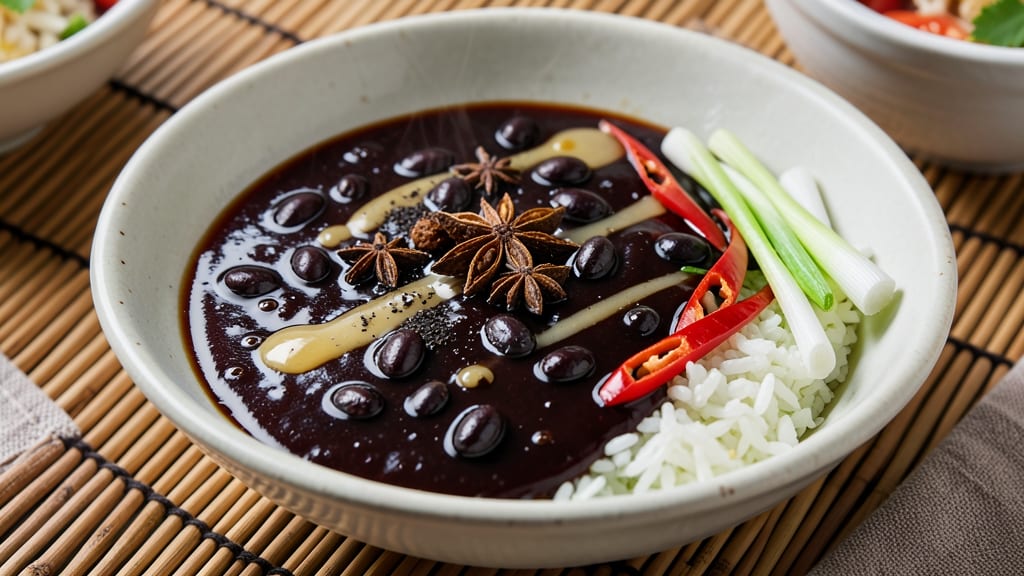
This authentic Chinese black bean sauce recipe unlocks the umami-rich, fermented depth that transforms stir-fries and dumplings into restaurant-quality dishes. 🌟 The secret lies in fermented black beans, simmered with soy sauce, sugar, and aromatic spices until thick and glossy.
I developed this version after years of testing—balancing traditional techniques with home-cook practicality for a sauce that delivers professional results every time.
The foundation of this sauce begins with fermented black beans, which provide that signature funky, savory complexity. Combined with soy sauce, sugar, and a blend of star anise, cinnamon, and ginger, the flavors meld into a harmonious balance of sweet, salty, and aromatic notes.
Unlike store-bought versions, this recipe builds depth through slow simmering, allowing the spices to infuse and the sauce to thicken naturally.
What you’ll end up with is a glossy, versatile black bean sauce that elevates any dish—whether you’re tossing it into stir-fries, glazing dumplings, or drizzling over noodles.
The fermentation process (if using pre-fermented beans) or the long simmer (if using dried) ensures a rich, complex flavor that’s impossible to replicate with instant sauces. This is the kind of sauce that turns ordinary meals into memorable ones.
Ready in about 45 minutes of active time (plus optional fermentation), this recipe is perfect for meal prep or gifting. Store it in the fridge for up to 2 weeks or freeze for longer shelf life. The possibilities are endless—let’s make this sauce the star of your next Chinese-inspired meal.
Ingredients for authentic chinese black bean sauce
Fermented black beans and aromatic spices transform into a restaurant-quality sauce that elevates stir-fries and dumplings.
| Ingredient | Amount | Notes |
|---|---|---|
| Fermented Black Beans 🫘 | 1 cup | Packed, rinsed well |
| Light Soy Sauce 🥄 | ½ cup | High-quality, low-sodium preferred |
| Dark Soy Sauce 🥄 | ¼ cup | For deeper color |
| Brown Sugar 🍚 | ½ cup | Packed, light brown preferred |
| Star Anise Pods 🌿 | 4 whole | Crushed lightly for aroma |
| Cinnamon Sticks 🍃 | 2 whole | 1-inch pieces for infusion |
| Dried Ginger 🧄 | 1 tbsp | Grated or thinly sliced |
| Garlic Cloves 🧄 | 4 cloves | Peeled, roughly chopped |
| Dried Red Chili Peppers 🌶️ | 1 tbsp | Crushed, adjust for heat |
| Sesame Oil 🫒 | 1 tbsp | Toasted, for finishing |
| Cornstarch 🌾 | 1 tsp | For thickening slurry |
| Water 💧 | ½ cup | For cornstarch slurry |
Fermented black beans are the heart of this sauce—look for them in the Asian aisle or order online from brands like Three Crabs. The funkier the smell, the better the flavor, but rinse them well before using to remove excess salt. Star anise and cinnamon should be whole, not ground, for maximum aroma. Whole Foods or Asian markets carry the best quality, but the bulk bins at regular grocery stores work too. If you can't find fermented beans, soaked and parboiled black beans (like kidney beans) can substitute, though the flavor won't be as deep.
No star anise? Anise seeds or fennel seeds at double the amount work in a pinch. Swap dark soy sauce for extra light soy sauce plus 1 tsp molasses if needed. The brown sugar can be white sugar plus 1 tsp molasses for a lighter color. For heat, red pepper flakes or cayenne (start with 1/2 tsp) can replace the dried chilies. Toast your spices in a dry pan for 30 seconds before adding to the sauce—this unlocks so much more flavor. The sesame oil should be toasted, not the flavored kind from the bottle—Trader Joe's sells it pre-toasted for convenience.
This sauce keeps beautifully—2 weeks in the fridge or 6 months in the freezer. Store it in an airtight jar with a layer of oil on top to preserve freshness. I double the batch every time and freeze half—perfect for gifting. When reheating, add a splash of water to prevent thickening. The sauce thickens as it cools, so thin with water if needed. Trust me, the second day is even better as the flavors meld.
Why You'll Love This Recipe
- Pantry Magic: I swear by this sauce—just five ingredients, no fancy prep. Toss the fermented black beans in a pot with soy sauces and sugar, let it simmer until the star anise infuses that deep, warm aroma, and boom—flavor without the fuss.
- Umami Bomb: That funky, salty depth from the fermented black beans? It’s the star. The dark soy sauce adds that glossy, caramelized richness, while the star anise sneaks in a subtle licorice note—like a secret handshake for your taste buds.
- Weeknight Swiss Army: Drizzle it over noodles, toss with stir-fried greens, or slather it on grilled chicken. Honestly, I’ve used it as a marinade, a dipping sauce, and even a glaze for roasted veggies—it’s the ultimate shortcut sauce that never lets you down.
- Budget Game-Changer: A jar of fermented black beans lasts months, and a few pods of star anise stretch across recipes. This sauce costs pennies to make but tastes like you spent hours in a wok—my wallet and my taste buds thank me every time.
Step-by-step instructions for authentic Chinese black bean sauce
Here's how to unlock that signature umami depth—layer by layer, just like in Cantonese kitchens.
🍳 Step 1: Toast the Spices and Aromatics
Heat a dry skillet over medium-low heat and add the 4 whole star anise pods, 2 whole cinnamon sticks, and 1 tbsp dried ginger. Toast for 1-2 minutes until fragrant—you should smell warm, earthy notes with a hint of spice. This step awakens their flavors without burning them.
Remove the spices immediately when aromatic (they burn fast!) and transfer them to a small bowl. Add the 4 peeled garlic cloves and 1 tbsp dried red chili peppers to the same skillet. Cook for 30 seconds until the garlic just turns golden at the edges—this prevents bitterness. Remove and add to the spices. Here's the thing—over-toasting turns these into bitter medicine, not flavor bombs.
🥘 Step 2: Build the Sauce Base
In a medium saucepan, combine the toasted spice mixture with the 1 cup packed, rinsed fermented black beans, 0.5 cup light soy sauce, 0.25 cup dark soy sauce, and 0.5 cup packed brown sugar. Bring to a gentle boil over medium heat, then immediately reduce to a simmer. Stir occasionally for 15 minutes—you want the beans to break down and release their deep, fermented essence.
Watch for the sauce to thicken slightly and develop a rich, glossy sheen. The fermented black beans will darken and soften, creating that signature velvety texture. If it looks too thick, add 2 tablespoons water—just enough to keep it workable. This is where the magic happens: the dark soy sauce adds color while the light soy sauce balances with saltiness.
🍳 Step 3: Thicken and Finish
In a small bowl, whisk together the 1 tsp cornstarch with the 0.5 cup water until smooth. Slowly pour this slurry into the simmering sauce while stirring constantly. The sauce will thicken dramatically within 1-2 minutes—this is your signal to remove it from heat immediately.
Stir in the 1 tbsp toasted sesame oil and taste. You're aiming for a balance of sweet, salty, umami, and just a whisper of heat. If it needs more depth, simmer for another 2 minutes—if it needs more complexity, add a pinch of white pepper. Real talk: this sauce should coat the back of a spoon with a glossy, syrupy consistency.
⏰ Step 4: Rest and Adjust
Transfer the sauce to a clean jar and let it cool to room temperature. This resting period (at least 30 minutes) allows the flavors to meld completely. The sauce will thicken further as it cools—this is normal and actually improves the texture.
Before using, give it a final taste and adjust seasoning: more brown sugar for sweetness, light soy sauce for saltiness, or a pinch of sugar to balance acidity. Store in the refrigerator for up to 2 weeks—the flavors will deepen over time. This isn't just a sauce; it's the soul of your stir-fries and dumplings.
Pro Tips For Making Authentic Chinese Black Bean Sauce
- Rinse the Beans First: Fermented black beans smell like a funky science experiment—good news, that’s normal. Bad news, if you skip rinsing them, your sauce will taste like a dumpster behind a soy sauce factory. Give them a quick 30-second cold rinse under running water before cooking. Not enough to wash away flavor, just enough to tame the ammonia bomb.
- Low and Slow Wins: I used to blast this sauce on high heat, thinking it’d caramelize faster. Wrong. The black beans need time to soften and release their deep, umami magic—think 15-20 minutes on medium-low, stirring occasionally. Rush it, and you’ll end up with a bitter, grainy sludge instead of a glossy, velvety sauce.
- Toast the Star Anise: Star anise isn’t just for show—it’s the aromatic backbone. Dry-toast it in the pan for 30 seconds before adding liquid. That quick sear deepens its licorice notes and prevents it from floating like a lazy boat. Remove it early (after 5 minutes of simmering) so it doesn’t turn the sauce bitter.
- Balance the Soy Sauces: Light soy adds brightness; dark soy gives body. Use them in a 2:1 ratio (light to dark) unless you’re going for a molasses-thick glaze. Taste as you go—if it’s too sharp, add a splash of water or a pinch more brown sugar. The goal is harmony, not a salty punch to the gut.
Essential equipment for perfect results
Essential Saucepan
Your medium saucepan is the workhorse for this recipe—I recommend a 3-quart stainless steel pan like the All-Clad Stainless for even heat distribution. Avoid nonstick pans here; the sauce needs to caramelize and develop depth.
If you don’t have stainless steel, a heavy-bottomed enamel pan (like Le Creuset) works beautifully too. The key is maintaining consistent heat without hot spots that can burn your spices or beans. 🔥
Immersion Blender
While this recipe doesn’t require blending, an immersion blender (like the Ninja BN601) comes in handy if you want ultra-smooth texture. After simmering, you can blend directly in the pan for 10-15 seconds to break down any remaining bean chunks.
This step isn’t mandatory, but it gives your sauce a silky finish—perfect for drizzling over delicate dishes like scallion pancakes. Pro tip: Remove the sauce from heat before blending to avoid splattering.
Fine-Mesh Strainer
A fine-mesh strainer (like the OXO Good Grips) is crucial for rinsing fermented black beans before use. The beans are packed with salt and debris from fermentation, and rinsing them thoroughly removes excess sodium while preserving their flavor.
I also use a strainer to remove whole spices after simmering—this ensures your sauce stays smooth and free of bitter bits. A cheesecloth works too if you want to strain out even finer particles for a silky texture. ✨
Measuring Spoons
Precision matters with spices and aromatics—accurate measuring spoons (like the OXO Stainless Steel Set) are non-negotiable. For example, using 1 tbsp dried ginger instead of 2 tbsp makes a noticeable difference in flavor balance.
I recommend stainless steel spoons because they’re durable and won’t warp over time. Avoid plastic spoons, as they can absorb odors and affect the taste of your sauce. Trust me, the difference is worth it.
Cornstarch Slurry Bowl
Use a small, dedicated mixing bowl (like the Pyrex 1-cup glass bowl) for your cornstarch slurry—this prevents cross-contamination and makes stirring easier. Glass or ceramic bowls distribute heat evenly if you’re tempted to warm the slurry slightly before adding it to the sauce.
Avoid metal bowls for this step, as they can react with the cornstarch and alter its thickening properties. A whisk (like the Mercer Culinary Genius) ensures a smooth, lump-free slurry every time. 💫
Storage Jars
For long-term storage, airtight glass jars (like Ball Mason jars) are ideal—they preserve flavor and prevent freezer burn. I like the 16-ounce size for batch cooking, as it’s perfect for gifting or meal prep. If you’re freezing the sauce, leave 1 inch of headspace to account for expansion.
Label your jars with the date and contents—this sauce tastes even better after a few days, so you’ll want to keep track! For short-term fridge storage, any food-grade plastic container with a tight seal works fine.
Nutrition facts
Frequently asked questions
Can I substitute fermented black beans with regular black beans?
The fermented beans provide that signature umami depth, but you can use 1 cup soaked and parboiled black beans (like kidney beans) in a pinch. For best results, simmer them for an extra 5 minutes to soften and develop flavor. The sauce will be less funky but still delicious—just add 1/2 tsp fish sauce or 1 tsp soy sauce to boost umami.
How do I adjust the heat level in this sauce?
Start with the 1 tbsp dried red chilies for mild heat, but you can reduce to 1/2 tbsp for a milder sauce or increase to 2 tbsp for extra spice. For a different heat profile, swap in 1/2 tsp red pepper flakes or 1/4 tsp cayenne pepper. Toast the chilies longer for deeper flavor—just don't burn them!
Can I make this sauce without star anise or cinnamon?
Replace 4 star anise pods with 1 tsp anise seeds or 1 tsp fennel seeds, and skip the cinnamon or use 1/2 tsp ground cinnamon. For warmth, add 1/4 tsp ground cloves. The sauce will still taste amazing—just slightly less aromatic. Toast your substitutes for 30 seconds to wake up their flavors.
How should I store and reheat this sauce?
Store in an airtight jar in the fridge for up to 2 weeks or freeze for 6 months. To reheat, warm in a saucepan over low heat and stir in 1 tsp water if it thickens too much. Never microwave directly—it can separate. The sauce actually improves with age, so make extra! For gifting, freeze in ice cube trays and transfer to a bag.
What are the best dishes to use this sauce in?
This sauce shines in stir-fries (like dan dan noodles or mapo tofu), glazed dumplings, or as a dipping sauce for spring rolls. Use 1-2 tbsp per dish—start with less and adjust to taste. It also works in braised meats (like pork belly) or as a marinade for tofu. The key is balance: pair it with bright, fresh flavors like scallions or lime.