
Sauces & Condiments
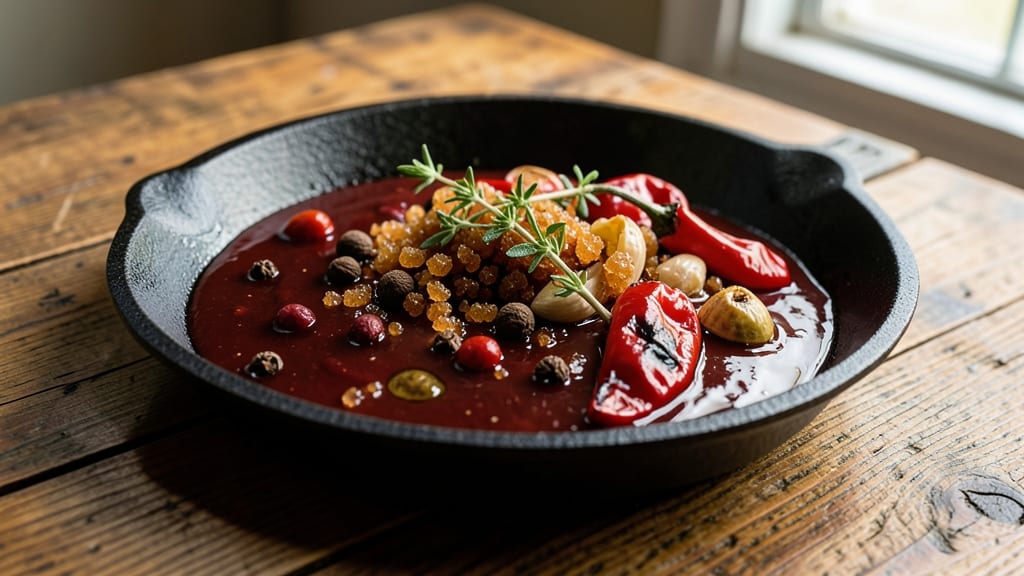
This authentic Caribbean jerk sauce delivers the bold, smoky-sweet heat that defines Jamaican flavor—where allspice, Scotch bonnet peppers, and brown sugar create a complex, aromatic paste.
The key lies in slow-toasting whole spices until fragrant, then blending them with vinegar and oil for a sauce that transforms grilled meats into restaurant-quality masterpieces. My version stays true to island traditions while being simple enough for home cooks to master.
What sets this jerk sauce apart is the balance of heat and sweetness, achieved through precise measurements of Scotch bonnet peppers (adjustable for spice preference) and brown sugar. The allspice, thyme, and garlic form the flavor foundation, while soy sauce and vinegar add depth.
Unlike many recipes, this version uses a wet blend rather than a dry rub, making it perfect for marinating or basting—ideal for chicken, pork, or even tofu.
The result is a vibrant, sticky sauce with a deep mahogany color and layers of flavor: fiery, sweet, and earthy all at once.
It keeps well in the refrigerator for up to two weeks or can be frozen for longer storage, ensuring you always have authentic jerk flavor at your fingertips. Whether you're grilling, baking, or drizzling over rice and peas, this sauce brings the Caribbean to your kitchen.
For those new to jerk seasoning, start with half the recommended Scotch bonnet pepper and build up to your preferred heat level. The sauce works equally well as a marinade or finishing glaze, so feel free to experiment with applications.
Let's make this authentic jerk sauce—your taste buds will thank you.
Ingredients for authentic caribbean jerk sauce
Nine ingredients create the bold, smoky-sweet Caribbean jerk sauce you've been craving.
| Ingredient | Amount | Notes |
|---|---|---|
| Allspice Berries 🌶️ | 1 ½ tbsp | Whole berries, toasted until fragrant |
| Scotch Bonnet Peppers 🌶️ | 1 whole | Seeds removed for medium heat |
| Brown Sugar 🍚 | ½ cup | Light or dark variety |
| Fresh Thyme Leaves 🌿 | ¼ cup | Stems removed, packed loosely |
| Garlic Cloves 🧄 | 6 cloves | Peeled, roughly chopped |
| Extra-Virgin Olive Oil 🫒 | ½ cup | High-quality, fruity variety |
| Apple Cider Vinegar 🍎 | ¼ cup | Or white vinegar |
| Soy Sauce 🍜 | 2 tbsp | Light or dark preferred |
| Ground Ginger 🌿 | 1 tbsp | Fresh grated works too |
| Salt 🧂 | 1 tsp | Kosher or sea salt |
The allspice is non-negotiable—it's the soul of jerk flavor. Look for whole berries at Caribbean markets or bulk spice shops—they toast beautifully for deeper aroma. If you can't find Scotch bonnet peppers, habanero or serrano peppers work, but reduce seeds for milder heat. Fresh thyme is ideal, but dried thyme at half the amount works in a pinch. For the best brown sugar, grab Muscovado from Trader Joe's—it's richer and has molasses notes that complement the jerk perfectly. Toast your spices over low heat in a dry pan until fragrant—this step makes all the difference.
No apple cider vinegar? White vinegar or lime juice keeps the tang. Soy sauce can be swapped for coconut aminos if you're avoiding soy. The ginger is key for that warm, earthy kick—freshly grated packs more punch than ground. For a smoother sauce, blend the toasted spices with the oil first, then add the wet ingredients. Want extra depth? Add 1 tsp smoked paprika to the blend. The sauce thickens as it cools, so don't worry if it looks runny immediately—it'll come together beautifully.
This sauce keeps for 2 weeks in the fridge in an airtight jar, covered with a thin layer of oil to preserve color. For longer storage, freeze in ice cube trays—perfect for single-use portions. The flavor actually improves after a day or two as everything melds. Double the batch and freeze half—you'll want to make this all the time. If you're using it as a marinade, let the meat soak for at least 4 hours for maximum flavor penetration.
Why You'll Love This Recipe
- No Fuss, Big Payoff: I swear, this sauce takes less than 15 minutes—just toast the allspice and garlic, blend, and simmer. The Scotch bonnet adds heat without fuss, and the brown sugar balances it all while you’re chopping veggies for dinner.
- That Allspice Magic: Honestly, the moment I cracked open those allspice berries, I knew this was special. They’re like a warm hug in your mouth—earthy, piney, with just a hint of cinnamon. Pair that with the fresh thyme, and you’ve got a flavor that sticks with you.
- Weeknight to BBQ Star: Between us, this sauce is my go-to for everything: slather it on grilled chicken, toss it in rice, or even drizzle it over roasted sweet potatoes. It’s the kind of thing that turns a simple meal into a showstopper without extra effort.
- Makes Leftovers Look Good: I’ll be real—this sauce tastes better the next day. The flavors meld, the sweetness deepens, and you end up with a jar of liquid gold. Store it in the fridge for up to a week, and suddenly, you’ve got a pantry staple that costs pennies to make.
Step-by-step instructions for authentic Caribbean jerk sauce
Bring the bold flavors of Jamaica to your kitchen with this traditional jerk sauce method.
Toast the Allspice Berries for Depth of Flavor
Heat a small dry skillet over medium heat and add the 1.5 tablespoons allspice berries. Toast them for 2-3 minutes until they release their aromatic oils and become fragrant—you'll smell that warm, piney scent that's the heart of jerk seasoning. Stir constantly to prevent burning, as allspice can go from perfect to bitter quickly.
Once fragrant, remove the skillet from heat and let the allspice berries cool for 1 minute. This cooling step is crucial—it prevents the oil from releasing too quickly when you add it to the sauce later. Transfer the toasted berries to a small bowl and set aside. Here's the thing—these berries carry the signature "jerk" flavor, so don't skip the toasting.
Blend the Base Ingredients for Smooth Texture
In a clean food processor or blender, combine the 1 whole Scotch bonnet pepper (seeds removed), 6 cloves garlic, 0.25 cup fresh thyme leaves, 1 tablespoon ground ginger, and 1 teaspoon salt. Pulse until the garlic and pepper are finely chopped but not pureed—you want some texture in your sauce.
Add the 0.5 cup extra-virgin olive oil and 0.25 cup apple cider vinegar next. Pulse again until everything is smoothly blended but still retains a slightly rustic texture. The oil helps emulsify the sauce while the vinegar adds brightness that balances the heat. Here's where it gets important—don't over-blend or you'll end up with a paste instead of a sauce.
Incorporate the Brown Sugar and Toasted Allspice
With the food processor running, slowly drizzle in the 2 tablespoons soy sauce through the feed tube. This gradual addition prevents the motor from overheating and ensures even distribution. Add the 0.5 cup brown sugar and the toasted allspice berries, then pulse until everything is fully combined.
The mixture should look like a thick, glossy paste with visible flecks of allspice and pepper. Taste a small amount—you'll notice the complex layers of heat from the Scotch bonnet, warmth from the allspice, and sweetness from the brown sugar. If the sauce tastes too sweet, add a splash more vinegar. If it's too tangy, add a pinch more brown sugar. This is where you fine-tune the balance.
Simmer and Thicken the Sauce
Transfer the sauce to a medium saucepan and place it over low heat. Stir frequently as it begins to warm, being careful not to let it boil—you want to develop the flavors gently. Simmer for 8-10 minutes, stirring occasionally, until the sauce thickens slightly and coats the back of a spoon.
This simmering step is what transforms your sauce from raw ingredients to something truly special. You'll see the colors deepen and the aromas become more complex. Here's the critical part: if the sauce starts to separate, whisk in 1 tablespoon water at a time until it smooths out. The goal is a glossy, velvety sauce that clings beautifully to grilled meats.
Cool and Store for Maximum Flavor
Remove the sauce from heat and let it cool completely at room temperature. This cooling period allows the flavors to meld and the sauce to thicken further. Once cooled, transfer it to a clean glass jar with a tight-sealing lid. The sauce will keep in the refrigerator for up to 2 weeks, or you can freeze it for up to 3 months for later use.
When ready to use, give the sauce a good stir—it may thicken further after refrigeration. This jerk sauce is incredibly versatile: use it as a marinade for chicken, pork, or fish, or as a bold condiment for grilled vegetables and rice dishes. The authentic flavors will transport you straight to the islands with every bite.
Pro Tips For Making Authentic Caribbean Jerk Sauce
- Toast the Allspice: Dry-toast whole allspice berries in a skillet over medium heat for 30 seconds—just until fragrant. This unlocks their depth without burning them. I learned this the hard way when my first batch tasted bitter; now I always toast them first.
- Blister the Scotch Bonnets: Char the Scotch bonnet peppers directly over a gas flame or under a broiler until blackened in spots. This smoky step turns raw heat into complex flavor—don’t skip it. (Yes, even if you’re impatient like me.)
- Simmer Low and Slow: Reduce the sauce to a thick paste over low heat after blending—walk away and let it bubble gently for 10 minutes. Rushing this makes it watery; patience gives you that glossy, clingy sauce.
- Grind Garlic with Skin: Leave the garlic skins on when pulsing with thyme and brown sugar—it adds texture and prevents the sauce from turning into a smoothie. Sounds weird, but it works: your sauce will have bite.
Common mistakes when making your authentic caribbean jerk sauce
Skipping Spice Toasting
Toasted allspice berries are the soul of jerk sauce—skipping this step means missing that warm, piney aroma that defines authentic flavor. I've tried it both ways, and the difference is night and day.
Toast your 1.5 tbsp allspice berries over medium heat for 2-3 minutes until fragrant. This releases their essential oils, creating depth that raw allspice can't match. 🌶️
Overblending the Mixture
When blending your jerk sauce, stop before it becomes completely smooth. A slightly rustic texture with visible flecks of allspice and pepper is ideal. Overblending turns your sauce into a paste, which lacks the beautiful clinging quality that makes jerk so special.
Pulse your food processor until the garlic and pepper are finely chopped but still retain some texture—this keeps the sauce's integrity. 🔥
Using Fresh vs. Dried Ingredients
Fresh thyme and ginger pack more punch than their dried counterparts, but they can't be swapped one-to-one. If using dried thyme, reduce to half the amount—0.125 cup instead of 0.25 cup. For ginger, freshly grated adds a brighter flavor, but ground ginger works in a pinch.
The brown sugar should be light or dark, but Muscovado from Trader Joe's adds extra depth you won't get with regular granulated sugar. 🍚
Ignoring the Simmering Step
The 8-10 minute simmer is where the magic happens—it's not optional. This step develops the sauce's complex flavors and allows it to thicken properly. Skipping it leaves your sauce raw-tasting and watery.
Stir frequently to prevent burning, and if it starts to separate, whisk in 1 tbsp water at a time until smooth. The goal is a glossy, velvety sauce that coats the back of a spoon. ⚡
Not Adjusting Heat Levels
Scotch bonnet peppers vary in heat intensity, so always taste your sauce before using it. If it's too fiery, add a splash of vinegar or a pinch of brown sugar to balance. If it's too mild, add more pepper seeds or a dash of cayenne.
Start with half a pepper if you're new to jerk heat—you can always add more later. The sauce should have layers of heat, sweetness, and smokiness, not just one dominant flavor. 💫
Storing Improperly
Jerk sauce oxidizes quickly if exposed to air, so always store it in an airtight glass jar with a tight-sealing lid. For longer storage, freeze in ice cube trays—this makes it easy to grab single-use portions later.
The sauce thickens as it cools, so don't worry if it looks runny immediately. If it separates after refrigeration, whisk in 1 tbsp water to restore its glossy texture.
Proper storage keeps your sauce vibrant for up to 2 weeks in the fridge or 3 months in the freezer. ❄️
Nutrition facts
Frequently asked questions
Can I use habanero peppers instead of Scotch bonnet?
Yes, habanero peppers work well as a substitute! Use 1 whole habanero (seeds removed) for similar heat, but reduce to half a pepper if you prefer milder heat. Habaneros have a slightly fruity undertone that complements jerk sauce beautifully. For extra authenticity, try a mix of both peppers if available.
How long should I marinate meat in this jerk sauce?
For best results, marinate chicken or pork for at least 4 hours (overnight is ideal). The longer it marinates, the more tender and flavorful the meat becomes. For tougher cuts like pork shoulder, marinate for 8-12 hours to break down fibers. Always refrigerate while marinating for food safety.
Can I make this sauce without a food processor?
You can make this jerk sauce with a mortar and pestle or by finely chopping all ingredients with a sharp knife. For the allspice and pepper, grind them as finely as possible. The texture will be slightly rustic but still delicious. Just ensure everything is well combined before simmering.
What's the best way to use leftover jerk sauce?
Leftover jerk sauce is incredibly versatile! Use it as a glaze for grilled vegetables, a drizzle over rice and peas, or as a bold condiment for tacos. You can also freeze it in ice cube trays for single-use portions. The sauce keeps well in the fridge for 2 weeks, so don't hesitate to make a big batch.
Why does my jerk sauce look too thin?
The sauce will naturally thicken as it cools, but if it's still too thin after refrigeration, simmer it for an extra 5 minutes on low heat. If that doesn't work, whisk in 1 teaspoon cornstarch mixed with 1 tablespoon water and simmer until thickened. The goal is a glossy, velvety texture that clings beautifully to meats.