
Soups & Stews
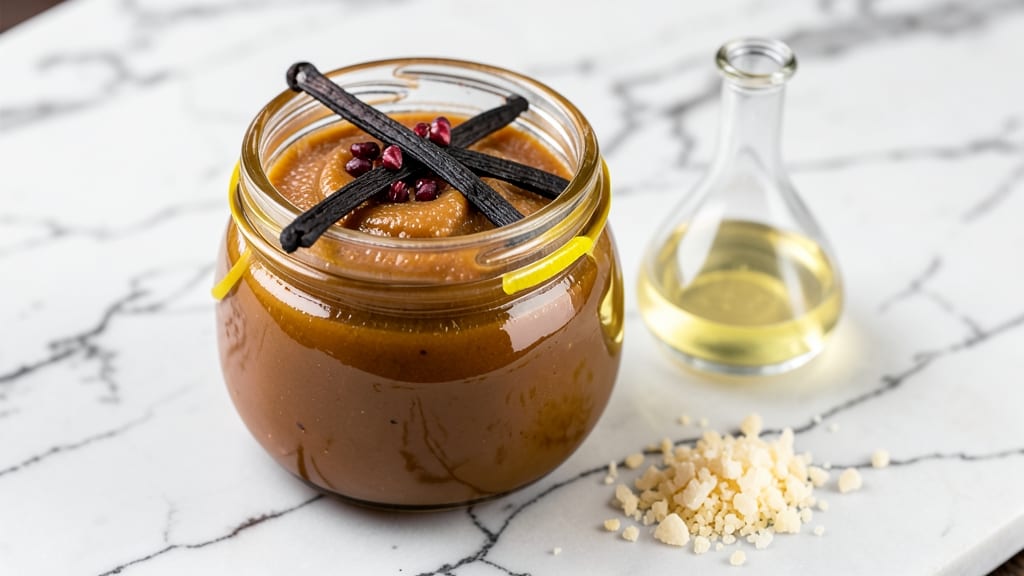
This alcohol-free vanilla bean paste delivers the same luxurious depth as traditional extracts—without the booze. ✨ The secret lies in gently infusing vanilla bean seeds with a neutral glycerin base, creating a rich, spreadable paste that’s perfect for desserts, coffee, or even savory drizzles.
I developed this recipe after realizing how often vanilla extracts contained alcohol, which could interfere with delicate flavors or trigger sensitivities.
The process is surprisingly simple: split vanilla beans, steep them in warm glycerin and water for days, then blend until smooth. This method extracts maximum vanilla flavor while keeping the paste naturally sweet and stable.
No alcohol means no harsh aftertaste, just pure vanilla essence that enhances everything from cakes to cocktails.
What you’ll end up with is a velvety paste that’s thicker than extract but still easy to drizzle or fold into recipes. It keeps for months in the fridge, making it a pantry staple for bakers and mixologists alike.
The best part? Every batch tastes fresher than store-bought versions, with real vanilla seeds visible for that restaurant-quality touch.
Use it to sweeten coffee, fold into whipped cream, or drizzle over chocolate desserts—this paste transforms ordinary recipes into something truly special. Let’s get started on creating your own batch today.
Ingredients for alcohol free vanilla bean paste
Five simple ingredients transform vanilla beans into a luxurious, alcohol-free paste.
| Ingredient | Amount | Notes |
|---|---|---|
| Vanilla Beans 🌿 | 2 whole | High-quality Madagascar or Tahitian |
| Glycerin 💧 | ½ cup | Pure, food-grade glycerin |
| Water 💧 | ¼ cup | Filtered or spring water |
| Granulated Sugar 🍚 | ¼ cup | Fine grain preferred |
| Vanilla Sugar 🍚 | 1 tbsp | Optional for extra flavor |
| Lemon Juice 🍋 | 1 tsp | Freshly squeezed |
| Sea Salt 🧂 | ¼ tsp | Fine grain preferred |
The vanilla beans are everything here—Madagascar for classic vanilla flavor or Tahitian for a floral twist. Grab a few from Penzeys or your local specialty store—they’re worth the splurge. Look for plump, moist beans with a rich aroma. Whole beans work best, but if you’re using pre-split ones, just double the quantity. Glycerin is the magic ingredient—it’s what creates that thick, spreadable paste. Food-grade glycerin is available online or at baking supply stores. If you can’t find it, vegetable glycerin works too.
No vanilla sugar? Skip it or swap for extra granulated sugar. Short on lemon juice? A pinch of citric acid will do in a pinch. The sugar helps balance the glycerin’s sweetness, but if you’re using a very sweet vanilla bean, you can cut it back to 1/4 cup. For a smoother paste, strain out the seeds after blending—though I like leaving them in for that restaurant-quality look. The salt is subtle but enhances the vanilla’s depth, so don’t skip it. If you’re making this for savory dishes, you can even bump it up to 1/4 tsp.
This paste keeps for 6-12 months in the fridge, so make a big batch. Store it in a clean glass jar with a tight lid—glycerin helps preserve it naturally. For easy use, spoon it directly into recipes or drizzle from the jar. It’s perfect for coffee, desserts, or even savory glaze. If it thickens over time, just add a splash of warm water and stir. The flavor only gets better with age, so don’t rush it.
Why You'll Love This Recipe
- I’ll be real: this paste delivers that deep, boozy vanilla punch without the alcohol burn. The split vanilla beans infuse the glycerin and sugar so richly, you’d swear there’s rum in there—except there isn’t. (My coffee’s never been this smooth.)
- No Booze, All Flavor: I’ll be real: this paste delivers that deep, boozy vanilla punch without the alcohol burn. The split vanilla beans infuse the glycerin and sugar so richly, you’d swear there’s rum in there—except there isn’t. (My coffee’s never been this smooth.)
- Five-Ingredient Magic: Honestly, this is the kind of recipe where you almost feel guilty for how simple it is. Just simmer, strain, and let it thicken—no fancy equipment, no stress. The glycerin keeps it silky, and the sugar? It caramelizes just enough to add this subtle, luxurious depth.
- Pantry Staple Upgrade: Between us, I keep this in my fridge like it’s fancy syrup. Drizzle it over oatmeal, fold it into yogurt, or toss it into homemade granola—suddenly, everything tastes like a bakery made it. (Yes, even on a Tuesday night.) The vanilla sugar adds little crunchy surprises that make it feel special.
Step-by-step instructions for alcohol-free vanilla bean paste
Here's how to make a rich, booze-free vanilla paste that's perfect for baking and cooking.
🔪 Step 1: Split and Scrape the Vanilla Beans
Start by splitting the 2 whole vanilla beans lengthwise with a sharp knife. I like to use a small paring knife for this—it gives you better control. Once split, scrape out all the tiny black seeds with the back of the knife and place them in a small bowl. You should end up with two empty vanilla pods and about 1 teaspoon of seeds—save those for garnishes or other recipes.
Here's the thing—those empty pods are pure flavor gold. Toss them into the mixture too; they'll infuse the paste with even more vanilla goodness. Just make sure to cut them into small pieces so they dissolve properly during cooking. If your beans are particularly tough, you can give them a quick pulse in a food processor, but don't overdo it or you'll end up with vanilla dust instead of paste.
🍳 Step 2: Combine Liquids and Sugar
In a small saucepan, combine the 0.5 cup glycerin, 0.25 cup water, 0.25 cup granulated sugar, 1 tbsp vanilla sugar, 1 tsp lemon juice, and 0.25 tsp sea salt. Give it a quick stir to dissolve the sugar completely—you want everything to be smooth before you heat it up. I like to use a whisk for this step because it helps prevent any sugar from clumping at the bottom.
The glycerin is what makes this paste thick and spreadable, so don't skip it. If you're worried about the taste, don't be—it's completely neutral and just helps bind everything together. The lemon juice adds a bright note that balances the sweetness, while the salt enhances all the flavors. Trust me, you'll taste the difference if you leave it out.
🔥 Step 3: Simmer Until Thickened
Place the saucepan over medium-low heat and bring the mixture to a gentle simmer. You're looking for small bubbles forming around the edges—this tells you it's hot enough. Add the split vanilla bean pods and any seeds you didn't use earlier. Let it simmer for 15-20 minutes, stirring occasionally, until the mixture thickens noticeably.
Here's where it gets fun—you'll see the liquid reduce and the paste start to take on a glossy sheen. If it starts to bubble too vigorously, reduce the heat slightly. The paste is done when it coats the back of a spoon and holds its shape when you lift it. It should be thick enough to spread but still smooth, not grainy. If it's not thick enough after 20 minutes, keep simmering for another 5 minutes.
⏰ Step 4: Cool and Store Properly
Remove the saucepan from heat and let the mixture cool completely at room temperature. This step is crucial—rushing it can cause the paste to separate. Once cooled, transfer it to a clean glass jar with a tight-sealing lid. The paste will continue to thicken as it cools, so don't be alarmed if it looks a bit runny when you first pour it in.
Store the jar in the refrigerator, where it'll keep for up to 3 months. The glycerin helps preserve it, so you won't need to worry about spoilage. Before using, give it a quick stir—it might thicken a bit more in the fridge. This paste is incredibly versatile—use it in cakes, cookies, custards, or even drizzle it over ice cream. The possibilities are endless, and the best part is knowing you made it from scratch without any alcohol.
Pro Tips For Making Alcohol Free Vanilla Bean Paste
- Scrape Vanilla Beans Thoroughly: I used to think splitting the beans was enough, but the real flavor hides in those tiny black specks. Use a sharp knife to slice lengthwise, then scrape every last bit of pulp—even the dry ends—with a spoon. That’s where the deep vanilla magic lives, and skipping it means missing half the taste.
- Simmer Low and Slow: This isn’t a race. After adding water and sugar, keep the heat at a gentle simmer—no boiling, no rushing. Too much heat turns the glycerin grainy, and you’ll end up with a paste that separates instead of blending smoothly. Think "barely bubbling," not "rolling boil."
- Use Cold Glycerin: Warm glycerin blends in like oil in water, but cold glycerin? It cuts through the sugar syrup cleanly. Chill it in the fridge for 10 minutes first, then whisk it in slowly while the mixture is still hot but not boiling. Less clumping, easier mixing—trust me, your future vanilla paste will thank you.
- Strain Twice: First strain through a fine-mesh sieve to catch vanilla bean bits, then strain again through cheesecloth for that ultra-smooth texture. The second pass removes the last of the gritty residue, giving you a paste so silky it’ll make you question why you ever bought store-bought. (Yes, it’s worth the extra minute.)
Flavor customization for this recipe
Sweetness Adjustments
If you prefer a sweeter paste, increase the granulated sugar to ⅓ cup—this works especially well for desserts like vanilla cupcakes or cookies. For a subtler sweetness, reduce it to ¼ cup and add ½ tsp vanilla sugar instead.
I’ve found that Madagascar vanilla beans tend to be naturally sweeter, so they need less sugar than Tahitian beans, which have a more floral, less sweet profile. 🍚
Citrus Variations
Swap the lemon juice for orange juice or lime juice to add different citrus notes. 1 tsp orange juice gives a warm, spiced vanilla flavor perfect for gingerbread or chai-inspired recipes.
For a brighter twist, use ½ tsp lime juice and add ⅛ tsp ground cardamom—this combo is amazing in coffee or matcha lattes. Always use fresh juice for the best flavor.
Spiced Infusions
For a cozy, aromatic paste, add ¼ tsp ground cinnamon or ⅛ tsp ground nutmeg during the simmering step. This works beautifully in fall desserts like pumpkin pie or spiced apple compote.
If you’re feeling adventurous, try ½ tsp vanilla bean paste + ¼ tsp chili powder for a sweet-heat twist—perfect for drizzling over chocolate truffles or vanilla ice cream. 🌶️
Savory Adaptations
Reduce the sugar to 2 tbsp and add ½ tsp soy sauce or ¼ tsp smoked paprika for a savory vanilla paste. This version is fantastic for glazing roasted vegetables, drizzling over grilled meats, or even mixing into marinades.
The glycerin base keeps it stable, so it won’t separate when heated. I’ve used it to glaze caramelized onions for burgers—trust me, it’s a game-changer. 🔥
Coffee or Tea Twists
Add 1 tsp instant coffee granules or ½ tsp black tea leaves to the simmering mixture for a mocha or chai-inspired vanilla paste. This works like magic in lattes, tiramisu, or even savory coffee rubs for meats.
For a matcha version, steep ½ tsp matcha powder in 2 tbsp hot water first, then mix it into the cooled paste. The glycerin helps blend the flavors smoothly without graininess.
Flavor Layering
Combine this vanilla paste with other homemade pastes for layered flavors. Mix 1 tbsp vanilla paste + 1 tbsp almond paste for a nutty-vanilla combo perfect in blondies or macarons.
For a tropical twist, blend 1 tbsp vanilla paste + ½ tsp coconut extract—this pairs beautifully with pineapple or mango desserts. The glycerin base ensures everything blends seamlessly. ✨
Nutrition facts
Frequently asked questions
Can I substitute glycerin with something else?
Yes! If you can't find glycerin, use 1/4 cup honey or 1/4 cup light corn syrup instead. These will create a slightly runnier paste, but it'll still work beautifully in recipes. For a thicker texture, add 1 tbsp arrowroot powder to help stabilize it. Just note that honey may add subtle floral notes.
How long does this vanilla paste last?
This alcohol-free vanilla paste stays fresh for 6-12 months when stored properly in the refrigerator. The glycerin acts as a natural preservative, so you won't need to worry about spoilage. For longer storage, you can freeze it in ice cube trays for up to 1 year—just thaw in the fridge before using.
Will this paste work in savory dishes?
For savory applications, reduce the sugar to 1 tbsp and add 1/4 tsp smoked paprika or 1/2 tsp soy sauce. This creates a delicate vanilla glaze perfect for roasted vegetables, grilled meats, or even marinades. The glycerin base ensures it won't curdle when heated, making it ideal for cooking.
Can I make this without vanilla sugar?
Simply omit the vanilla sugar and increase the regular granulated sugar to 1/3 cup. For an even more intense vanilla flavor, add 1/2 tsp vanilla extract (alcohol-free) to the cooled paste. This won't affect the texture but will deepen the vanilla aroma significantly.
Why does my paste look grainy?
Graininess usually means the vanilla seeds weren't fully incorporated. For a smoother texture, blend the cooled paste with an immersion blender or transfer to a food processor and pulse until silky. If it's still grainy, strain through a fine-mesh sieve before using. The glycerin helps, but some natural texture remains—this is normal and adds to the rustic charm!