
Soups & Stews
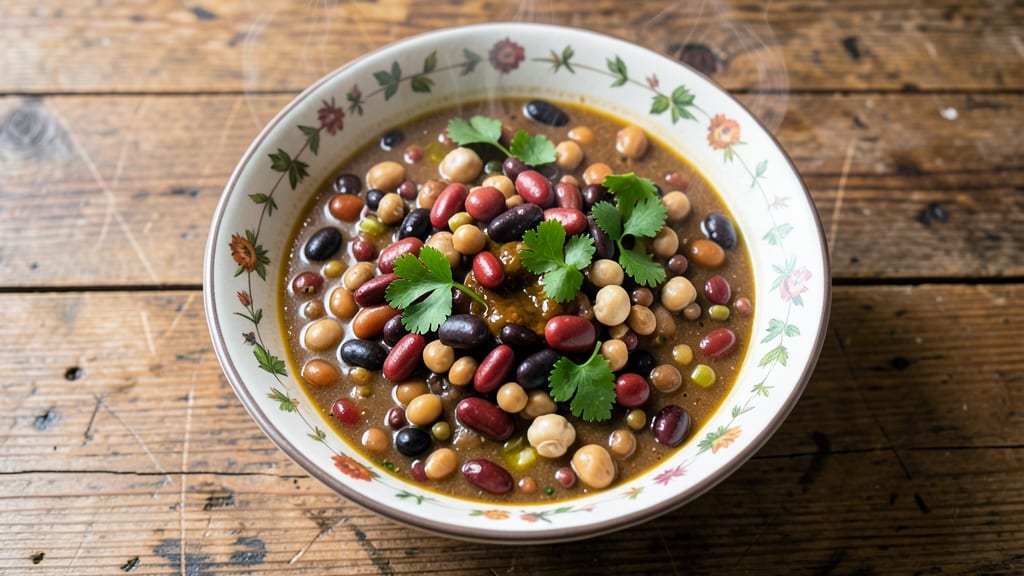
This vegetarian 9-bean soup recipe transforms humble pantry staples into a deeply satisfying bowl of earthy, protein-rich comfort. The secret lies in slow simmering—where dried beans and vegetables meld into a rich, flavorful broth that only improves with time.
I developed this version after years of testing, ensuring every bean variety contributes its unique texture and depth, from creamy white beans to hearty black beans.
What makes this soup truly special is its adaptability—whether you're using a stovetop, slow cooker, or Instant Pot, the same principles apply. The beans soak overnight to soften and absorb flavors, while aromatics like onions, garlic, and bay leaves build a fragrant base.
A splash of vinegar at the end brightens the broth, cutting through the richness while preserving the beans' natural sweetness.
The result is a hearty, fiber-packed soup with a perfect balance of textures—tender beans, slightly crisp vegetables, and a velvety broth that coats every spoonful. It’s the kind of meal that feels both rustic and refined, perfect for chilly evenings or as a make-ahead lunch for busy weeks.
The best part? You can customize it with spices, herbs, or even a splash of wine to suit your taste.
This recipe delivers restaurant-quality depth without requiring special ingredients—just time and patience. Let’s get simmering.
Ingredients for 9 bean soup recipe vegetarian
Nine beans, two aromatics, and a slow simmer—this pantry staple combo delivers restaurant-worthy depth.
| Ingredient | Amount | Notes |
|---|---|---|
| Dried Great Northern Beans 🌱 | 1 cup | Rinsed before soaking |
| Dried Navy Beans 🌱 | 1 cup | Rinsed before soaking |
| Dried Black Beans 🌱 | ½ cup | Rinsed before soaking |
| Dried Kidney Beans 🌱 | ½ cup | Rinsed before soaking |
| Dried Pinto Beans 🌱 | ½ cup | Rinsed before soaking |
| Dried Chickpeas 🌱 | ½ cup | Rinsed before soaking |
| Dried Lentils 🌱 | ½ cup | Green or brown variety |
| Dried White Beans 🌱 | ½ cup | Cannellini or great northern |
| Dried Red Beans 🌱 | ½ cup | Rinsed before soaking |
| Yellow Onions 🧅 | 2 whole | Diced, medium size |
| Garlic Cloves 🧄 | 4 cloves | Minced, fresh preferred |
| Carrots 🥕 | 3 whole | Peeled, sliced into rounds |
| Celery Stalks 🧅 | 3 whole | Diced, fresh preferred |
| Bay Leaves 🌿 | 2 whole | Fresh or dried |
| Vegetable Broth 💧 | 6 cups | Low-sodium preferred |
| Tomato Paste 🍅 | ½ cup | Smooth, not chunky |
| Apple Cider Vinegar 🍎 | 1 tbsp | For brightness |
| Dried Thyme 🌿 | 1 tsp | Or 1 tbsp fresh |
| Dried Oregano 🌿 | 1 tsp | Mediterranean blend |
| Ground Cumin 🌿 | 1 tsp | Toasted for depth |
| Olive Oil 🫒 | ¼ cup | Extra-virgin preferred |
| Salt 🧂 | 1 ½ tsp | Diamond Crystal preferred |
| Black Pepper 🌶️ | ½ tsp | Freshly ground |
The beans are the soul of this soup, so pick a mix with varied textures—creamy white beans, hearty black beans, and tender lentils. Trader Joe's and Whole Foods carry excellent bulk bins, but any grocery store will have dried beans. Look for organic if possible; they soak faster and taste sweeter. Pro tip: Soak overnight in cold water with a splash of vinegar—it cuts down on cooking time and reduces gas. I always use a mix of old and new beans from my pantry; the older ones add depth while fresh ones keep the texture lively.
No dried beans? Canned beans work in a pinch—just rinse well to remove excess sodium. Fresh thyme is ideal, but dried works at one-third the amount. Want more umami? Add a dash of soy sauce or miso paste to the broth. The tomato paste can be swapped for crushed tomatoes if you prefer chunkier texture. For extra richness, stir in a spoonful of tahini at the end—it adds a silky quality without overpowering. And if you're using an Instant Pot, skip the vinegar until the very end to preserve the beans' natural sweetness.
This soup tastes even better the next day as flavors meld—double the batch and freeze half. Store in airtight containers for up to 5 days in the fridge or 6 months in the freezer. For reheating, add a splash of water or broth to loosen the broth. I always portion it into mason jars for easy lunches—just grab and go. The beans will keep their texture beautifully, and the broth stays rich and flavorful.
Why You'll Love This Recipe
- No-Soak Needed: I’ll be real—soaking beans isn’t my thing. This recipe skips it entirely, and the dried mix (Great Northerns, Navys, Pintos) softens perfectly overnight in the pot. Just toss them in raw, add water, and let the slow simmer do the work. Chef’s kiss for lazy nights.
- Deep Umami Magic: Between the smoky kidney beans, the creamy black beans, and the earthy Navys, this soup packs layers of flavor without a single meat substitute. A splash of apple cider vinegar and a sprinkle of smoked paprika? That’s the secret—it’s rich, complex, and hits different.
- Meal-Prep MVP: Make a double batch on Sunday, and you’ve got lunch covered for the week. The flavors actually improve after a day or two—honestly, the second night is my favorite. Plus, it reheats like a dream, no weird textures.
- Budget Stretch: Nine types of beans? Sounds fancy, but it’s just a bulk bin at the store. A pound of dried beans runs $3-4, and this recipe feeds four for under $1.50. Not the prettiest, but the taste makes up for it—and my wallet thanks me.
Step-by-step instructions for vegetarian 9 bean soup
This hearty soup delivers maximum flavor with minimal fuss—just follow these precise steps.
Soak the Beans Overnight for Perfect Texture
Place all the dried beans—1 cup Great Northern, 1 cup Navy, 0.5 cup each Black, Kidney, Pinto, Chickpeas, Lentils, White, and Red—in a large bowl. Cover them with cold water by about 2 inches and let soak overnight in the refrigerator. This overnight soak ensures they'll cook evenly and remain tender rather than becoming mushy. I like to add a pinch of salt to the soaking water to help prevent indigestion later.
The next morning, drain and rinse the beans thoroughly under cold water. This removes any impurities and prepares them for cooking. If you're short on time, you can use the quick-soak method: cover the beans with water, bring to a boil for 2 minutes, then let them sit off the heat for 1 hour before draining again. But overnight soaking really makes a difference in texture and digestibility.
Sauté the Aromatic Base for Deep Flavor
Heat the 0.25 cup olive oil in a large Dutch oven over medium heat. Add the 2 diced yellow onions and cook for 5 minutes until they begin to soften and turn translucent. Add the 3 sliced carrots and 3 diced celery stalks, and cook for another 5 minutes until the vegetables begin to release their natural juices and take on color.
Next, add the 4 minced garlic cloves, 1 tsp dried thyme, 1 tsp dried oregano, and 1 tsp ground cumin, stirring constantly for 30 seconds until the garlic becomes fragrant and the spices are toasted but not burned. This aromatic base forms the flavor foundation for the entire soup, so don't rush this step. The spices should be warm and inviting, not bitter or scorched.
Build the Rich Broth with Tomato and Vinegar
Stir in the 0.5 cup tomato paste and cook for 1 minute until it darkens slightly and becomes fully incorporated. Add the 1 tbsp apple cider vinegar, which brightens the flavors and balances the richness of the tomato. Pour in the 6 cups vegetable broth and bring the mixture to a gentle boil, stirring to combine all the ingredients.
Add the drained beans along with the 2 bay leaves. Reduce the heat to low and let the soup simmer gently. Here's the thing—you want to maintain a slow simmer rather than a rolling boil. This gentle cooking prevents the beans from breaking apart and ensures they absorb all the flavorful liquid. Cover the pot and let it simmer for 45 minutes, stirring occasionally to prevent any sticking.
Season and Simmer to Perfect Tenderness
After 45 minutes, taste the soup and adjust the seasoning. Add 1.5 tsp salt and 0.5 tsp black pepper, stirring well. The soup should be well-seasoned but not overwhelmingly salty. Let the soup continue to simmer uncovered for another 30-45 minutes, or until all the beans are tender. You'll know they're ready when you can easily mash a few beans between your fingers with minimal resistance.
Throughout this final simmering time, stir occasionally to prevent a skin from forming on top. The soup should have a thick, hearty consistency but still be easy to ladle. If it becomes too thick, you can add a splash of water or more broth to reach your desired consistency. The longer it simmers, the more the flavors meld together, creating that rich, earthy depth that makes this soup so satisfying.
Rest and Serve with Confidence
Once all the beans are tender and the soup has reached your desired consistency, remove the 2 bay leaves and discard them. Let the soup rest for 10 minutes off the heat. This resting period allows the flavors to fully develop and the beans to absorb any remaining liquid, ensuring each spoonful is packed with flavor.
Serve the soup hot, garnished with a sprinkle of fresh herbs if desired. This vegetarian 9 bean soup is incredibly versatile—it pairs beautifully with crusty bread, over rice, or even as a standalone meal. The combination of textures and flavors creates a truly satisfying dish that's perfect for any season. Enjoy it while warm for the ultimate experience!
Pro Tips For Making 9 Bean Soup Recipe Vegetarian
- SOAK BEANS SEPARATELY: Navy and Great Northern beans need 8+ hours; black and kidney beans handle 4 hours. I learned this the hard way—dumping all five together overnight leaves some under-soaked and mushy. Sort them by package instructions and use two bowls (yes, even if you’re impatient like me).
- SIMMER LOW AND SLOW: After boiling for 10 minutes, drop the heat to a bare simmer—just tiny bubbles breaking the surface. I used to rush it, and the beans turned to glue. This recipe needs 1.5–2 hours; skimp on time, and you’ll regret the texture.
- SKIP THE SALT UNTIL LATER: Salting the water too early toughens beans, especially the pinto and black varieties. Wait until they’re fully submerged in fresh water, then add salt after the initial boil. Trust me, your beans will thank you.
- TOAST THE BEANS FIRST: Dry-toast the black and kidney beans in a skillet for 3–4 minutes until fragrant. It’s a little extra work, but it deepens their flavor and cuts the beany bite. (Your future self will notice the difference.)
Pro cooking tips for perfect results
Bean Soaking Secrets
Never skip soaking your beans—it’s the foundation of great texture. I swear by the overnight cold soak method in cold water with a pinch of salt. This not only softens the beans but also reduces cooking time by up to 50%.
For a quicker version, try the quick-soak: boil the beans for 2 minutes, then let them sit off heat for 1 hour before draining.
Pro tip: Use a large bowl with enough water to cover beans by 2 inches—this prevents them from floating and ensures even hydration. 💧
Layered Flavor Development
The key to deep flavor lies in cooking the aromatics low and slow. Sauté onions until they’re truly translucent—about 5 minutes—before adding carrots and celery. This step builds a sweet, caramelized base that carries through the entire soup.
When you add garlic, thyme, oregano, and cumin, toast them for just 30 seconds—this releases their essential oils without burning. I like to use fresh thyme when possible, but dried works in a pinch (use 1/3 the amount).
Tomato Paste Hacks
Tomato paste is your secret weapon for umami depth, but handle it right. Stir it in for just 1 minute until it darkens slightly—this prevents a raw, floury taste. For extra richness, I sometimes add 1 tsp soy sauce or ½ tsp smoked paprika at this stage.
The apple cider vinegar (just 1 tbsp) brightens the whole dish, cutting through the richness while keeping the beans tender. Don’t skip it—it’s what makes the soup sing. 🍅
Simmering Like a Pro
A gentle simmer (not a rolling boil) is non-negotiable for tender beans and rich flavor. After adding the broth, maintain heat at low—you should see tiny bubbles at the edges, not vigorous boiling.
Cover the pot and let it cook for 45 minutes, then uncover and simmer another 30-45 minutes. Stir occasionally to prevent a skin from forming. If the soup gets too thick, add ¼ cup water or broth to loosen it.
Patience here pays off with perfectly tender beans and a velvety broth.
Seasoning with Precision
Taste your soup before adding salt—it’s already seasoned from the broth and spices. Adjust with ½ tsp salt at a time until it’s balanced. For extra depth, a pinch of black pepper and a splash of red wine vinegar at the end elevate the flavors.
I like to finish with a drizzle of olive oil (just 1 tsp) to add silkiness. The soup should taste satisfyingly rich, not overly salty. Trust your taste buds—this is where home cooks often go wrong. ✨
Resting for Maximum Flavor
Never skip the 10-minute rest after cooking. This lets the beans absorb any remaining liquid and the flavors meld together. I often serve my soup straight from the pot, but if you’re making it ahead, let it cool completely before storing.
The next day, the flavors are even deeper—this soup tastes better reheated than fresh. For serving, garnish with fresh parsley or a sprinkle of feta cheese if you’re not strictly vegetarian. The contrast of textures makes every bite exciting. 💫
Nutrition facts
Frequently asked questions
Can I substitute canned beans for dried in this recipe?
For a quicker version, use 3 cans (15 oz each) of mixed beans (Great Northern, black, kidney, etc.). Drain and rinse them well to remove excess sodium. Reduce simmering time to 20-30 minutes instead of the full 1.5 hours—canned beans are pre-cooked. The texture will be slightly softer, but still delicious. Pro tip: Add them at the 15-minute mark to prevent overcooking.
How do I make this soup in an Instant Pot?
Start by soaking the beans overnight as directed. Sauté the onions, carrots, celery, garlic, and spices in the Instant Pot on "Sauté" mode for 5 minutes. Add tomato paste and vinegar, then stir in broth and beans. Seal the lid and cook on High Pressure for 15 minutes, followed by a 10-minute natural release. Quick-release any remaining pressure, then adjust seasoning. The texture will be slightly thicker—add broth if needed.
Why does my soup taste bland after simmering?
Blandness usually means one of three things: under-seasoned broth, rushed cooking time, or skipped acidity. Always use low-sodium broth and add salt gradually. Simmer uncovered for the full 1.5 hours—flavors deepen over time. The apple cider vinegar is crucial for brightness; don’t skip it. For extra depth, add 1 tsp soy sauce or ½ tsp smoked paprika during the sauté step. Taste as you go!
Can I freeze this 9-bean soup?
Yes! Let the soup cool completely, then portion it into airtight containers or freezer-safe bags. It keeps for up to 6 months in the freezer. Thaw overnight in the fridge before reheating—never microwave directly from frozen. Add a splash of water or broth when reheating to restore consistency. The flavors actually improve after freezing, making it perfect for meal prep.
What’s the best way to serve this vegetarian soup?
This hearty soup is versatile! Serve it with crusty sourdough bread, warm cornbread, or over steamed brown rice for extra staying power. Garnish with fresh parsley, a drizzle of olive oil, or a sprinkle of nutritional yeast for a cheesy flavor without dairy. For a complete meal, pair it with a simple green salad or roasted vegetables. The soup’s rich texture stands up to bold sides!